3D printed invisibility cloaks can 'blind' infrared cameras
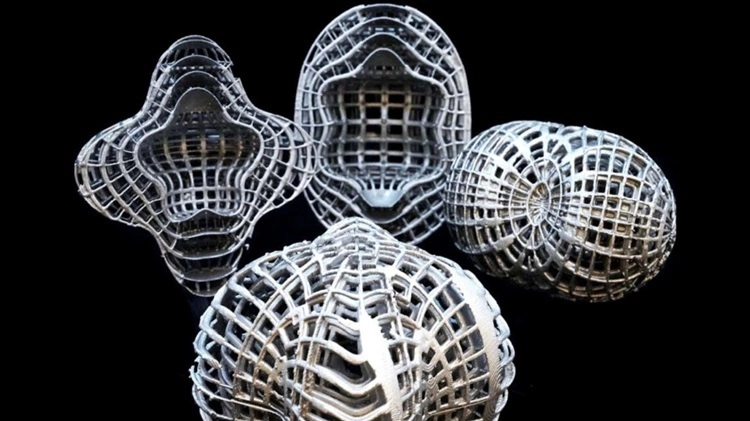
According to Phys.org, a team from the University of Illinois Urbana-Champaign and the Technical University of Denmark developed the first 3D printed omnidirectional thermal cloak capable of making objects invisible to infrared cameras from any angle. While previous designs only worked in two dimensions or at a fixed angle, the new cloak conducts heat around the object instead of blocking it, creating the effect of nothing being there. Researchers describe this type of shirt in detail in a paper published in the journal Nature Communications.
Soldiers, drones or overheating microchips often emit characteristic heat signatures, easily detected in the dark. However, this unique material can completely eliminate heat signatures on infrared camera screens by changing the way heat is detected. The research team relied on basic heat transfer principles to create a complex 3D printed aluminum mesh frame similar to a honeycomb. They then poured a rubber-like material with low thermal conductivity into the structure using a molding technique.
According to Interesting Engineering, through three-dimensional adjustment of the mesh size, the research team can precisely customize the thermal conductivity at each location, forcing the heat flow to go around the object instead of passing through it, helping it disappear from the infrared camera's view. Unlike old technologies that often reveal themselves if the environment or viewing angle changes, the new invisibility cloak maintains the illusion even with complex surfaces and constantly changing environments.
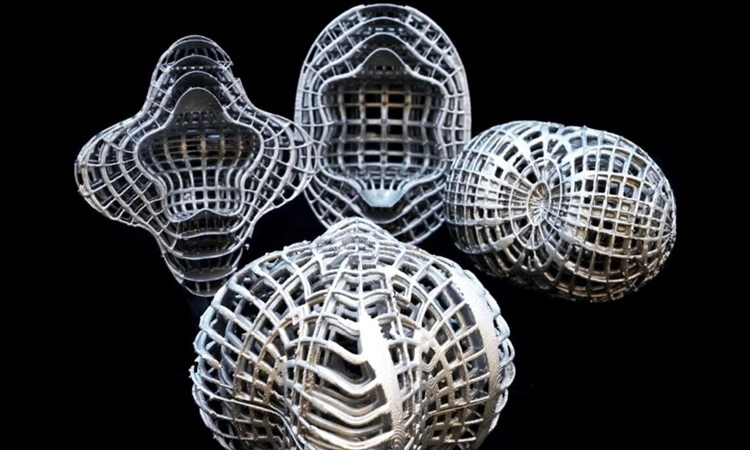
In the test, researchers tested the material under extreme temperature gradients and used infrared cameras to monitor heat flow. To an outside observer, the temperature field looks completely normal like the object does not exist. The research team even successfully hid objects with irregular geometric shapes, including a 3D model of a human head.
Invisibility cloaks have applications as diverse as changing the way heat is controlled in increasingly tiny microchips in electronic devices or hiding tanks, drones and soldiers from thermal sensors. The researchers' next goal is to develop a multifunctional smart cloak that can concentrate, disperse or conduct heat according to need within the area to be protected.
An Khang