Chinese memory chip companies 'emerge' thanks to the AI fever
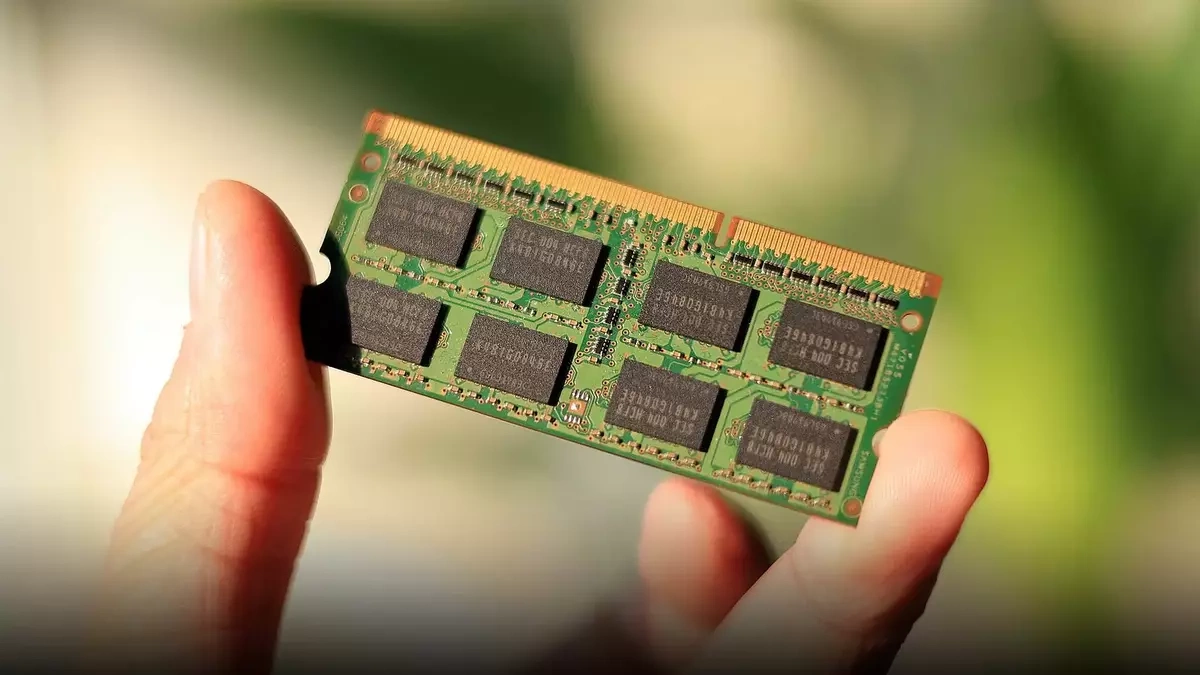
At a sprawling campus in the city of Hefei, workers are racing to complete a new production line for ChangXin Memory Technologies (CXMT). This is the Chinese company's next line to serve the ongoing memory chip fever.
CXMT attracted global attention recently, after information appeared that Apple began testing using this company's memory for devices sold in China. According to the Financial Times, Apple worked with the administration of US President Donald Trump and the US Department of Commerce more than a month ago, with the goal of being approved to buy RAM from the Chinese semiconductor company.
Apple's interest in CXMT marks a turning point for a company that was born a decade ago (2016), spent billions of dollars, but only "flashed" when the global technology industry fell into the memory chip crisis. According to experts, China has very high expectations for CXMT, the company that plays an important role in the national project to build a self-sufficient AI supply chain.
In fact, the global memory chip thirst that took place since the end of last year helped CXMT "transform" financially. According to an IPO filing filed in April with the Shanghai Stock Exchange, the company's net profit increased to 33 billion yuan ($4.8 billion) in the first quarter of this year, "reversing" a loss of 37 billion yuan ($5.4 billion) suffered over the past decade. In May, the business was approved by the Shanghai Stock Exchange and is about to list on STAR Market. CXMT is the world's fourth largest DRAM manufacturer, after SK Hynix, Samsung Electronics (Korea) and Micron (USA). According to analytics firm SemiAnalysis, the Chinese company accounted for about 11% of total global DRAM wafer capacity last year, which is expected to increase to 15% by 2028 as new lines come online in Hefei, Shanghai and Beijing.
CXMT is not the only name benefiting from the memory chip thirst. Longsys Electronics, a company specializing in designing, packaging and providing storage solutions from memory chips, earlier this week announced that its net profit for the first half of the year was estimated at 9.2-11 billion yuan (1.36-1.62 billion USD), exceeding the figure of 2.2 million USD in the same period last year, equivalent to a growth of 61,818-73,636%. The company's revenue is also estimated to increase by 3.24-3.68 billion USD (22-25 billion yuan), double the 1.5 billion USD in 2025.
Speaking to SCMP, Longsys said it has signed a number of long-term agreements and memoranda of understanding with global memory wafer suppliers to ensure supply stability. However, the company did not specifically state which parties it signed contracts with.
According to Tom's Hardware, some reports indicate that many electronics brands in China have abandoned three suppliers Micron, Samsung and SK hynix to switch to using products from CXMT and Yangtze Memory Technologies (YMTC). In early July, Notebookcheck discovered that Lenovo included a YMTC memory chip in at least one version of the ThinkBook 14 G9 IPL, marking the first time Lenovo tested a YMTC SSD on a laptop.
In May, YMTC also announced that it had recorded a profit for the first time last year. In the first quarter of 2026 alone, revenue increased by more than 700% compared to the same period in 2025. According to Reuters, despite being placed on the US blacklist from 2022, YMTC still expands capacity, mainly domestically. The Wuhan-based company is currently China's largest NAND Flash memory chip manufacturer, with two factories with a total monthly output of 200,000 wafers. The third factory is expected to be operational later this year, with a capacity of 50,000 wafers per month by 2027.
Faced with a shortage of consumer memory chips, in addition to Apple, American computer and accessory companies such as Dell, HP or Corsair are said to have begun considering using products from Chinese suppliers. Some experts consider this a rare move, as most have been placed on the Pentagon's restricted list.
According to TechRadar, YMTC, CXMT or smaller units such as Longsys and Biwin are considered China's great hope in establishing a foothold in the global memory chip market, which has long been dominated by Korean and American businesses. Companies are also growing rapidly and all have plans to increase production.
However, analysts say that supply from this group is unlikely to "cool down" memory chip prices in the short term, because most of the output has been distributed and demand continues to increase. "There is a misconception that Chinese memory is a lot cheaper and will flood the market," SemiAnalysis analyst Ray Wang told the Financial Times. "Production capacity is extremely limited. Even if CXMT expands, supply will still be constrained for at least the next two years."
In fact, Chinese memory chip companies are joining the "honeymoon" period taking place in the industry, when most increase revenue and profits. For example, Samsung on July 8 said its operating profit in the April-June period reached 89.4 trillion won (58.44 billion USD), 19 times higher than 4.7 trillion won (3.1 billion USD) in the same period last year with a large contribution from the Samsung Electronics memory chip segment. On a global scale, the three largest manufacturers including SK Hynix, Samsung Electronics and Micron still hold the majority of the market share, according to SemiAnalysis.
Memory is one of the two most important components on any computer system. If the CPU plays the role of the "brain" of the device and processes large amounts of information at extremely fast speeds, memory is where data is stored and provided to the processor, like a plate containing food.
For many years, memory chips such as DRAM and NAND Flash mainly served business servers, personal computers, smartphones, wifi routers and other consumer electronics devices. Demand is assessed to be stable, even surplus, and increasingly cheaper due to continuously improving production technology, according to Reuters.
However, stability gradually disappears from the end of 2025, when most AI systems such as OpenAI's ChatGPT, Anthropic's Claude or Google's Gemini switch form from processing to inference and need more memory. From here, the consumer electronics market fell into difficulty.
The problem is exacerbated by AI data centers' preference for high-bandwidth memory (HBM). HBM has very high profit margins, so manufacturers decided to focus production and technical investment on this segment. That means they have to reduce their focus on conventional DRAM and NAND.
"Memory chip manufacturing is becoming a zero-sum game," said a study on the memory crisis published by Deutsche Bank on June 18. "For every additional wafer for HBM and AI servers, the supply for phones, computers and cars is reduced. This situation pushes up memory prices and affects many economic sectors. At this time, memory chips are no longer a common commodity, but become a clear macroeconomic variable."