Bored of interacting with AI instead of real people

"I hate customer service chatbots, but many companies are using them. I would rather talk to a real person," Carmen Smith, living in California, shared that she often falls into an "endless loop" when communicating with chatbots. "They always seem to direct you to a list of frequently asked questions (FAQs) or repeat information you've already tried and found to no avail."
Smith is not the only case. According to Qualtrics' 2026 Customer Experience Trends Report, nearly 1 in 5 people who have used customer service AI have not achieved any benefits. This failure rate is nearly four times higher than the overall rate, suggesting that customer service is a particularly difficult area for AI. Consumers ranked customer service AI applications among the lowest in terms of convenience, time saving, and usefulness.
In the "Consumer Patience Index" survey released last month by customer service AI agent development company Parloa, more than half of the 1,001 participants said they actively avoid chatbots, with 43.9% shouting "person" or "human" when trying to end a call with an AI agent. 17% even "swear curses to escape".
In the ranking of the most annoying things, "talking to a bot that doesn't understand you" ranked first with 25.9% of participants, higher than "long waiting time" (22.8%) and "being switched multiple times" (13.4%). Additionally, only 13.6% of respondents believe AI can handle complex requests, while 30.4% "do not trust it at all".
"Consumers are showing extreme fatigue. They reject systems that don't know how to listen, don't know how to adapt, and don't solve problems when needed. These reactions increase impatience. In short, they are so fed up," Latané Conant, Parloa Marketing Director, shared with Futurism.

Why are customer service AI agents so ineffective? According to Isabelle Zdatny, head of thought leadership at Qualtrics XM Institute, cost is one reason. "Many companies deploy AI to save costs, not to solve problems, and customers can tell the difference," Zdatny said.
In addition to technical capacity, another reason why many chatbots avoid issues, give misleading or circular answers is the company's orientation. "If management prioritizes reducing customer refunds, limiting employee transfers, or shortening call times, the AI agent will work according to that priority," Ben Wiener, head of digital experience at technology and consulting company Cognizant, explained to CNBC. AI can even do this on a larger scale and more consistently than human employees, he adds.
AI avoiding problems or discouraging customers also brings some benefits to employees. According to Terra Higginson, Research Director at Info-Tech Research Group, this strategy can help protect workers in a job that is prone to affecting mental health and has high rates of burnout and turnover. AP cited McKinsey data as saying that about half of customer service employees quit after just one year due to pressure and monotony.
According to Higginson, when a refund is impossible according to company regulations or law, AI can immediately refuse, helping employees "not have to endure arguments or be yelled at by customers even if they do the right thing."
But on the contrary, making it difficult for customers to legitimately want a refund is a terrible strategy. "It's an act of hindering, not serving," she said, underestimating this strategy, especially in today's competitive market where customer opinions on social networks can spread quickly.
Jesse Zhang, CEO of customer service chatbot development company Decagon, also believes that businesses that try to hinder customers will lose money in the long run. According to him, we should not let the story go to a dead end but need to build a handling roadmap for customers who do not receive satisfactory answers from AI. In addition, businesses need to establish quick and clear communication channels, helping elderly customers, VIP customers or those with complex problems to directly chat with support staff.
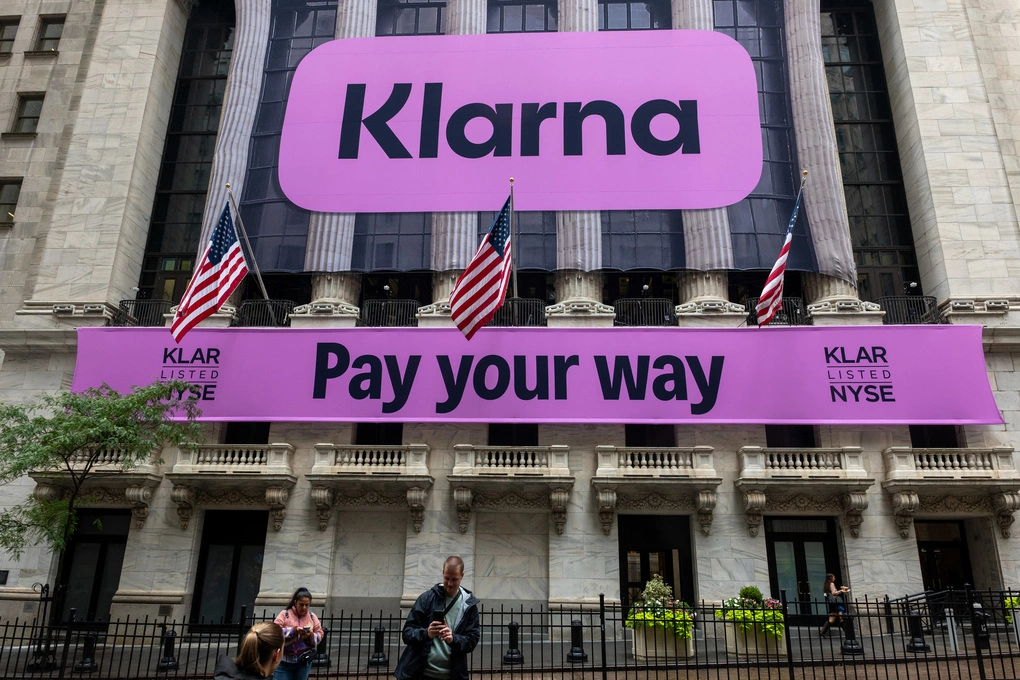
Rushing to replace employees with AI can cause a lot of trouble for the business itself. Sebastian Siemiatkowski, CEO of buy-now-pay-later service company Klarna (Sweden), once declared that AI can "do what humans can do" by 2024. They cooperated with OpenAI to develop virtual assistants, cut staff and use AI to take on the work of 700 customer service staff.
However, he changed his opinion somewhat when customers lost patience with "novice" bots. During the AI adoption period, Klarna's first quarter loss doubled compared to the same period last year. In May 2025, Siemiatkowski announced plans to recruit more employees for customer care.
At health services company NotifyMD, AI solves some simple problems like answering customer calls about bills. But Jodi Miller, senior vice president of sales, says humans still play an important role in complex and emotional problems.
"AI cannot provide the same understanding and empathy as humans, especially when customers are upset or have legitimate problems. I think the key for every company going forward is to be careful when using AI, making sure the technology is helping rather than hindering the people who need help the most," Miller told CNBC.
Tom Eggemeier, CEO of software company Zendesk, believes that AI will become increasingly popular. He estimates that in the next three years, 50% of digital customer service interactions will be handled by AI, increasing to 80% in five years. According to him, customers will soon have personal AI assistants to interact with the company's chatbots, solving low-level problems without human involvement.
Meanwhile, Zhang believes artificial intelligence is the future of customer service, AI agents will have enough memory and ability to handle all types of requests. "From a general perspective, every business will have AI on the 'front line' of customer contact, and channels will only need a single agent," he said.