The 'token burning' race cools down

Twice a week, Morgan Linton, Chief Technology Officer at AI startup Bold Metrics (USA), will inform his team of 16 engineers what model to use and when. For example, last week, he asked one group to use Claude Fable at a low level, one group to use GPT-5.5 at a high level, and the third group to use Cursor with Composer 2.5, and achieved "perfect results" in his assessment.
Specifying each model specifically helps Linton not need to set a hard limit on the amount of tokens - basic input data units consisting of words, parts of words, characters or punctuation that the AI model processes to create output. "My team still has the best stuff, and at the same time uses it much more efficiently," he said.
According to Business Insider, Bold Metrics is one of the companies pursuing a strategy of using AI economically and effectively, different from the situation a few months ago, when the "token maximization" strategy, which encourages employees to use AI as much as possible, prevailed.

In March, the New York Times, citing close sources, reported that employees of some technology companies such as Meta and OpenAI even competed on internal rankings for token consumption. At Anthropic, an employee using Claude Code programming tool spent more than 150,000 USD in just one month.
Nvidia CEO Jensen Huang hasn't directly talked about token maximization, but he emphasized the importance of using multiple tokens on the All-In Podcast in March. "If a $500,000 engineer doesn't consume at least $250,000 worth of tokens, I would be extremely concerned," he said.
However, Scott Wu, CEO of AI startup Cognition, believes that the token maximization strategy has gone too far and businesses should focus on employee productivity. "There are companies that rank engineers based on token consumption. But let's rank them based on the results they actually produce," he said in a podcast last month.
Evaluating employees by tokens can even have adverse effects. In May, the Financial Times said Amazon had to close the internal rankings used to track employees' AI usage. The reason is that some people try to increase their score by assigning AI agents to perform unnecessary tasks, causing the company's computing costs to increase.
"Twitter ranking engineers based on token usage is like ranking marketing teams based on who spends the most. Don't confuse high spend rate with high success rate," Cristina Cordova, Chief Operating Officer at Linear, wrote on Twitter in April.
After considering the total cost of AI, many companies are starting to use this technology more cautiously. Praveen Neppalli Naga, chief technology officer at Uber, told The Information in April that the company spent its entire 2026 AI budget in just four months. "I had to start planning again from scratch, because the amount I thought was enough was now exhausted," he shared. Previously, Uber also actively promoted the use of AI through internal rating rankings.
The Verge reported in May that Microsoft is canceling most licenses for direct use of Claude Code, a programming AI tool developed by Anthropic, and calling on employees to switch to GitHub Copilot CLI to prioritize internal products. However, some sources said that the real reason is that the cost of Claude Code increases as the number of users increases.
Tesla employees are also no longer able to freely use AI as the company seeks to contain skyrocketing costs. In early July, Tesla announced that employees would be limited to using AI tools at $200. However, this regulation does not apply to the Grok model of xAI, the company founded by Elon Musk, which has now merged into SpaceX and changed its name to SpaceXAI.
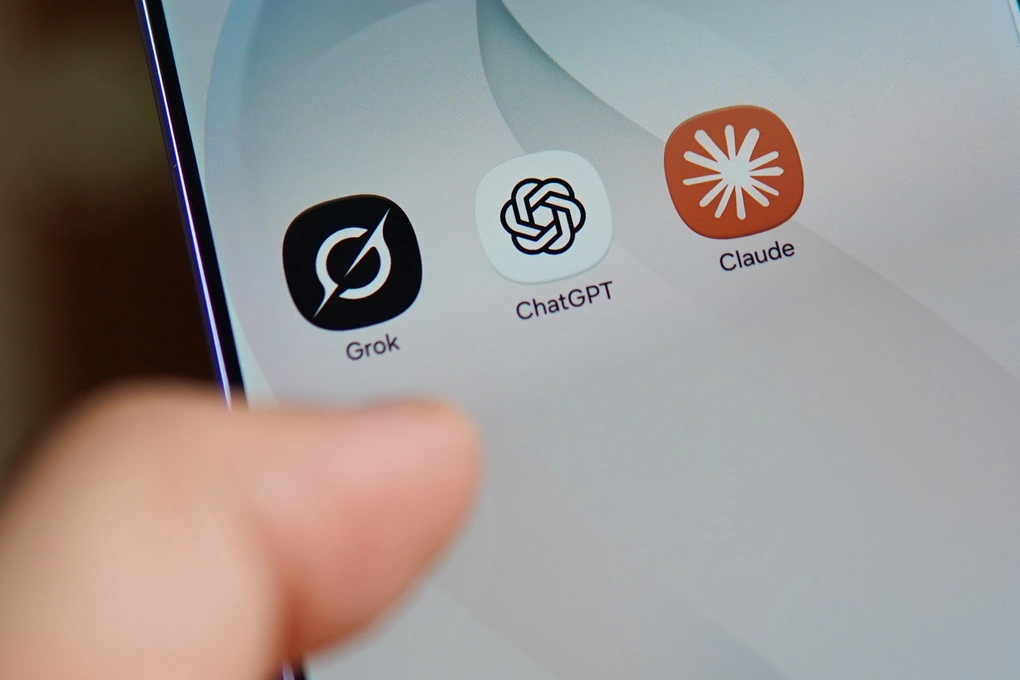
Founders, software engineers, UX designers, even vibe coders without a technical background, are starting to apply the cost-saving trick: paradigm shifting. They assign difficult, high-thinking tasks to advanced and expensive models, while assigning easy, repetitive tasks to older and cheaper models. This tip helps make the most of your budget and use tokens effectively in the context of businesses increasing cost savings.
Brian Armstrong, CEO of Coinbase, mentioned the transition between AI models in a Twitter post in early June: "The next 12-18 months, 80% of the workload will be performed on models that are 99% cheaper, the remaining 20% will continue to run on the newest models, when maximum intelligence is needed."
Alejandra Thomas, a software engineer and technology content creator in New York, always tests every new model to evaluate the advantages of each product. "I try not to use the most expensive or advanced model just because it's available. For simple tasks, I always choose a lightweight model, even using nothing at all," Thomas shared with Business Insider.
Behavioral economics researcher Dan Ariely, a professor at Duke University, explains how getting the most out of each token demonstrates a scarcity mindset. Ariely said the token budget is reminiscent of old-fashioned cell service, when calling minutes were limited and people tried to use them up at the end of the month, even though they had to call people they didn't really want to.
For many companies, choosing an AI model to optimize costs can be a difficult problem. Taking advantage of that opportunity, many startups began providing routing software that helps allocate tasks to appropriate AI models, including open source. According to Ara Kharazian, chief economist at financial technology company Ramp, the number of businesses using routing software has increased from about 1% last year to 5% this year, showing the growing need to optimize the efficiency of AI use.