Japanese memory chip company 'produced' 600 millionaires thanks to the AI wave
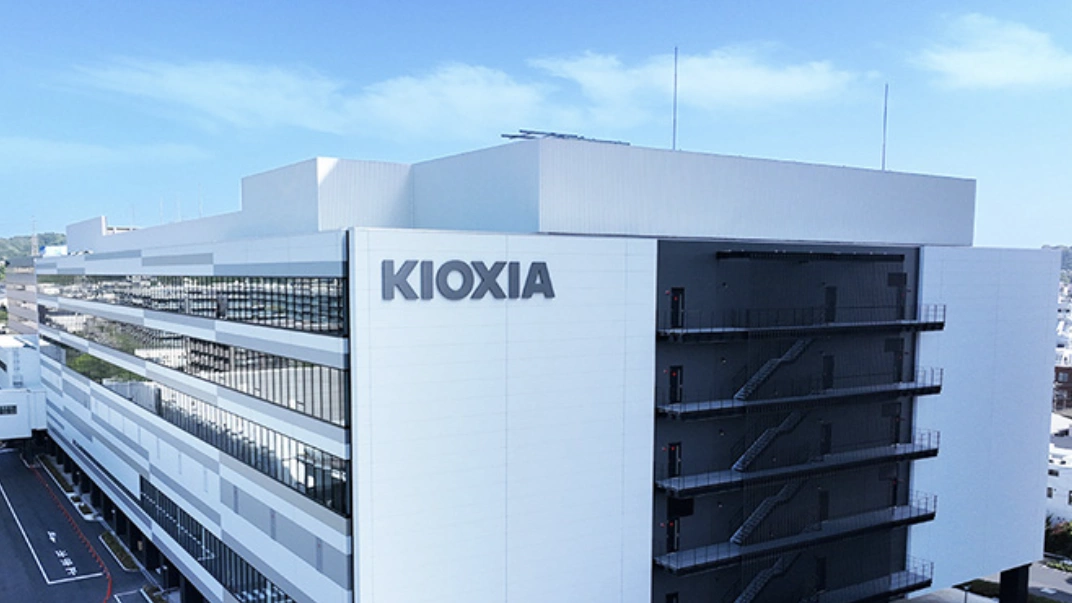
At the new Kioxia factory that opened last year on the outskirts of Kitakami City, Iwate Prefecture, a robot system is transporting thousands of silicon wafers at a fast pace. Capacity is currently being pushed up to meet the huge demand for memory chips to serve AI data centers.
"The AI craze is expanding rapidly. Therefore, we have high expectations that the flash memory chip market will continue to expand," Hiroo Ota, CEO of Kioxia, told AFP.
Little known compared to other companies in the field of memory chips such as Samsung and SK Hynix (Korea) or Micron (USA) as well as other Japanese technology companies, but Kioxia is rising strongly. According to Bloomberg, the company's stock price has increased more than 670% since the beginning of the year. In mid-June, the company's capitalization reached 274 billion USD after 18 months of listing, surpassing Toyota to top the Japanese stock market at that time.
According to Nikkei, the skyrocketing shares helped more than 600 Kioxia employees "suddenly" hold assets worth over one billion yen (6.2 million USD) as of the end of June. They were granted large-scale stock options after the Bain Capital fund joint venture acquired them in 2019, mainly department directors, department heads, factory managers...
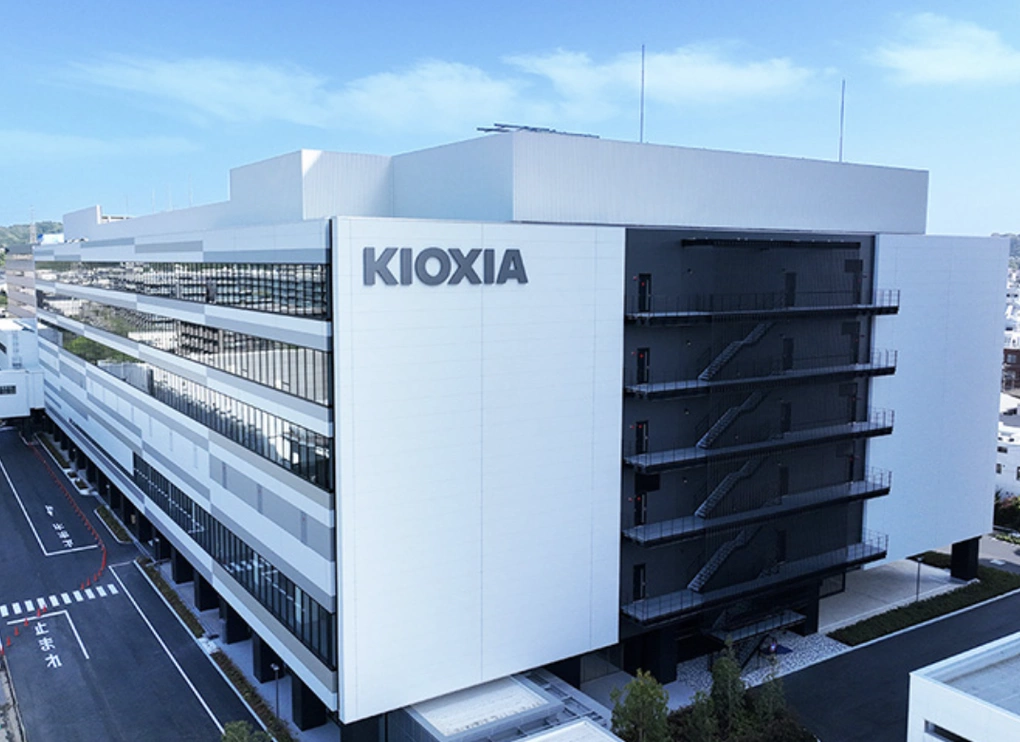
It is rare in Japan for Kioxia office and factory workers to join the ranks of yen billionaires through stock options. "The AI revolution is not only creating new industries. It is also changing the current order of who benefits from the growth of corporations," commented Nikkei.
What Kioxia experienced is in contrast to the context nearly ten years ago. Initially named Toshiba Memory under Toshiba, the company was sold to Bain Capital for 18 billion USD after the famous Japanese corporation accumulated losses of more than 1,000 billion yen (6.2 billion USD) in 2016 and 2017.
Back in the 1980s, Japanese electronics engineer Fujio Masuoka, while working at Toshiba, devised a way to create a chip that stores data that is not lost when the power is turned off. In 1987, he and the Toshiba team announced the NAND flash memory structure. Masuoka is considered the "father" of this type of memory chip, while Toshiba helps them appear on electronic devices around the world.
Thanks to companies like Toshiba, in its heyday in the 1980s, Japan accounted for about half of the global semiconductor market. However, according to Japanese government data earlier this year, this rate dropped to less than 10%.
In 2019, Bain Capital joint venture acquired and renamed Toshiba Memory to Kioxia, focusing on NAND flash memory chips and SSD storage solutions for smartphones, personal computers, business servers and data centers. For a long time after that, Kioxia mainly produced consumer goods.
Even in the early stages of the AI memory chip boom, the company was little known because artificial intelligence server systems mainly used DRAM, especially high bandwidth memory (HBM) due to the need for fast access. However, as the trend of using AI expands from model training on large volumes of data to inference (the process of answering queries), the demand for high-capacity NAND memory also increases rapidly, causing market scarcity.
"Memory chip manufacturers prioritize DRAM to the point of neglecting investment in NAND development," Satoru Oyama, a consultant who worked at semiconductor firm Tokyo Electron, told ET Telecom. "They were completely unexpected and unable to meet the current NAND boom. That's why current demand is focused on Kioxia."
"Kioxia's share price surge represents valuation normalization for a once neglected sector," Counterpoint Research analyst MS Hwang told AFP.
As of March 31, Kioxia had about 15,000 employees. The company is manufacturing 10th generation BiCS Flash memory developed with Sandisk at two factories in its home country of Japan. According to Kazuyoshi Saito, analyst at IwaiCosmo Securities, Kioxia's NAND technology is 2-4 years ahead of its competitors in terms of performance and power consumption thanks to the strength of its proprietary wafer lamination technology.
On the development momentum, the Japanese chip company is planning to list American depository shares (ADS) on the US exchange next year. "International competition is extremely fierce," said Satoshi Nohara, an official at Japan's Ministry of Industry. "Maintaining and enhancing Kioxia's global competitiveness is important from the perspective of national interests and ensuring a stable supply chain for allies and like-minded countries."