India proposes to promote key technology cooperation with Ho Chi Minh City
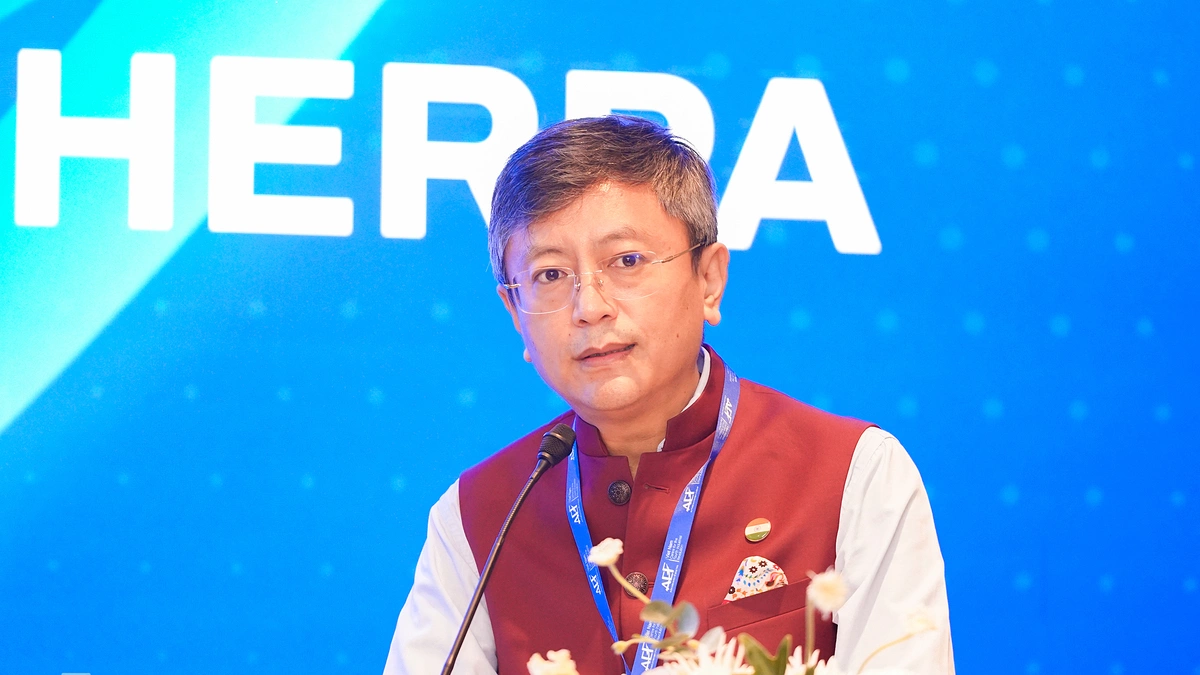
The information was announced by Indian Ambassador to Vietnam Tshering Wangchuk Sherpa at the Vietnam - India Future Technology Forum conference on October 26, on the sidelines of the 2026 Fall Economic Forum (AEF 2026) chaired by the Ho Chi Minh City People's Committee.
According to Mr. Sherpa, India and Vietnam have gone through a long and strong path of cooperation. This year, the two celebrate the 10th anniversary of the establishment of the Comprehensive Strategic Partnership (CSP), and next year will mark the 55th anniversary of the establishment of diplomatic relations. During the state visit to India last May by General Secretary and President To Lam, the two sides agreed to upgrade their relationship to an Enhanced Comprehensive Strategic Partnership (Enhanced CSP).
"The development path ahead for the two countries needs to be built on the foundation of new fields such as information and communications technology, innovation, science and technology," said the Indian Ambassador to Vietnam.
From this foundation of cooperation, Mr. Sherpa wishes to promote further by linking Ho Chi Minh City and Mumbai. Both will connect the technology and startup ecosystem, strengthen the connection between the two sister cities, and focus on the startup and innovation ecosystem.
At the same time, the Indian Institute of Technology Bombay (IIT Mumbai) will coordinate with universities in Ho Chi Minh City to exchange students, graduate students and implement joint projects, thereby promoting educational and research cooperation. Through a series of Year of Friendship 2027 activities, the two will coordinate to build a technology and innovation cooperation program, with the companionship of Ho Chi Minh City People's Committee.
On a national scale, the two countries plan to hold the first meeting of the Working Group on Digital Technology at the Deputy Minister level in Hanoi, and at the same time coordinate with the C4IR Center (Centre for the 4th Industrial Revolution) in a number of localities to implement a high-tech capacity building program in India.
In addition to cooperation orientations, Mr. Sherpa assessed that Vietnam has affirmed its position as a global production and export center, especially in the fields of advanced technology. The Indian Ambassador to Vietnam said that India wants to learn from Vietnam's R&D development experience, especially the active participation of the industrial sector and private enterprises.

Speaking online, Mr. S. Krishnan, Deputy Minister of Electronics and Information Technology of India, assessed that the two countries have opportunities to expand cooperation in the fields of AI, digital public infrastructure (DPI), semiconductor industry and advanced materials. "The focus is to transform existing cooperation agreements into actual implementation programs, while strengthening connections between management agencies, businesses and research organizations of the two countries," Mr. Krishnan said.
Mr. Krishnan said that India has successfully built its own system, such as Aadhaar digital identification using biometric data, to serve identity authentication; UPI is a flexible electronic payment platform through an interconnected system; or DigiLocker provides digital document storage and authentication services, supporting people in using electronic documents in transactions. This approach reduces the need to build separate systems, creates conditions for businesses to enter the market, develop new services, and supports connectivity between multiple platforms, limiting the risk of dependence on one technology supplier.
From practical experience, he suggested that Vietnam can develop shared digital infrastructure, increase connectivity between systems and expand digital services for people. However, implementation needs to be associated with data management requirements, protecting personal information and ensuring the security of transactions.

Speaking at the event, Vice Chairman of Ho Chi Minh City People's Committee Nguyen Manh Cuong commented that AI, digital infrastructure, semiconductors and automation are changing production methods, management and market connection. According to him, competitive advantage lies in the ability to research, master and apply technology to solve practical problems. No country or business can fully develop on its own, so international cooperation needs to focus on building common capacity and creating practical value for people and businesses.
Therefore, Mr. Cuong assessed that key cooperation between Ho Chi Minh City and Mumbai helps realize the strategic vision of the two countries. This is also an important basis for the two major economic centers to promote the expansion of practical cooperation in many fields: economics, trade, investment, education and training, culture, tourism, urban planning, infrastructure, green and digital growth. "Ho Chi Minh City is ready to coordinate closely with all parties to effectively implement these key cooperation directions," Mr. Cuong said.
The Vice Chairman of Ho Chi Minh City People's Committee also stated three key cooperation directions to promote cooperation, including identifying potential future technology fields and developing high-quality human resources associated with actual needs; Take practical development needs as the starting point for research, application and technology transfer; and connect innovation ecosystems and promote technology commercialization.
According to Mr. Cuong, the goal of Vietnam - India technology cooperation does not stop at knowledge sharing, but directly contributes to the competitiveness of businesses and the formation of new industries.
AEF 2026 is held at Thiskyhall Sala Convention Center, Ho Chi Minh City, starting side sessions this morning, before officially opening on October 28. One of the goals of the forum is to focus on discussing issues shaping new growth drivers such as breakthrough technology, digitalization, greening, finance, value chains and new cooperation models.
According to the Organizing Committee, Ho Chi Minh City does not stop at being a destination, but aims to become a place where global resources meet, are coordinated and transformed into investment decisions. At the same time, this will be a destination for international cooperation initiatives, a center connecting emerging economies and a focal point for promoting regional innovation.
Bao Lam