Re-freezing plan to save the Arctic
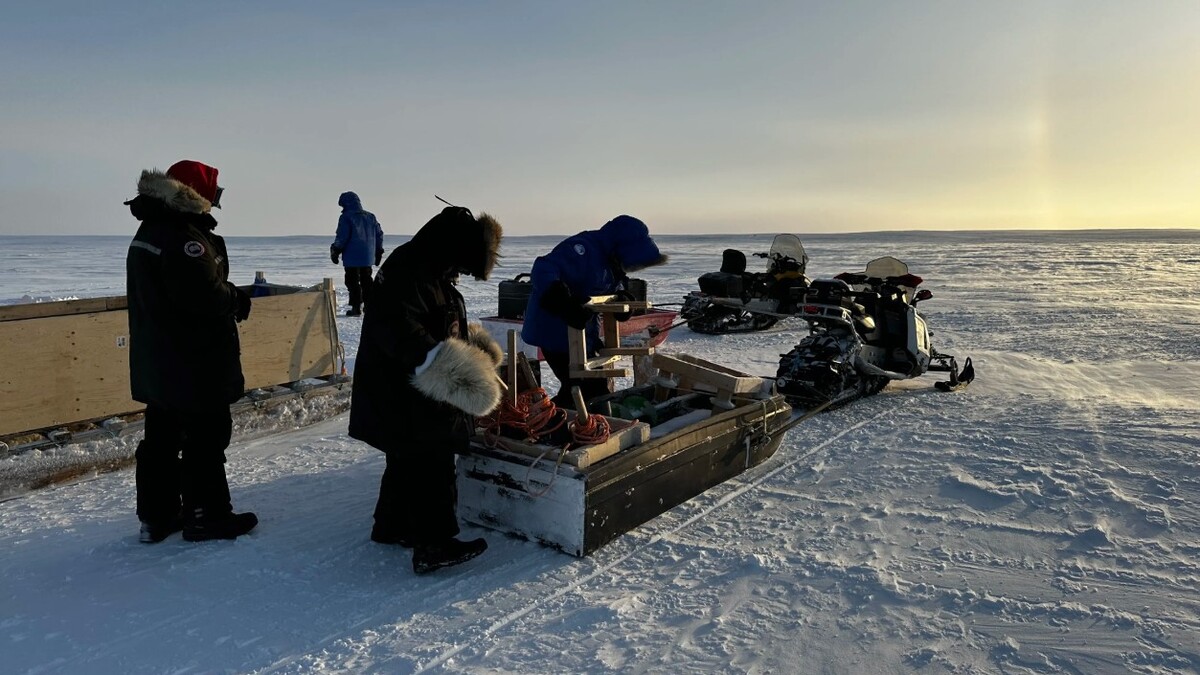
According to Live Science, the method of thickening Arctic ice with seawater yielded promising results in the first field experiment in the town of Cambridge in Nunavut, Canada. In research published in the journal Earth's Future, scientists evaluated the benefits of pumping seawater onto existing ice in the winter and letting it harden into a solid reinforced layer.
Associate Professor Edward Blanchard-Wrigglesworth, Department of Atmospheric Sciences, University of Washington and Professor Emeritus Andrea Ceccolini, University of London and CEO of Real Ice company, said that the above method has many practical applications including the construction of runways and offshore oil platforms. Simulation results show that thickening sea ice could help Arctic communities adapt to climate change by limiting coastal erosion near towns, promoting transportation, and supporting animal migration and predation.
In research published in the journal Earth's Future, scientists evaluated the effectiveness of this method in field conditions for the first time. Experimental results show that it is possible to significantly enhance the thickness and brightness of sea ice on a small scale, making the ice surface more reflective and therefore less likely to melt.
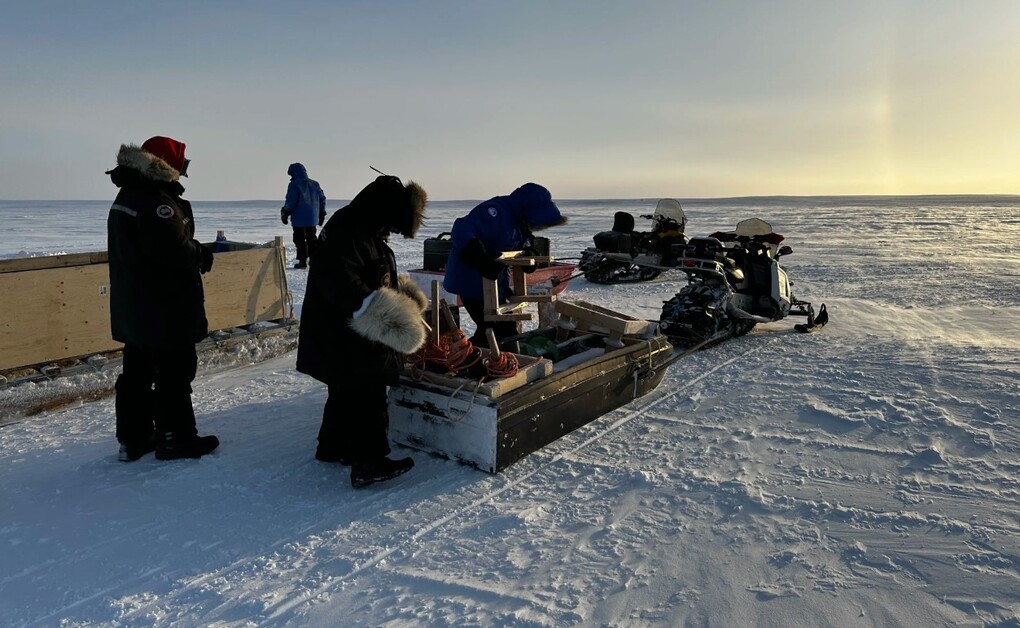
In the experiment, the research team arranged 8 test areas and 3 control points in Cambridge town during the winter of 2024-2025. They used low-energy submersible pumps to flood the test area with up to 20 cm of seawater while the control site was not flooded. In the spring, the researchers conducted a meltwater drainage experiment at a control site, which involved drilling small holes in the ice to remove the meltwater, revealing the brighter layer of ice underneath.
The test areas were up to 32 cm thicker than the control sites in late winter, equivalent to the thinning of Arctic sea ice over the past 50 years. In particular, the test area flooded twice thickened more than the area flooded once. During the melting period from late May to September, the sea ice in the test area was brighter and had a slower melting rate, so it was still thicker than the ice in the control site.
Blanchard-Wrigglesworth and Ceccolini explain that when water is pumped onto sea ice, the snow on the ice becomes saturated. The mixture of snow and water freezes into a new layer of ice, the insulating ability of the snow is reduced allowing colder temperatures to promote the natural growth of ice from below. Thick sea ice is often brighter than thin ice, helping to increase the amount of sunlight reflected back into space, contributing to cooling the area.
However, the scalability and economic feasibility of the sea ice thickening method to refreeze the Arctic is still a big question mark due to the need for people and machines to work on site. A study published in 2016 in the journal Earth's Future showed that about 10 million wind-powered pumps would be needed to cover 10% of the Arctic Ocean, increasing to 100 million pumps to cover the entire Arctic. The annual sea ice area in the Arctic has decreased by 20% since 1979, with the rate increasing due to global warming. Therefore, for large-scale thickening of Arctic sea ice, pumps need to be deployed immediately.
According to the Guardian, the ecological and social impacts of thickening Arctic sea ice are still unclear, meaning that by the time scientists have enough data needed to prove the safety and feasibility of this method, implementation will be too late. Blanchard-Wrigglesworth and Ceccolini shared they are developing underwater robot technology to support autonomous deployment. Earlier this year, they conducted the first field tests with a drone prototype in Finland.