Japan 'lags behind' despite being a pioneer in humanoid robots
"In the future, the relationship between humans and robots will be closer, even the boundary between the two sides may disappear," the Geminoid HI-6 robot said during the 2026 Humanoid Robot Summit, taking place in Tokyo at the end of May. According to IEEE Spectrum magazine of the Institute of Electrical and Electronics Engineers (USA), this prediction would probably not be remarkable if it were not for Geminoid HI-6, the sixth generation of humanoid robots first launched 20 years ago.
A mechanical replica of professor Hiroshi Ishiguro at Osaka University, the Geminoid HI-6 is equipped with a large language model (LLM) trained on his writings and interviews. Thanks to that, it has advanced conversation skills.
However, at the conference in Tokyo, this was only one of a few humanoid robots from Japan, a country that once pioneered the field. Of the approximately 40 robots participating, the number of Chinese products is three times that of Japan. Some companies in this country even use Chinese robots to demonstrate their technology, something that was previously "unthinkable". Talking to IEEE Spectrum, a Japanese engineer commented that this situation was "very sad".

According to SCMP, in 1973, a group of experts from Waseda University, Tokyo, introduced Wabot-1, considered the world's first life-sized humanoid robot. Wabot-1 can move slowly on two legs, grasp objects and communicate simply. The next version released in the 1980s could even play keyboards.
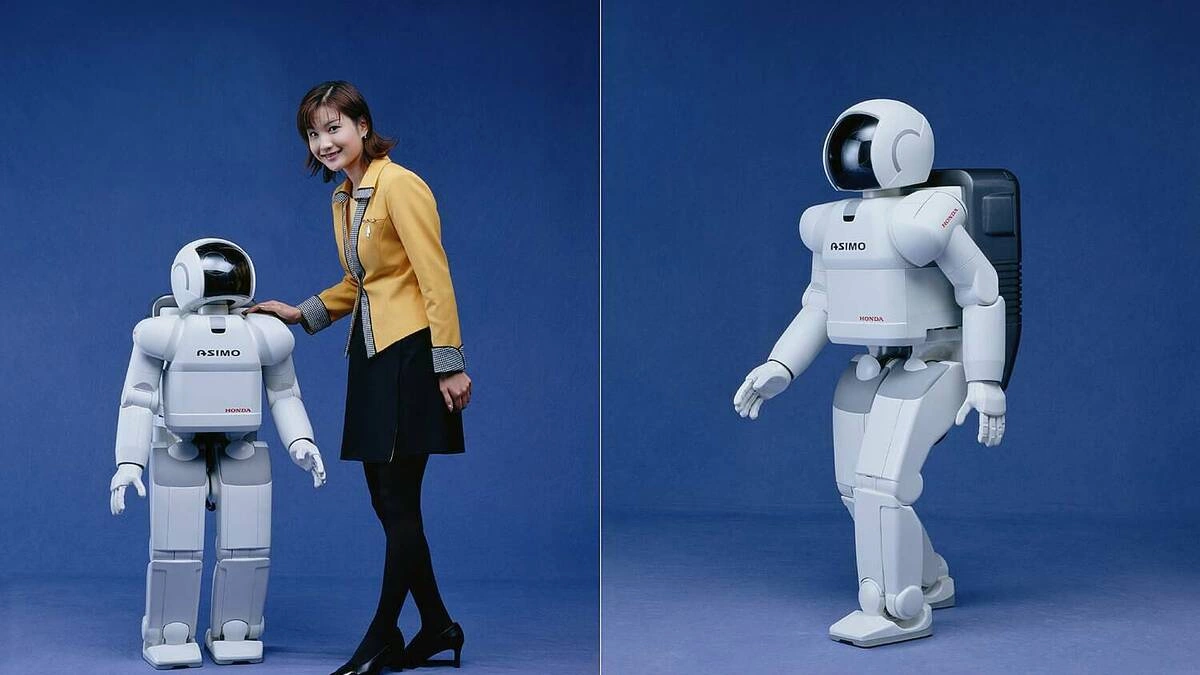
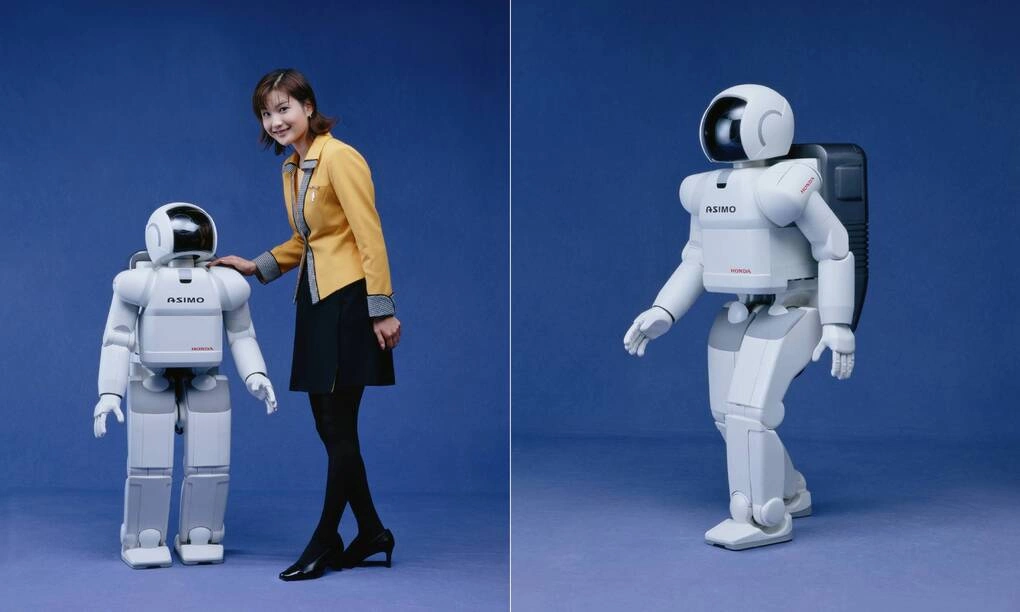
In the same decade, giant auto manufacturer Honda began a humanoid robot research program. In 2000, Asimo appeared, quickly attracted great interest and became the most famous humanoid robot in the world. This two-legged machine that looks like an astronaut even played soccer with former US president Barack Obama during his visit to Tokyo in 2014. However, Honda stopped developing Asimo in 2018 after not being able to make a profit from the project.
Pepper, SoftBank Group's wheeled humanoid robot launched in 2014, represents Japan's early faith in emotionally interactive robots. But by 2021, Pepper production was stopped due to weak market demand.
IEEE Spectrum said that Japan has created breakthrough versions with amazing capabilities, but could not be commercialized or widely applied in practice. As a result, they were mostly expensive technological showcases that were eventually almost shelved.
Japan's humanoid robot capabilities were partly built on an industrial automation foundation, but this foundation is in decline. According to robotics expert Ani Kelkar from consulting firm McKinsey & Company, Japan ranked first in the world in manufacturing robot density (number of multi-purpose industrial robots per 10,000 employees) from at least 1994 to 2009, but by 2024 only ranked 5th. In the same year, Korea ranked first with a robot density of 1,220, far ahead of Japan with 446.
According to the International Federation of Robotics (IFR), over the years, China has maintained its position as the world's largest industrial robot market. As of mid-April, the country had 964 companies related to humanoid robots. The number of patent applications in this area reached 1,174 last year, up 89.7% from the previous year and reaching a five-year high. Meanwhile, according to China's Ministry of Industry and Information Technology, the country will have more than 140 manufacturers and more than 330 models of humanoid robots by 2025.
IFR estimates that China has the largest number of industrial robots in operation in the world, reaching about 2 million, 4.5 times more than Japan. According to AP, the country of billions of people also leads in mass production capacity, hardware supply and humanoid robot training data collection.
According to investment bank Barclays (UK), Chinese humanoid robots will account for 85% of the world market share by 2025. Meanwhile, research company Omdia (UK) said that the world shipped 13,000 humanoid robots last year, with the two leading robot companies, Agibot and Unitree, shipping more than 5,000 robots each. American competitors like Figure AI and Tesla produce a few hundred robots or less.
This year, Chinese humanoid robots attracted attention when performing martial arts during the Lunar New Year, breaking the human record when running a half marathon (21 km), and winning the RoboCup 2026 international robot soccer tournament. They also appear commonly in real life, from serving families to working at factories. Xinhua said the humanoid robot last month began operating at the Jianggao logistics area of the Guangzhou postal center, taking on a variety of tasks such as sorting with the ability to handle up to 1,200 parcels per hour. Meanwhile, GigaAI company plans to deploy 100 humanoid robots to households in Wuhan in the fall for free maid testing.
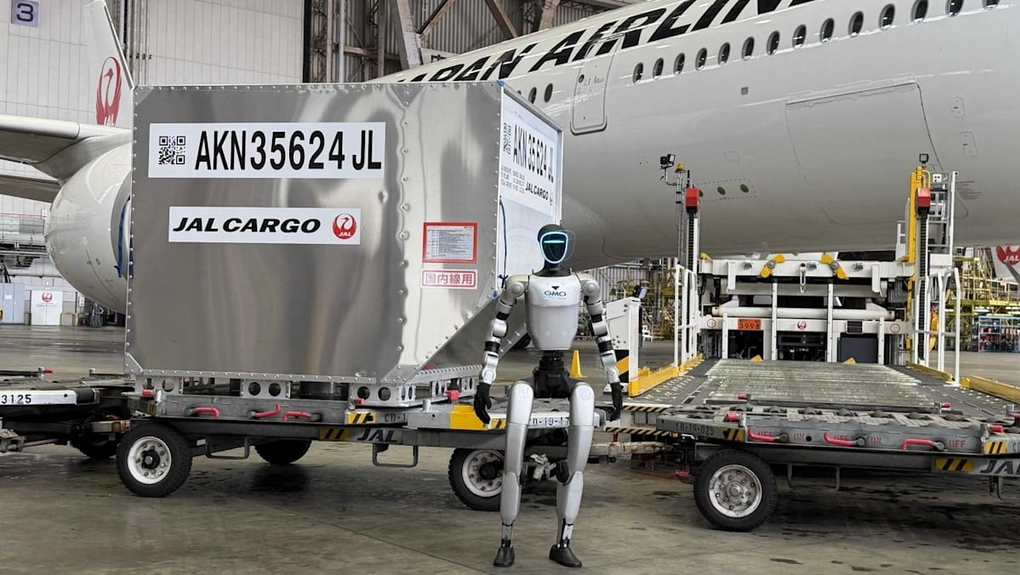
Even in Japan, Japan Airlines (JAL) also deployed humanoid robots to test in early May as a long-term solution to the labor shortage. This fleet of robots, manufactured by Unitree company, helps transport passengers' luggage and goods at Haneda airport, which serves more than 60 million passengers each year.
Besides China, a number of machines from other countries have also impressed in the past few months. Between the two halves of the Brazil - Norway round of 1/8 World Cup 2026, the Atlas robot from Boston Dynamics company, currently owned by Hyundai Motor (Korea), performed a goal celebration in the style of some famous players and then handed the match ball to the referee. According to research published in Nature magazine earlier this month, humanoid robot Surgie (USA), when controlled remotely, successfully performed two surgeries on large non-primate mammals.
According to Shuichi Nagao, Chief Technology Officer of the Omakase Robotics division of Zeals - a Japanese humanoid robot developer, the product is difficult to sell in this country due to safety issues and many other regulations. Meanwhile, in China, the government is promoting the development of humanoid robots even though it got involved several decades later. Many people involved in building this field are very young, in their 20s and 30s, with unique and different thinking. "Large companies in Japan are still finding application scenarios for humanoid robots, and China has mass produced them and reduced costs," Nagao said.
Takaaki Shigemitsu, President of Techshare, said some of Japan's prominent humanoid robot projects have ended, making the country generally less excited than the US and China. "Humanoid robots in Japan were dancing 35 years ago, but they did not contribute to industrial tasks but only served entertainment. Public interest then also disappeared."
But according to SCMP, the key difference in the current wave of humanoid robots is the AI "brain". Unlike the older generation, which acted according to pre-programmed instructions, today's humanoid robots are expected to self-learn and develop more general abilities.
Meanwhile, Japan's university system has long focused on engineering departments serving production, leading to a relative shortage of AI talent. Companies remain competitive in traditional robotics, but it also makes strategic shifts more difficult.
Expert Kelkar said that Japan has lost its leading position partly due to the rise of China, which is becoming a manufacturing power, even in areas where the country of the rising sun once achieved high export turnover.
"The recovery hasn't happened yet because Japan missed the period when AI for robotics was booming, and now they have to race to catch up," he said.