OpenAI releases first hardware
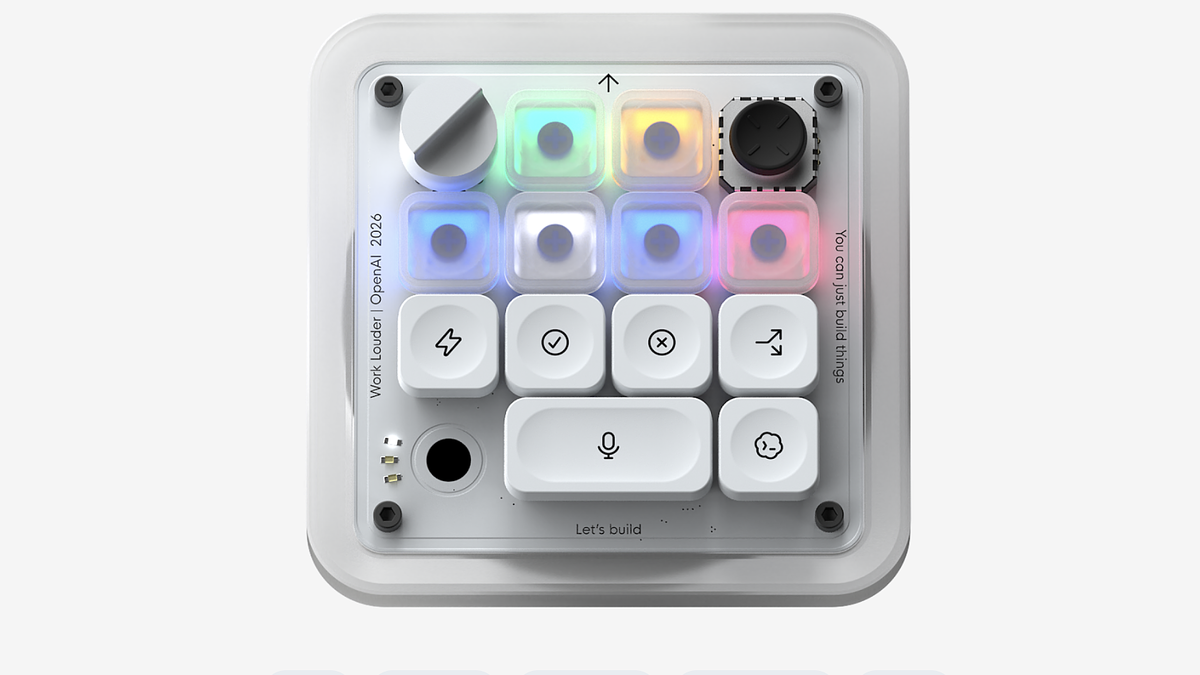
Introduced on July 15, Codex Micro, a collaboration product with specialized keyboard design unit Work Louder, is billed as a "novel way" to help ChatGPT users manage the Codex AI programming agent.
Specifically, Codex Micro is equipped with 13 "agent keys" called Agent Keys instead of a keyboard with a complete layout, essentially an extension of the existing keyboard. The command keys are called Command Keys, macros can be customized into shortcuts that work in the Codex, and a joystick can be used to launch common workflows.
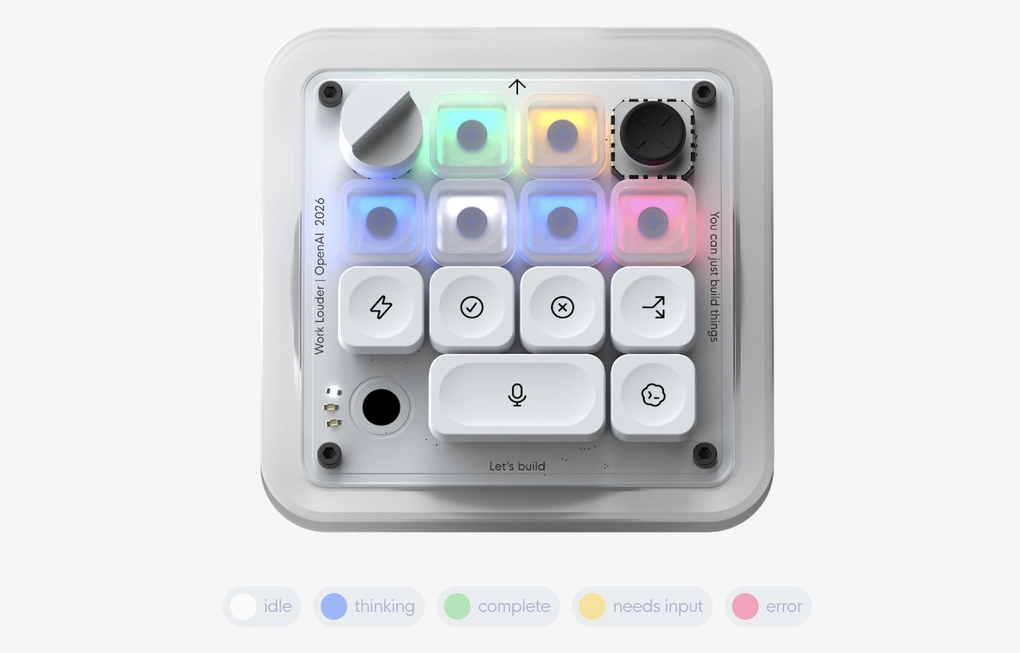
The special point on the key is the knob that adjusts the level of "inference". Essentially, the knob helps the user increase or decrease the amount of time and computing power the agent uses for a given task.
"Instead of managing agents via smartphones or computer applications, users can now use Codex Micro as a control center for the agent's work," said an OpenAI representative.
The company said Codex Micro only produces limited products instead of mass selling. Technology site TechCrunch commented that this is a "flashy jewelry" to mark the entry of the company behind ChatGPT into the hardware market rather than a product that attracts the masses.
The key supports RGB LED backlighting to display statuses by color, for example "thinking" is blue, or error is pink red. The product is sold for 230 USD, orders are currently allowed and expected delivery time is from July 24.
According to some previous rumors, OpenAI plans to launch a number of artificial intelligence-enabled devices. One of them has a design similar to AI Pin, but is compact and sophisticated like the iPod Shuffle music player. The company is also said to cooperate with Qualcomm and MediaTek to develop smartphones that operate via AI agents instead of traditional applications.
Meanwhile, citing supply chain sources, Bloomberg said on July 14 that OpenAI will also develop a screenless smart speaker, designed to become a new type of home computer for the artificial intelligence era, including the ability to control home devices, play multimedia, reply to messages and answer questions using OpenAI's ChatGPT.
OpenAI has not yet commented.
OpenAI announced its first hardware while the company was being sued by Apple, accusing it of carrying out a campaign of stealing secrets to develop devices that compete with the company.
According to experts, Apple is taking the lawsuit very seriously by hiring Weil, Gotshal & Manges, LLP - America's leading law firm, which has participated in many complex and serious economic crime cases in history. Some analysts speculate that the lawsuit could shape the future of both OpenAI, Apple and much of the technology industry, according to Fortune. In the immediate future, many AI experiences on a series of products such as iPhone and iPad will change because they are using the GPT model.