Developing a reactor to exploit minerals from seawater
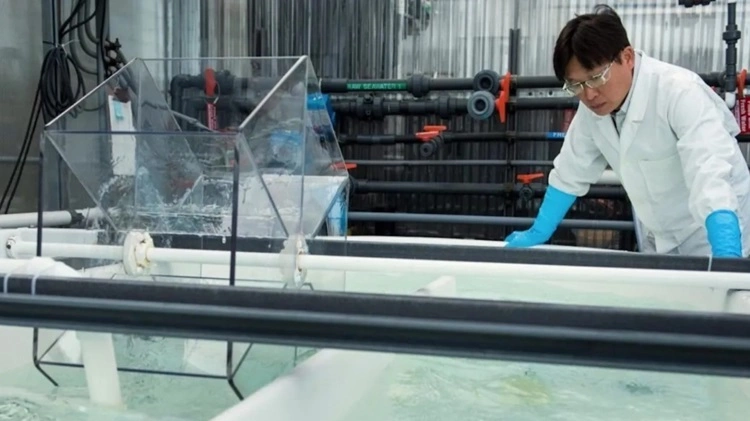
According to Interesting Engineering, a research team at the Pacific Northwest National Laboratory (PNNL) found that the world's oceans contain one of the largest untapped reserves of essential minerals, including magnesium, lithium, manganese, cobalt and many rare earth elements needed for electronics and clean energy production. Jessica Cross, a chemical oceanographer at PNNL, said just 0.1% of ocean water already contains enough important minerals to meet humanity's needs for the next 50,000 years or more.
With support from the U.S. Department of Energy's Office of Hydropower and Hydrodynamics, researchers are finding ways to extract minerals from seawater, overcoming the biggest obstacle of extremely low concentrations that force engineers to process huge volumes of water to collect the resource. For example, an Olympic-sized swimming pool with about 2.3 million liters of seawater contains about 2,980 kg of magnesium but only 0.42 kg of lithium and 0.00095 kg of nickel.
With support from the U.S. Department of Energy's Office of Hydropower and Hydrodynamics, researchers are finding ways to extract minerals from seawater, overcoming the biggest obstacle of extremely low concentrations that force engineers to process huge volumes of water to collect the resource. For example, an Olympic-sized swimming pool with about 2.3 million liters of seawater contains about 2,980 kg of magnesium but only 0.42 kg of lithium and 0.00095 kg of nickel.
According to chemist Chinmayee Subban, the leader of the research team, the biggest advantage of seawater is that its chemical composition is quite consistent around the world, allowing researchers to develop extraction technology for one location and scale it up for deployment in many other places.
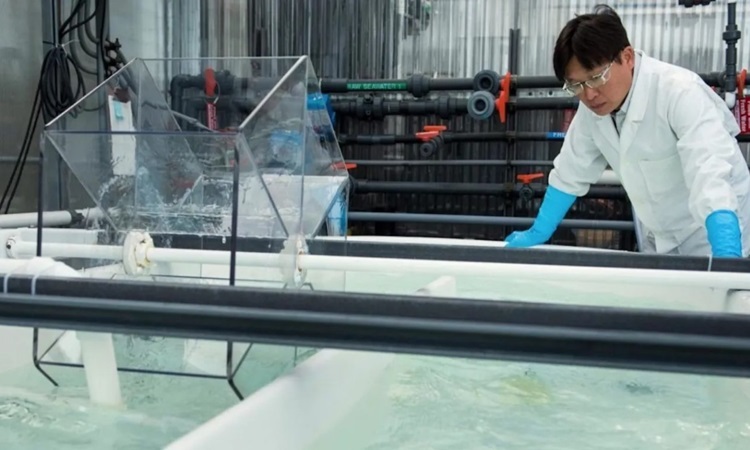
The team at PNNL developed a copper-flow reactor that guides seawater into contact with sodium hydroxide. High purity magnesium hydroxide forms where the two liquids meet and can collect. This is a popular material in American industries and is being imported in large quantities.
This modular system can be installed with existing desalination plants. Infrastructure analysis results show that when combined with the Carlsbad desalination facility in California, the technology could produce 524,000 kg of magnesium hydroxide per day, more than three times the amount used today in the US.
After magnesium extraction, the concentrated brine can undergo bipolar membrane electrolysis (BPMED), which produces the acidic and basic compounds required for all mining processes. According to EIN Presswire, in mining operations, essential elements such as copper, zinc or nickel are often located deep inside the rock. The mining process uses sulfuric acid or hydrochloric acid to dissolve metals, making extraction easier. For example, nickel can be extracted from olivine using acids released by electrolysis of seawater. The team found that the acid produced from BPMED performed better than commercially available hydrochloric acid in dissolving nickel from olivine rock.
Although the new technology still faces technical and cost challenges, the researchers hope their method can create a more sustainable domestic mineral supply in the future.