Proposal to abolish 18 intellectual property procedures
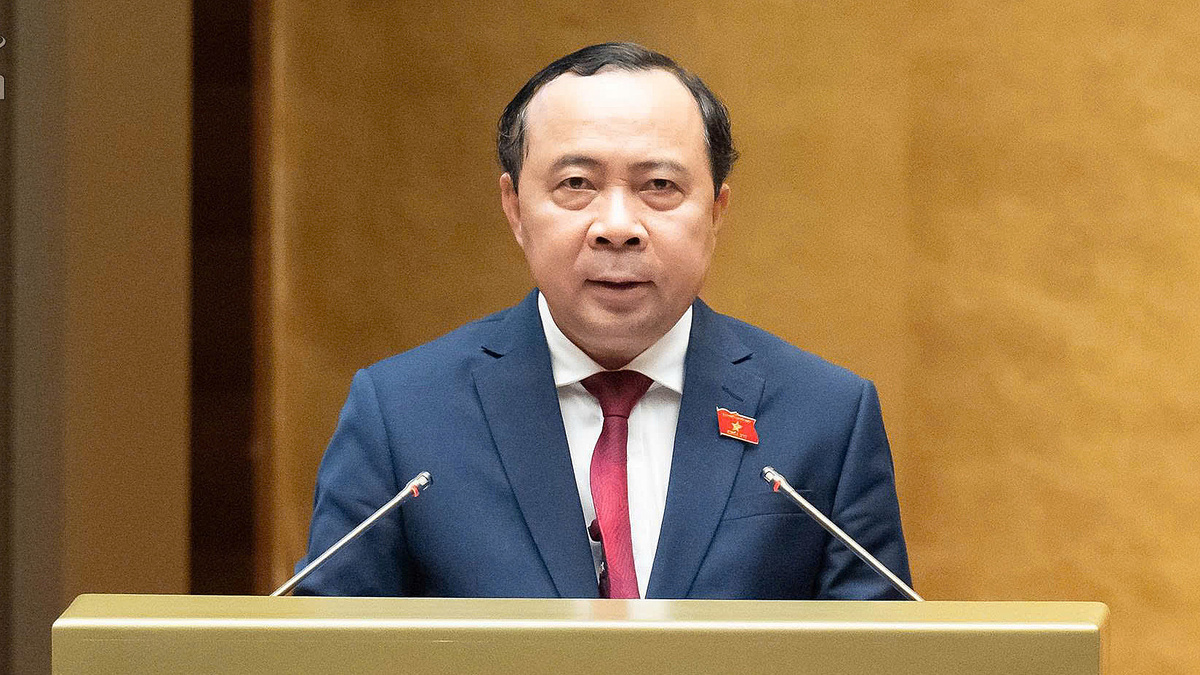
On the morning of October 24, Minister of Science and Technology Vu Hai Quan, authorized by the Prime Minister, presented to the National Assembly a draft Law amending and supplementing a number of articles of the Intellectual Property Law, including cutting administrative procedures, business conditions and unifying the focal point for managing rights to plant varieties.
According to the report, regulations on reducing procedures have been implemented by the Government through resolutions issued in 2026. This bill aims to legislate changes, ensuring a unified legal system when temporary implementation mechanisms expire.
One of the major changes in the bill is to abolish the procedure for registering industrial property transfer contracts, including rights to trademarks, inventions and industrial designs. Instead of having to register a transfer contract, the parties carry out procedures to modify owner information on the protection certificate for the rights established through registration.
The industrial property rights transfer contract is effective between the parties according to the agreement and provisions of civil law. However, for rights established on the basis of registration, the transfer is only effective when the management agency records changes in information on the protection certificate.
With plant varieties, the draft also eliminates the procedure for registering rights transfer contracts, replacing it with amendments to the information on the protection certificate. The transferee becomes the owner of the protection title from the time the management agency records the change.
Plant variety registration registration procedures are also proposed to be simplified. Detailed regulations on dossiers, procedures for appraisal, testing and application processing have been transferred to guidance documents, instead of being directly stipulated in the law. The time limit for announcing valid plant variety protection registration applications is expected to be reduced from 90 to 30 days; The time limit for announcing decisions related to protection certificates is reduced from 60 to 30 days.

The draft also amends regulations on intellectual property appraisal in the direction of removing business conditions for organizations and individuals operating in this field. Organizations and individuals providing services must notify operational information to management agencies, instead of carrying out procedures for issuing certificates and inspector cards as before.
However, the National Assembly's Law and Justice Committee believes that intellectual property appraisal is an activity that requires high expertise, concluding that appraisal plays an important role in establishing, implementing and protecting intellectual property rights. Removing conditions for assessment organizations and individuals without a specific post-inspection mechanism can affect the quality and reliability of conclusions, causing difficulties for authorities if many different conclusions appear about the same case. The inspection agency recommends continuing to evaluate practice, have solutions to control and improve the quality of inspection activities.
Another change is to expand the scope of rights of plant variety protection holders to include varieties that are primarily derived from protected varieties, varieties that are not clearly different from protected varieties, and varieties whose production requires repeated use of the protected variety.
The Law and Justice Committee recommends carefully evaluating the impact of applying new regulations to protection certificates granted before the law takes effect, in order to ensure the rights of organizations and individuals that have invested, exploited or are preparing to exploit plant varieties.
The draft also proposes transferring responsibility for state management of plant variety rights from the Ministry of Agriculture and Environment to the Ministry of Science and Technology. The unification of focal points aims to limit overlap in management, make full use of resources, digital infrastructure and intellectual property databases, and create convenience for people and businesses when carrying out procedures.
The inspection agency approved this plan and proposed to clearly stipulate that the Ministry of Science and Technology is the focal agency to help the Government unify state management of intellectual property.
The draft law is expected to take effect from March 1, 2027.
Son Ha