Sam Altman: The mathematicians turned from despair to acceptance of AI
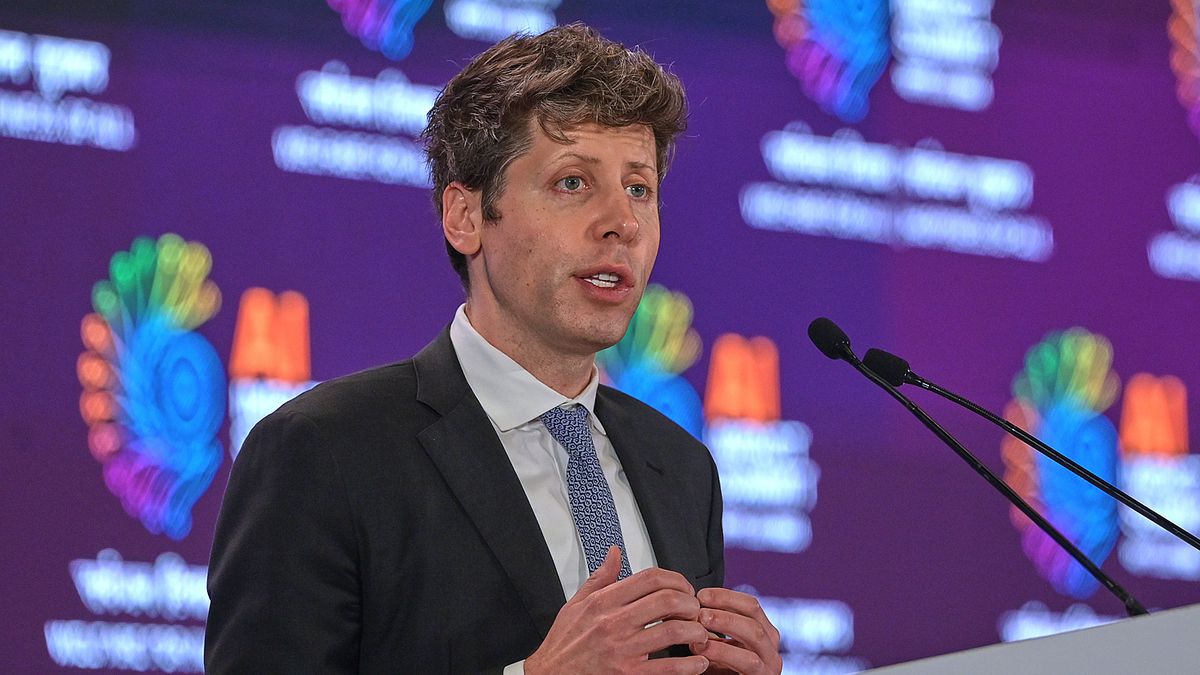
According to Altman, the mathematicians went through many emotional stages after OpenAI "stormed" the field. Initially there was disbelief and pain, followed by anger, then acceptance and adaptation.
"The first reaction will be like 'This is fake'. The next day it will change to 'We are doomed, our field is outdated, we should advise graduate students to change fields'. By the third day, maybe they will see how terrible what OpenAI is doing," Altman said in a presentation at Stanford University this week.
However, according to him, on the fifth day, things began to change. Mathematicians admit to doing some outdated work, but most of the time, they also don't solve millennium problems. Instead, they seek to understand knowledge, communicate it, and present it in a way that humans can understand.
"Many people say that as mathematicians, they will have a different and hopefully better type of career," said the OpenAI CEO.

According to Business Insider, Altman's optimistic assessment contrasts with the comments of many mathematicians about AI in the past few weeks. The wave of debate about AI applications in mathematics exploded on September 8, when OpenAI announced that its agents had found a solution to the Navier-Stokes equation. This is one of 7 Millennium Prize Problems proposed by the Clay Mathematics Institute in 2000, with a reward of one million USD each.
However, two scholars from New York University and the company Anthropic accused OpenAI of using data from their chat logs to solve math problems. Mathematicians also complain that while the AI model can solve the problem, it doesn't demonstrate how to do it, leaving them with the less interesting task of verifying the results.
In early October, OpenAI continued to publish 722 manuscripts containing 372 mathematical results, claiming to have made progress on hundreds of open problems. One day later, the company had to withdraw three drafts due to errors discovered, and at the same time edit 14 other drafts.
Professor Terence Tao, a famous mathematician at the University of California, Los Angeles (UCLA), believes that the "romantic era" of mathematics is ending when AI can solve difficult problems with just a few suggestions. "We are entering an industrial age, where mathematics becomes popular. New and exciting things may appear, but some romance is lost," he shared on the Numberphile podcast in mid-October.
Meanwhile, Professor Sun Zhiwei in China commented on SCMP: "AI cannot solve all problems and mathematicians do not need to panic. Instead, they will have more time to focus on things AI does not do well, such as researching new methods or building new theories."
After mathematics, AI can conquer new heights