Why are portable air conditioners popular in Europe?
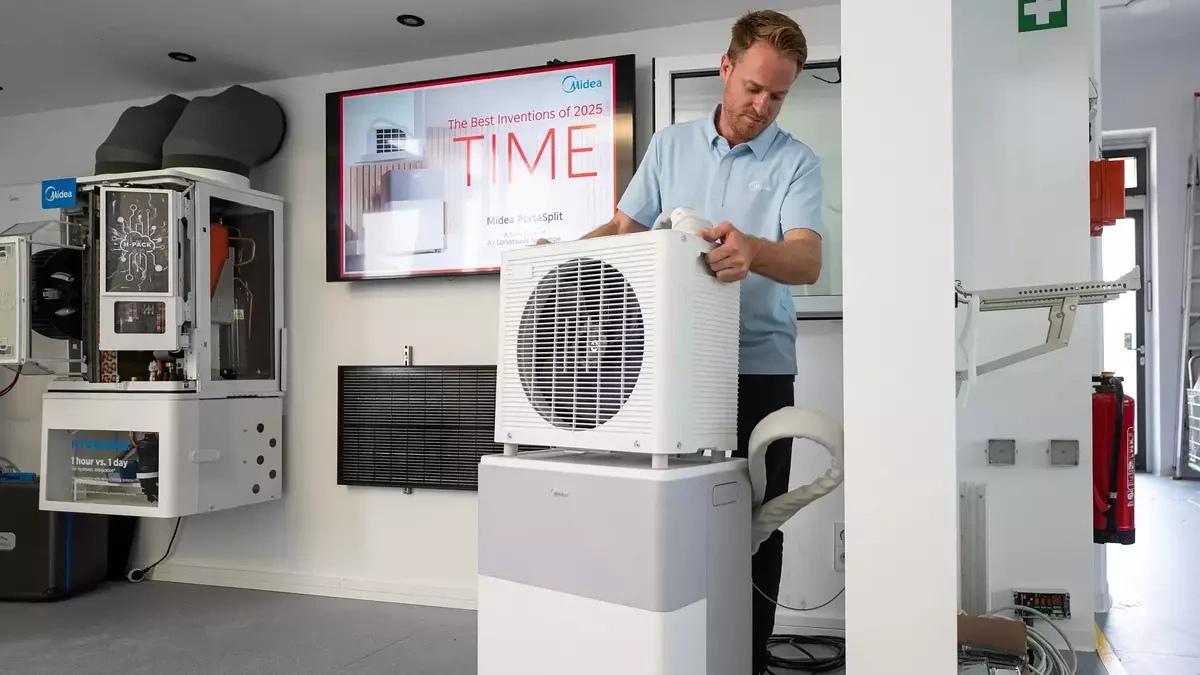
Europe is still experiencing prolonged heat waves, making cooling devices here a popular item. But unlike other countries that prioritize the use of fixed air conditioners, people in this region are aiming for mobile models.
Series of causes
Many Europeans reject air conditioning due to cultural differences, urban aesthetics and frugal lifestyles. According to Brian Motherway, Head of Energy Efficiency and Inclusive Transition at the International Energy Agency (IEA), a big reason is that in the past, many European countries, especially in the North, had virtually no cooling need. Hot weather still occurs in the past but rarely lasts long with continuously high temperatures like today.
"In Europe, we simply don't have a tradition of using air conditioning, because until recently, it was never an urgent need," Motherway told CNN.
According to the Telegraph, in many European countries, especially Germany, the proportion of renters is significantly higher than in the US. Tenants often do not want to invest thousands of euros in a fixed air conditioning system in their residence that can be changed after a few years.
However, architectural factors are considered the main cause. Many cities in England, Germany, France... currently have a large number of historical buildings. Drilling walls, installing heaters or changing building facades are often restricted by conservation regulations. Figures from the European Commission released earlier this year show that about 85% of buildings in the EU were built before 2000, most of them designed for climates that require more heating than cooling in the summer, with thick walls and closed structures.
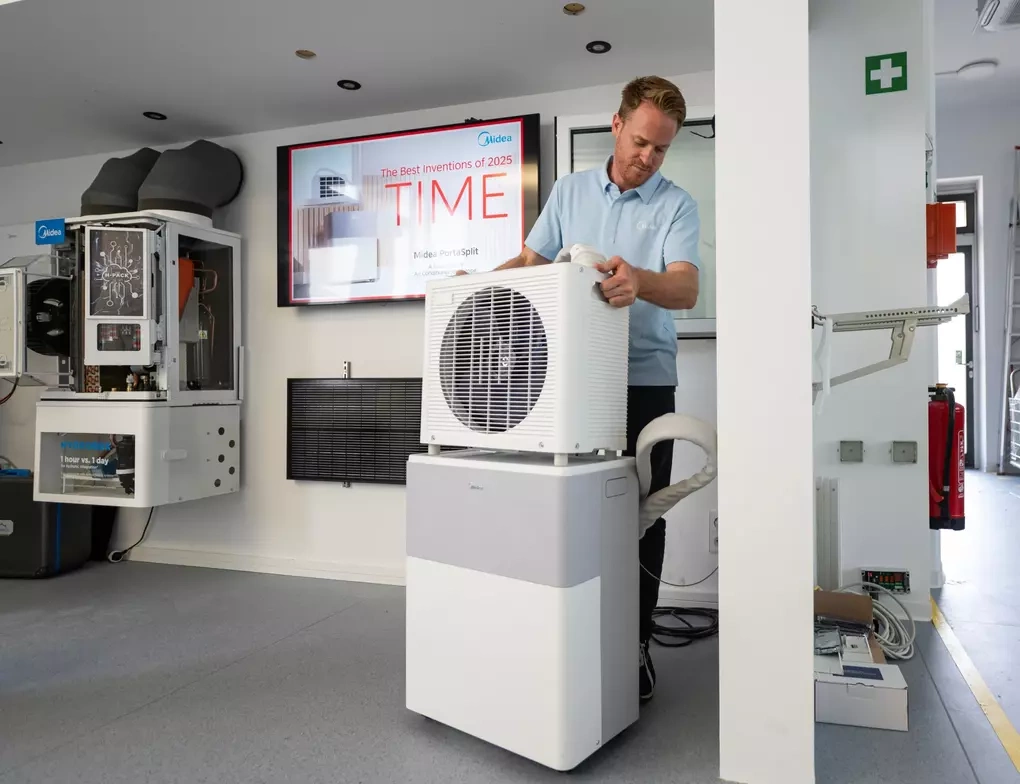
In this context, mobile air conditioners are considered a more optimal solution than fixed air conditioners. Unlike conventional split air conditioning systems, this model uses a window frame to hang the condenser outside, with the cooler inside. Users can remove and store it in storage after a period of use.
SCMP assessed that portable air conditioner models have received great attention from European users, partly because they seem to avoid regulatory and structural restrictions, including strict historical preservation rules in many cities that limit repairing walls and drilling holes for installation. Portable air conditioners can be taken with you when moving house and do not require intervention in the apartment structure.
Lower investment costs are also factors users consider, according to Reuters. A portable air conditioner in the UK costs around £250-700, significantly less than installing a wall-mounted air conditioner, which can exceed €1,000 when construction and licensing costs are included.
Chinese portable air conditioner fever in Europe
On July 13, Midea said it had urgently shipped an order of 20,000 air conditioners to France. This is part of an order from a Chinese home appliance manufacturer to meet rising cooling demand due to heat across Europe.
The entire shipment arrived in France over the weekend. To speed up deliveries, the company, headquartered in Foshan, Guangdong, switched to trucking to the EU for the first time, cutting the time to 15 days compared to two months by sea.
Previously, on July 7, Midea opened a new line to double capacity to 6,000 units, thereby producing 20,000 portable air conditioners in just three and a half days. To source components, management has instructed the supply chain team to "spare no expense" to serve the factory, including transporting important components by air and high-speed rail.
In Europe, Midea's PortaSplit model is a hot item. Speaking to China Daily in early July, Midea said PortaSplit sales in Europe exceeded 200,000 units in the first half of this year, double the same period last year, and were "sold out" in Germany, France, the Netherlands and the UK.
This portable air conditioner model even increased in price on the secondary market. On social networks and many e-commerce platforms, their prices have increased 20-30% compared to listed. Some shared stories of having to go to multiple cities to make purchases, with comments like "this will be the best investment of your life", or "rarer than Pokemon cards".
Besides Midea, a number of other Chinese brands currently sell portable air conditioners or bladeless fans. According to Sina, sales of Gree, Hisense and TCL are currently increasing by 50-100% over the same period, the installation schedule is tight until the end of August and the production cycle must be shortened to keep up with orders to Europe. This is considered a big victory for Chinese air conditioner companies in changing the consumer perspective of Europeans, with sales slightly higher than brands from Korea and Japan.
Comfee's PAC Series line with a capacity of 7,000-12,000 BTU is popular in Germany, Italy, Spain, or the Wave Serie line of EcoFlow (an American company with a research and production center in China) is present in many EU markets. Some fan models are also popular, such as Dreame's MF10 bladeless circulation fan, which sold out all 1,500 units within just two weeks of appearing on Amazon in Europe. Hisense, Gree or TCL also have some models sold in this market.
Express shipping units were also born to meet the requirements of European customers buying directly in China. A Shenzhen-based transportation company said that after launching a "high-speed lane" service specializing in transporting air conditioners to the EU via air two weeks ago, orders from France, Belgium and the UK have skyrocketed, although it did not mention specific numbers.
However, equipping air conditioners, including portable models, is not easy in Europe. Christopher De Bruyn, a person currently living in Ceret (southern France), said he installed three machines in his home in 2024 "at twice the price" compared to Spain, where he previously lived. The stages are described as "difficult", with workers often refusing to install equipment purchased from abroad.
Also according to De Bruyn, the process is also delayed because the machine needs a mandatory technical check before being installed in the house and has to wait (apartments are approved more slowly than private houses). Finally, the air conditioner was purchased in May 2024 but could not be used until September of that year. "So I missed the whole summer," De Bruyn told SCMP.
A study about Germany published on arXiv last year showed that the trend of buying portable air conditioners is creating a significant impact on the country's power grid. If air conditioning ownership increases from 19% to 35% during heat waves, peak electricity load could increase by 12.9 gigawatts (GW), largely from new portable air conditioning units.
Citing statistics, Wired said that about 20% of houses in Europe are equipped with air conditioning, much lower than 90% in the US. However, this number is starting to increase after heat waves. Data from Chinese customs published in May showed that exports to France reached 3.33 million USD, to Germany reached 2.82 million USD and to the Netherlands reached 7.69 million USD, up more than 186%, 69% and 139% respectively over the same period last year.