The world's most powerful rocket Starship V3 delayed launch at the last minute
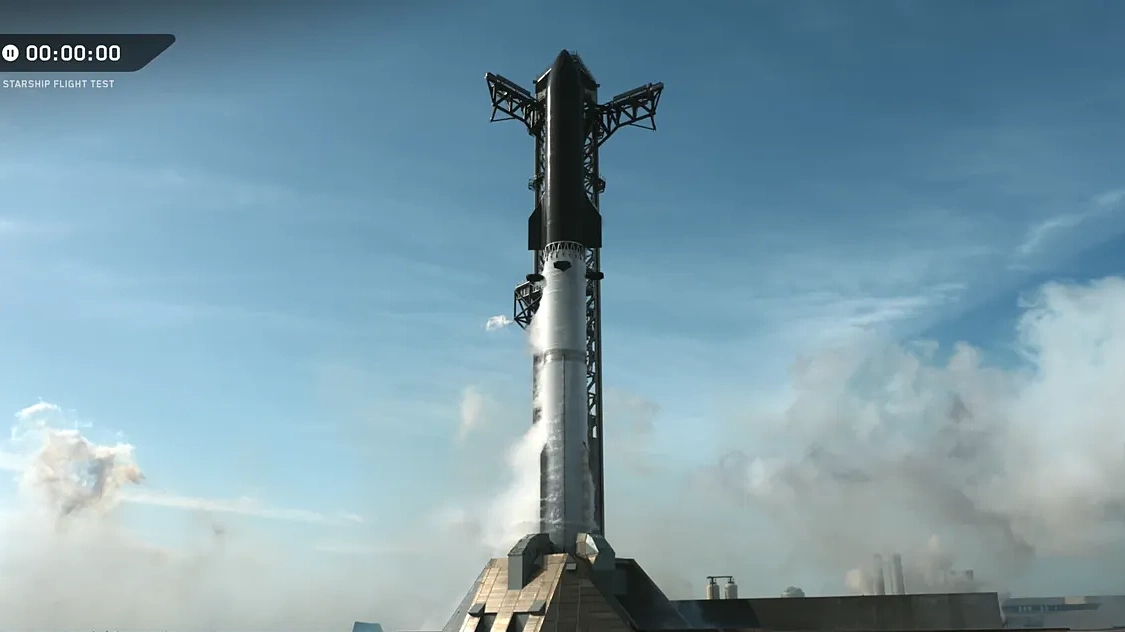
According to Space, the mission, named Flight 13, is the 13th test flight with Starship since 2023 but is only the second launch of V3 - the latest version of Starship to replace V2, which successfully performed its last test flight in mid-October last year.
Initially, Starship V3 was scheduled to launch at 6:45 p.m. on July 16 (5:45 a.m. on July 17, Hanoi time), carrying 20 new generation Starlink V3 satellites. The rocket prototype has completed the fueling process and the weather is considered not to be an obstacle.
However, when the countdown timer reached zero, the missile's computer system activated a stop and abort command. This order was issued at the last minute, making it impossible for SpaceX to conduct another test launch today. The company has also not announced a new launch schedule.
According to SpaceX livestream host Dan Huot, the abort command was triggered, leading to a launch abort, just as firing of the rocket's Raptor engines began. The team in charge then began to discharge all fuel, including methane and oxygen, to bring the rocket back to a safe state.
"Some engines did not start, leading to automatic launch abort. The rocket is dumping fuel. Hopefully the next launch will take place in the next few days," Elon Musk, CEO of SpaceX, wrote on Twitter.
With Flight 13, Starship V3 had the goal of launching into space and conducting a two-stage separation. The Super Heavy lower stage will ignite its engines for a soft landing in the Gulf of Mexico. Meanwhile, the Ship's upper stage will deploy 20 Starlink V3 satellites, test restarting one of the Raptor engines in space, then land gently in the Indian Ocean.
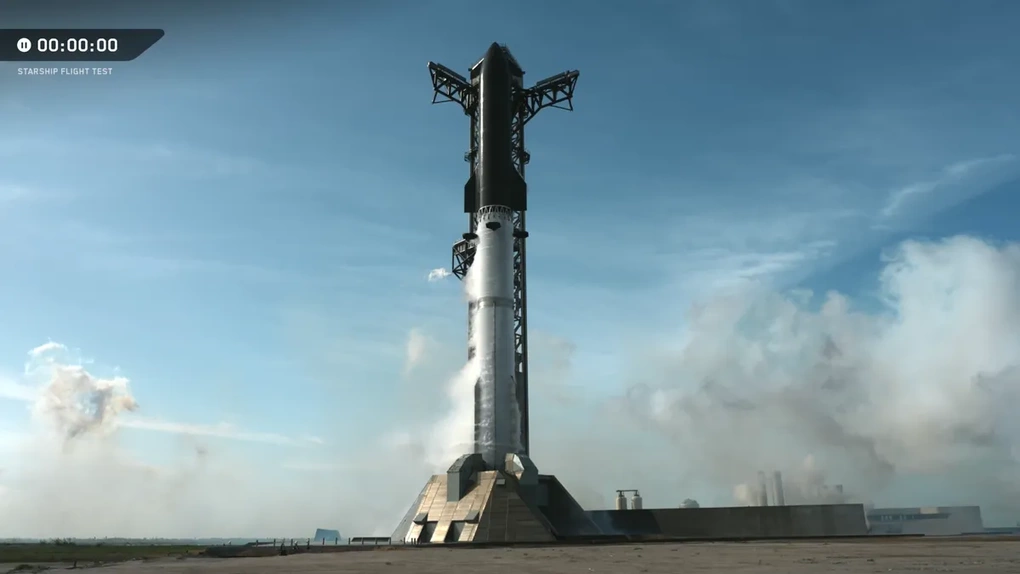
Flight 13 was the first flight in which the V3 carried a working Starlink satellite. The batch of satellites in the previous Flight 12 mission was for demonstration purposes only.
Starlink V3 will be released into space for functional testing, 6 of which are equipped with cameras to check the rocket's heat shield. Finally, because the rocket only flies suborbitally during this launch, the entire batch of satellites will burn up in Earth's atmosphere about 20 minutes after deployment.
In May, SpaceX first test-launched V3 on the Flight 12 mission. Most of the flight went well, except for some problems. One of the three vacuum-optimized Raptor engines failed 40 seconds after separation, but the rocket's upper stage still reached suborbital position as planned, demonstrating its ability to operate even with engine failure.
However, this loss prevented the upper stage from re-firing the space engine. According to SpaceX, the problem occurred due to "multiple interconnected causes" and has implemented several corrective measures for Flight 13, while "continuing to improve reliability in upcoming versions of the Raptor engine."
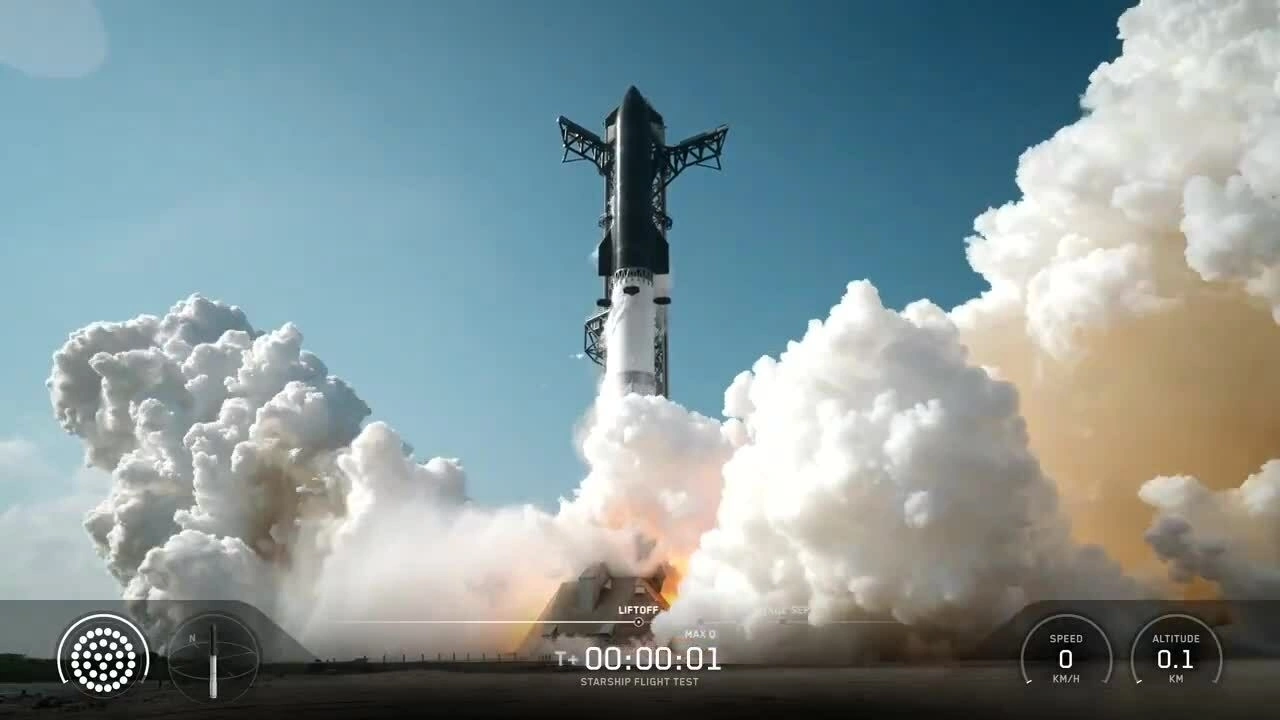
SpaceX designed Starship to be completely reusable and has successfully recovered Super Heavy boosters using the launch tower's "chopstick" arm, catching the booster in mid-air. However, the company has not yet tried to catch the layer above Ship.
V3 is the largest and most powerful rocket ever built with a height of about 124 m, consisting of two stages. The V3's Super Heavy lower stage is equipped with 33 Raptor 3 engines, estimated to provide about 8.2 million kg of thrust when taking off, nearly 10% more powerful than previous generations of Super Heavy. The Ship, the upper stage of V3, uses 6 Raptor 3 engines, generating more than 1.5 million kg of thrust.
V3 is a major upgrade over the previous V2 and V1, and integrates key components that help improve the vehicle's performance, including a docking port for refueling in space. This ability will be necessary for future missions, when Starship needs to fly beyond low Earth orbit like in NASA's Artemis program.
According to Gizmodo, the payload of Starship V3 is much larger, able to carry 100 tons of cargo into low Earth orbit, far exceeding the 35 tons of V2. V3 is also about 1.5 m taller and equipped with a new two-level connecting belt. Additionally, the V3 has only three instead of four net fins for stability during descent, each about 50% larger than the V2's net fins.
NASA signs a contract with SpaceX to use Starship as one of the Artemis program's lunar landers. The deadline for completing the vehicle is approaching very quickly. The Artemis III mission is expected to take place at the end of 2027, bringing the Orion ship and its crew to low Earth orbit to meet and pair with Starship, thereby evaluating the orbital connectivity of the two vehicles. If successful, Starship will carry astronauts to the lunar surface in the Artemis IV mission, expected in 2028.