China steps up production of motherboards for AI
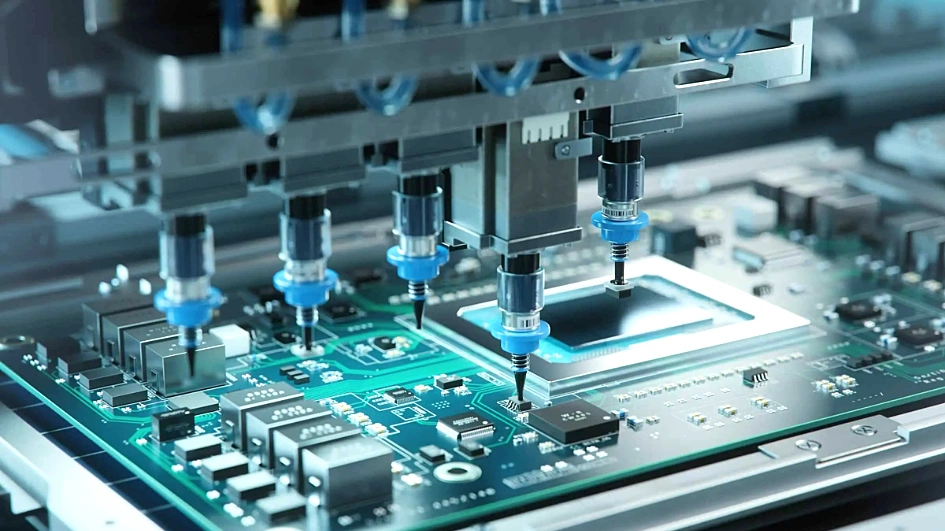
According to SCMP, in the first half of the year, more than 20 companies specializing in PCB such as Victory Giant Technology, WUS Printed Circuit, Shennan Circuits and Suzhou Dongshan Precision Manufacturing continuously announced plans to expand production capacity, expected to invest hundreds of millions of dollars, marking the strongest growth period in the industry in recent years. The reason for the shift is assessed to be the skyrocketing demand for motherboards for AI servers.
iFeng said that Victory Giant, a company in Huizhou, Guangdong province, raised its total capital expenditure in the first half of the year to 3.6 billion yuan (530 million USD), many times more than 730.1 million yuan (107.5 million USD) in the same period last year. mSAP production lines (Modified Semi Additive Process - specialized technology to create microscopic circuit lines and extremely narrow spacing for PCBs) have gone into stable production. The company is also promoting the commercialization of CoWoP products - advanced packaging technology that allows chip clusters to be mounted directly on the PCB, bypassing the traditional intermediate substrate layer.
WUS Printed Circuit in Kunshan, Jiangsu province is also pushing for expansion. According to Securities Times, the company is doubling its investment capital from 658.1 million yuan (97 million USD) to 1.5 billion yuan (221 million USD). In February, the company announced a 3.3 billion yuan ($486 million) project to meet medium and long-term demand for high-end PCB circuits.
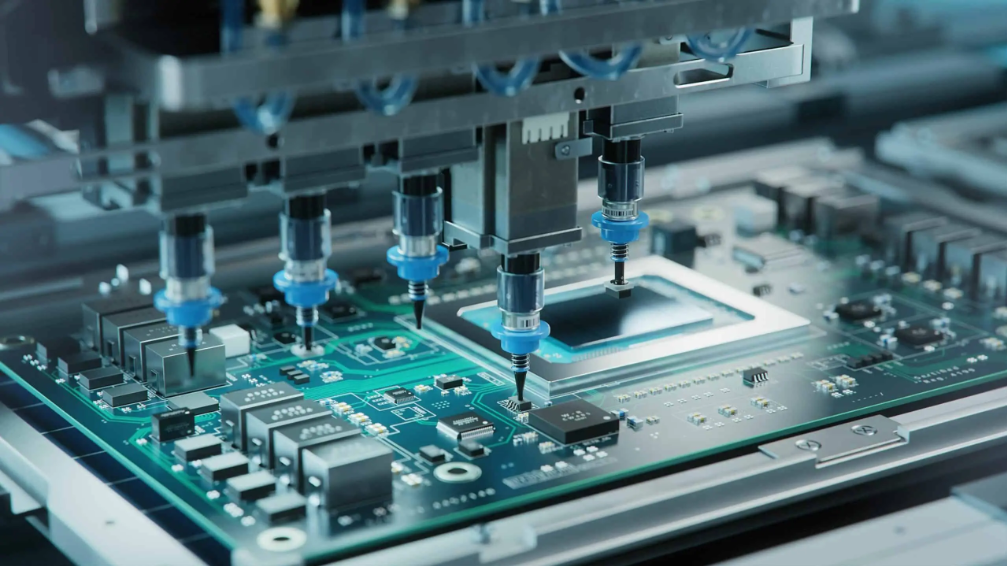
Last month, Shenzhen-based Shennan Circuits also announced that it was raising 4.88 billion yuan (718 million USD) through private placement of shares, of which the majority will be invested in a 4.54 billion yuan (668 million USD) artificial intelligence computing circuit project in Wuxi city.
"The need for AI server computing power is becoming an important growth driver for the PCB industry," a group of analysts from stock brokerage, asset management, and business consulting firm China Securities wrote on a blog on July 8. "Compared to before, high demand from AI drives new products with more improvements in material layers, density, speed and energy loss."
Also according to China Securities, the construction of AI infrastructure is driving "higher than ever" demand for computing boards, switching systems and liquid cooling. The trend leads to "an industry shift from quantity to quality".
Gao Chengfei, Director of consulting company Tiaoyuan in Guangzhou, estimates that the trend will continue in the second half of this year and may last until next year. "The current gap between domestic high-end PCB production capacity and demand is quite clear. The key point lies in product structure, not total output," he said on SCMP.
Chengfei assessed that Chinese PCB companies are simultaneously switching to producing boards for AI servers partly for profit, when a PCB for an artificial intelligence system can be 10 times larger than a traditional server and many times the size of a board for consumer electronic products. However, production capacity is currently limited by equipment precision and raw material shortages.
According to TTM Technologies, one of the largest PCB companies in the US, circuit boards for AI can be composed of 1-140 layers, with prices ranging from a few USD to more than 100,000 USD. "In the context of Moore's Law coming to an end, microprocessors cannot add more transistors, combining them together smoothly is essential. That's what we are doing," Edwin Roks, CEO of TTM Technologies, told CNBC.
Technology site 21Jingji (China) also has a similar opinion, stating that AI servers place significantly higher requirements on PCBs than traditional servers. Typical server PCBs have 14-24 layers, while AI server PCBs are much taller. High layer counts require complex connection structures, strict requirements for signal integrity as well as more stringent thermal management.
Earlier this week, research firm SemiAnalysis said Nvidia's Kyber NVL144 server rack could be delayed until 2028 due to manufacturing challenges, including PCBs. Nvidia later denied, but the report was considered to still "cast a shadow" on its partners in China such as Victory Giant and WUS Printed Circuit.
According to Chengfei, there are currently many challenges for Chinese PCB firms when expanding production capacity, including "major technical barriers that prolong the time to complete the profit curve, dependence on foreign suppliers for input materials and fierce geopolitical pressure".
Data from the American Circuit Board Association (PCBAA) released last month shows that about 30% of the world's PCB supply previously came from the US, but now only 4%. Speaking to CNBC, PCBAA Director David Schild said that currently up to 60% of PCBs are produced in China.
According to electronics research company Prismark Partners, the global PCB industry is expected to grow 12.5% this year, reaching nearly 96 billion USD. By the end of this decade, the number is expected to increase to 123 billion USD.
The AI boom recently is "draining" electronic products that already have a stable supply, according to TechCrunch. Not only does the price of GPUs and memory chips increase, the AI fever also creates a new "bottleneck" when capacitors, copper plates or glass fabrics become scarce, forcing the companies behind them to increase prices.