China cools down megacities without putting pressure on the power grid
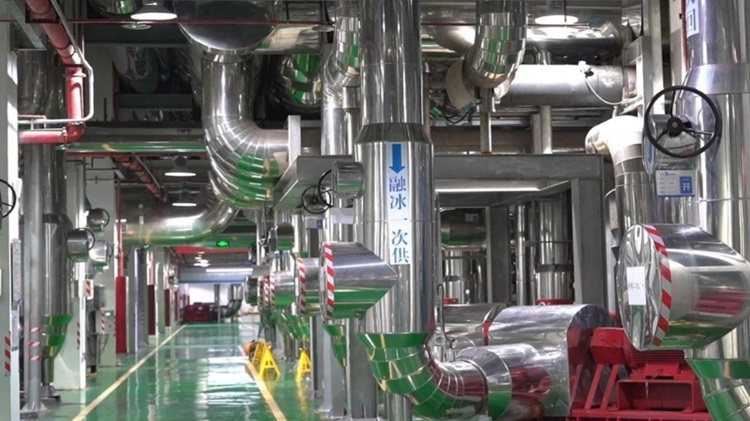
According to CGTN, Chinese cities are facing the challenge of cooling without putting more pressure on the power grid when demand for air conditioning increases in the summer. To limit the installation of additional air conditioners, many Chinese cities have begun to change the way they generate and distribute cold air. Through centralized networks, clean energy sources and smart management systems, the air conditioning system becomes a common urban infrastructure instead of each building installing and operating it itself. This is a transformational effort to build greener and more sustainable cities to adapt to China's increasingly hot summers, while promoting the goal of emitting less carbon.
One of the effective urban cooling solutions that China is applying is the district cooling system. A central power station produces cold water and distributes it through underground pipes to many buildings such as offices, supermarkets or apartments. After absorbing heat indoors, the water is returned to the factory to cool again, forming a closed continuous system. By sharing equipment across the region, the system reduces infrastructure duplication, improves energy efficiency and frees up building space.
Qianhai Economic Cooperation Area in Shenzhen is a representative project of district cooling system. According to Shenzhen Qianhai Energy Technology Development Company, their No. 5 cooling station is Asia's largest centralized station when in operation, able to meet the needs of about 2.75 million square meters of building area. According to SCMP, once completed, the company's 10 cooling stations are expected to be able to provide a total of 400,000 tons of cold air (RT), covering 19 million m2. Ton of refrigeration is a unit of measurement for the cooling capacity of air conditioning systems and electrical equipment. This central cooling network will save 130 million kilowatt-hours of electricity (equivalent to burning 16,000 tons of coal) and reduce carbon dioxide emissions by 130,000 tons per year.
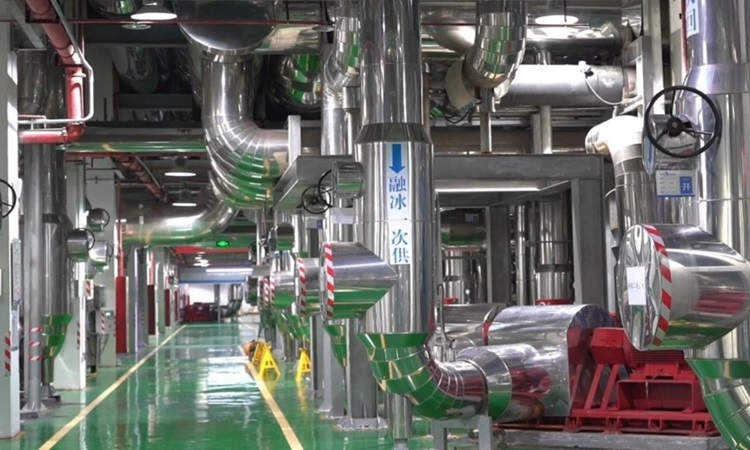
The above model is spreading to other cities. In Guangzhou, authorities are building an integrated energy project for the Financial City development area. According to the local government, the project will cover about 8 square kilometers, providing more than 200,000 tons of refrigeration through 8 centralized energy stations connected by a smart distribution network.
According to China Daily, Sanya, a resort city on China's Hainan Island, also replaced air conditioning with centralized cold water supply systems in some high-end hotels and duty-free shops. The district cooling system in Sanya channels 7-degree water through a system of pipes, reducing the burning of about 28,000 tons of standard coal and reducing carbon dioxide emissions by 76,000 tons per year when operating at full capacity. For hotels, using district cooling systems also helps reduce bacteria and noise pollution compared to traditional cooling methods.
However, building a city-scale cooling system requires authorities to produce cold air more efficiently and use energy when electricity demand is at its lowest. An increasingly popular solution is to store heat with ice. The power station will freeze water into ice at night, then use this ice to cool a building or industrial park during daytime peak hours, helping to reduce pressure on the power grid while improving energy efficiency.
Chinese cities are also taking advantage of local natural resources. In Beijing's administrative center, some public buildings use heat pumps, which exploit relatively stable underground temperatures for cooling in summer and heating in winter. Some other projects utilize recycled water or combine cooling, heating and power generation.
Smart energy management platforms increasingly use real-time data on weather, electricity demand and building capacity to coordinate the production, storage and distribution of cold air. By shifting energy-intensive activities to off-peak hours and balancing multiple cooling sources, they help cities maintain supplies during periods of extreme heat.
As heat waves become more frequent and intense, China is making cooling systems an essential part of urban infrastructure along with electricity, water and transportation, creating a new generation of cities that are cooler while using less electricity.