What is the “battery tank” effect and how does it affect battery life?
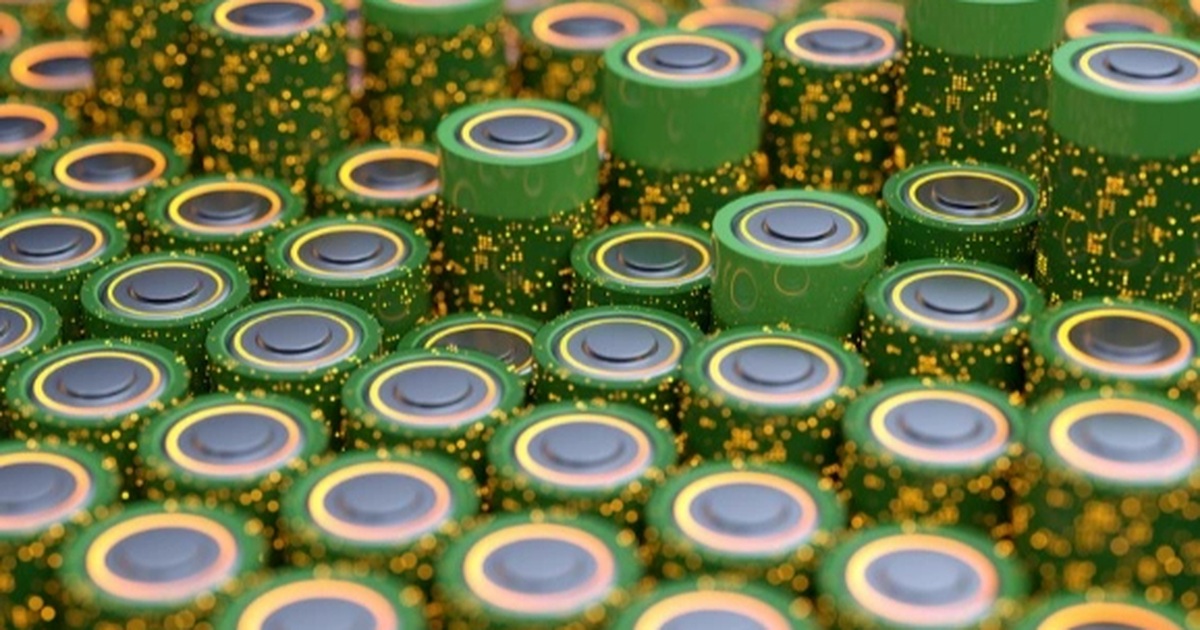
(Dan Tri) - The "wooden crate" effect describes a situation in which a weak battery cell can limit the performance of the entire battery pack.
Understanding this phenomenon helps explain the role of the battery management system in maintaining capacity and extending the life of rechargeable batteries.

The entire battery will immediately report being depleted and turn off power as soon as the weakest battery cell runs out of energy (photo: Vecticon/Getty Images).
Rechargeable batteries allow electronic devices and vehicles to operate without being constantly connected to a power source. However, the capacity and lifespan of a battery not only depends on each electrochemical cell but is also influenced by how the cells coordinate in a battery block.
The “barrel” effect, also known as the “water tank” effect, is a simile to explain this limitation. Imagine a barrel assembled from many wooden slats of different heights: the amount of water contained depends on the lowest wooden slat.
Similarly, in a battery pack consisting of many cells, cells with low efficiency or reaching their voltage limit prematurely can limit the ability of the entire system to use energy.
Why can a weak battery cell affect the entire battery?
Single-cell batteries have just one electrochemical cell, while multi-cell batteries consist of multiple cells connected together to meet voltage and capacity requirements. Each electrochemical cell has two electrodes, an anode and a cathode, separated by an electrolyte and other supporting components.

When some battery cells age or lose performance faster (barrel effect), they will reduce the life and capacity of the entire storage system (photo: Olemedia/Getty Images).
Over time, internal chemical reactions cause the battery to lose capacity. High temperatures, charging and discharging habits, as well as operating conditions can accelerate the aging process. In a multi-cell battery, the cells do not always degrade at the same rate.
The effect of a low battery cell depends on how the cells are connected. With cells connected in series, the current passing through each cell is the same. If one cell has a lower capacity or reaches its voltage limit before the rest, the availability of the entire string may be limited.
When charging, the system must also control the voltage of each cell to avoid one cell being overcharged, even if other cells have not reached their maximum charge.
With cells in parallel, the current distribution characteristics and the effects of a depleted cell may be different. Therefore, not every battery block operates completely according to the principle of "the weakest cell decides all". The level of impact also depends on the design, connection configuration and control system.
How does a battery management system help prevent this?
The battery management system (BMS) monitors parameters such as voltage, current and temperature to protect the battery, evaluate its operating status and limit adverse situations such as overcharging, overdischarging or overheating.
For multi-cell batteries, the BMS can also perform battery cell balancing, helping to reduce the difference in state of charge between cells. Equalization cannot completely restore capacity lost due to aging, but it can help cells operate more harmoniously and make better use of the battery's available capacity.
There are two popular balancing methods: passive balancing and active balancing.
In passive balancing, the system dissipates some of the energy in cells with higher voltages, usually through resistance. This method is relatively simple, low cost, but excess energy is converted into heat.
Meanwhile, the balancer actively transfers power from the cell with the higher charge to the cell with the lower charge through dedicated circuits. This can reduce energy waste, but the system is more complex and often costs more.
Balancing efficiency depends on BMS design, battery type and operating conditions. In addition, the battery management system needs to monitor temperature and limit current appropriately to maintain safe operation.
Improvements to extend battery life
In addition to improving BMS, researchers continue to look for ways to reduce the differences between electrochemical cells, from manufacturing to operation. Material quality, cell-to-cell uniformity, and heat control can all influence the rate of battery degradation.
New electrode technologies, improved electrochemical materials and smarter battery management algorithms are expected to help improve energy efficiency, limiting the situation where some cells degrade faster than the rest.
However, BMS cannot completely eliminate the chemical aging process of the battery. Extending lifespan still requires a combination of proper design, temperature control, operating within safe limits and good management of cells throughout the battery pack.