Twitter builds a secure platform for the energy storage market
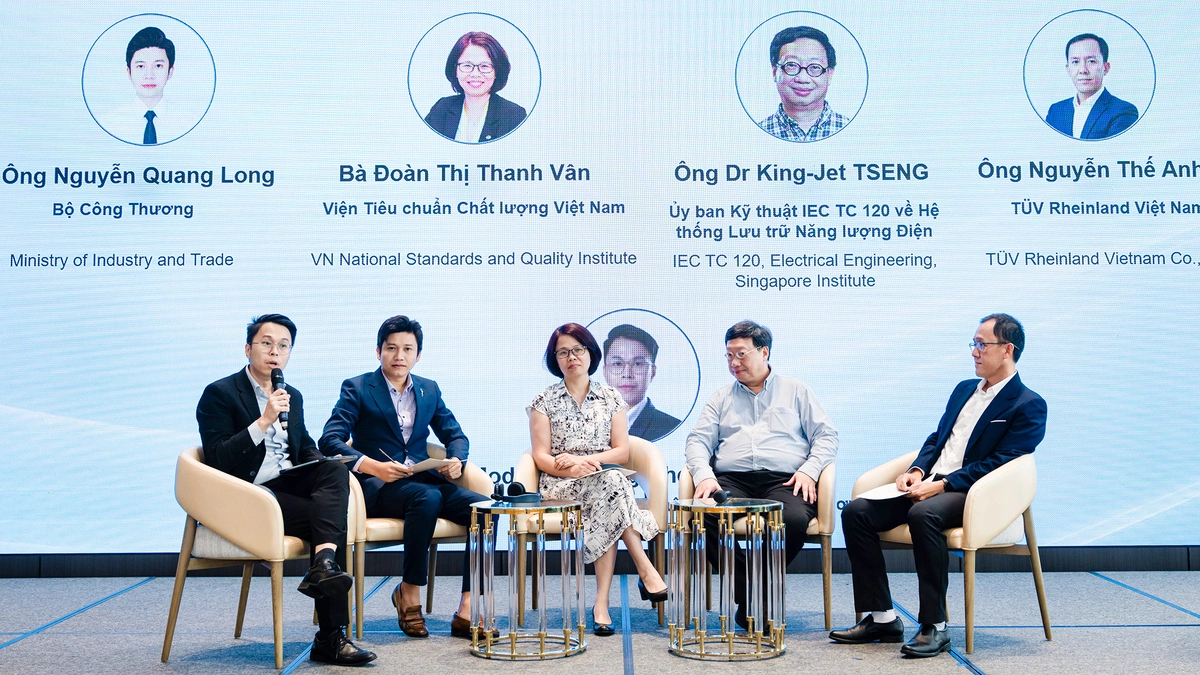
"Concentrated solar power projects are required to integrate BESS with a minimum capacity of 10% of the installed capacity, ensuring 2 hours of continuous energy storage", Mr. Nguyen Quang Long, Head of Economic - Technical Department, Electricity Department - Ministry of Industry and Trade, said at the BESS Safety Workshop event co-organized by the international independent certification organization for technical and safety control TÜV Rheinland (Germany) and the Vietnam Quality Standards Institute (TCCL VN), co-organized by support from Huawei Digital Power on July 15 in Hanoi.
According to Mr. Long, this regulation is expected to promote the application of BESS right from the early stages of developing renewable energy projects, thereby contributing to improving the efficiency of power source exploitation and increasing the stable operation of the national power system.
However, along with the development potential of the market comes the need to build a system of standards, regulations and synchronous safety assessment mechanisms. Unlike many traditional electrical devices, the battery energy storage system (Battery Energy Storage System - BESS) includes battery cells, battery management system (BMS), power converter (PCS), control system, thermal management, fire protection and many other protection layers. Safety depends on the ability of all components to work together, rather than just the quality of an individual device.

Experience from many countries shows that incidents related to BESS can affect market confidence, leading to tightening of technical processes and safety assessments. That poses a requirement to build a standard foundation and certification mechanism right from the time the market is still in its formation stage.
At the event, ensuring safety for BESS was the central issue discussed. Experts from management agencies, standards organizations, certification organizations and international organizations share the latest trends in IEC standards - a set of international electrical technical standards issued by the International Electrotechnical Commission, safety management experiences in developed markets as well as lessons from BESS incidents that have occurred around the world.
During the seminar, experts agreed that BESS safety needs to be approached at the whole system level, throughout from design, testing, manufacturing, integration, installation to operation and maintenance. Risks such as thermal runaway on the battery cell (battery cell - the smallest and most basic unit that makes up a complete battery), fire spread between each module or the ability to isolate the problem must be evaluated through technical standards and strict testing methods.
"The battery cell is the core component of BESS. Its reliability and stability determine the performance and safety level of the entire system," said Mr. Yun Xu, Head of Solar Energy and Commercial Products Department of TÜV Rheinland. "As energy density and charging and discharging capabilities increase, longevity and safety requirements also become more stringent."
Experts generally agree that a high-quality battery cell needs to be capable of deep charging and discharging (100% DoD) while still ensuring performance, longevity and safety requirements. This is an important technical criterion for large-scale BESS, where the charging and discharging frequency occurs continuously throughout the operation.
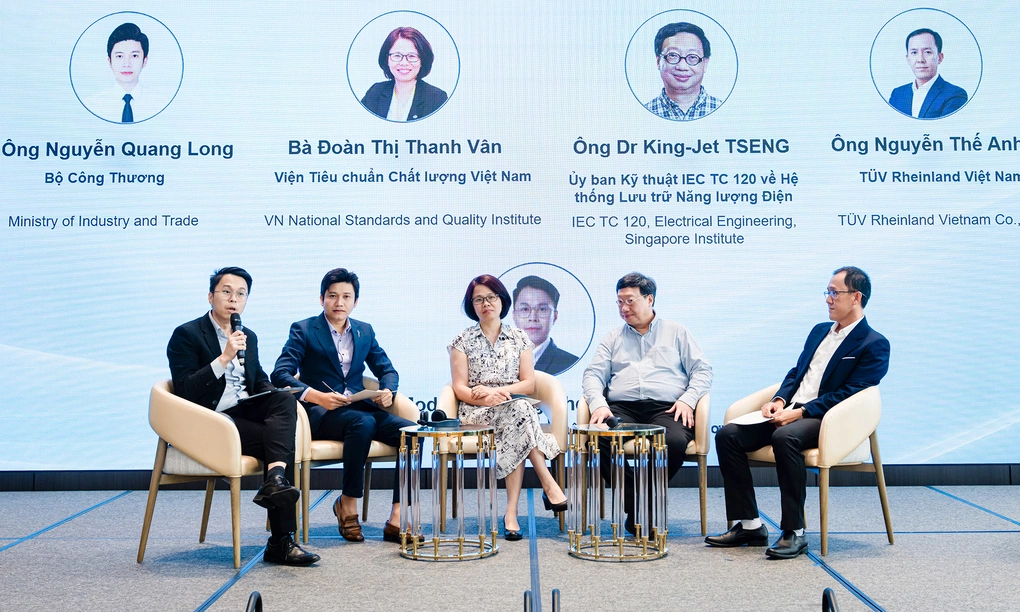
Along with updating international experience, experts also discussed directions for building a standards system and conformity assessment mechanism for BESS in Vietnam. This contributes to ensuring reliability, creating a transparent investment environment, improving project quality and increasing businesses' ability to participate in the global supply chain.
"With BESS, standards are not only a tool to evaluate product quality. This is also a common technical foundation for the entire value chain, from management agencies, manufacturers, design units, investors to certification organizations," commented Ms. Doan Thi Thanh Van, Head of the Electrical and Electronics Department of TCCL VN. "Harmonizing national standards with international practices contributes to improving safety levels, creating market confidence and promoting the sustainable development of the energy storage industry in Vietnam.
Experts say that in addition to perfecting the legal framework, building a synchronous standards system and certification mechanism will be an important factor to help minimize technical risks, improve project quality, and create a foundation for BESS to be widely deployed.
Previously, at a conference in Ho Chi Minh City on May 15, experts evaluated the new peak and off-peak hours as convenient for BESS investment, helping businesses reduce costs. Mr. Tran Quoc Tam, Vice President of Ho Chi Minh City Renewable Energy Association (HCMREA), Director of Lithaco, said that businesses can fully charge BESS during off-peak hours and discharge it for use in parallel with the grid during peak hours. According to this expert, without battery storage, about 30% of solar power produced is wasted. Therefore, charging BESS with renewable energy such as the sun will be the "perfect couple" to reduce dependence on grid electricity.
Last month, Vietnam Electricity Group (EVN) also sent a document to the Electricity Department for comments on the plan to build a power generation price frame in 2026 for ground-mounted and floating solar power plants with BESS. This unit believes that installing a storage system will increase the total project investment, leading to a higher electricity price range than conventional solar power plants, meaning that electricity buyers will have to pay higher costs for projects that incorporate storage.
Bao Lam