15 projects won the 2026 Scientific Innovation Award
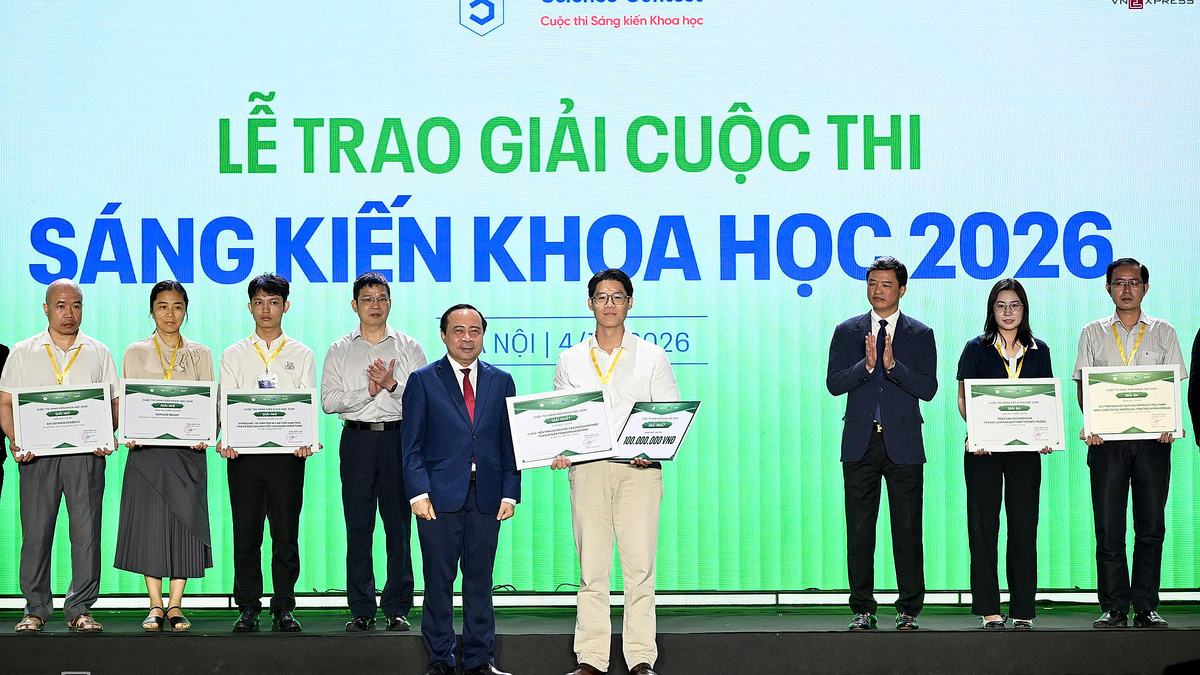
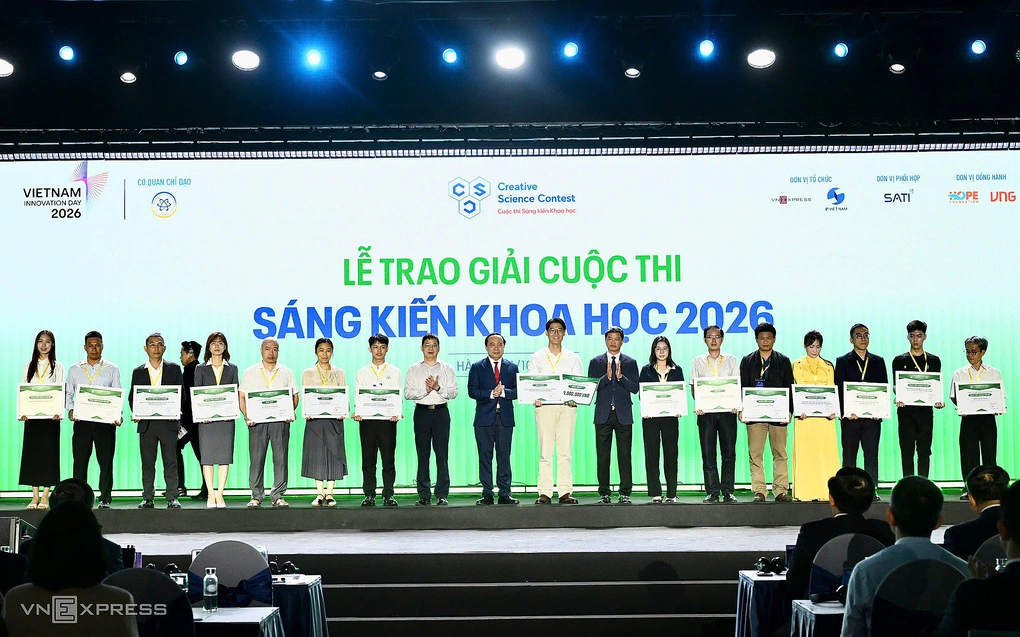
The award ceremony was held at the National Innovation Festival on the morning of October 4. This year, Scientific Initiative 2026 awards 4 prizes to groups of scientists, 4 to groups of amateurs, one prize for Green Initiative, one prize for Most Popular Initiative and 5 enterprise initiatives. The organizing committee did not award the first prize to the amateur group because there was no initiative that met the criteria.
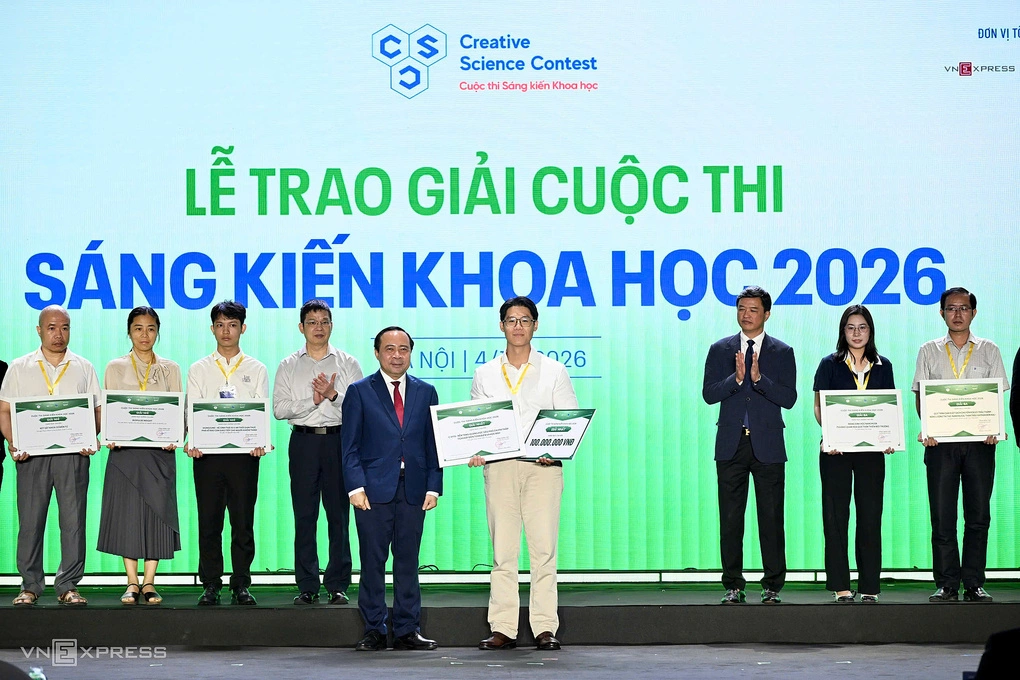
1. C-HySI hyperspectral optical platform
C-HySI by author Chau Khac Bao Chuong, RMIT University in Ho Chi Minh City, won first prize, specialized category (for scientists) worth 100 million VND. The initiative helps make a high-cost but essential device in precision agriculture, biomedicine, and materials more accessible to domestic businesses and researchers.
Hyperspectral optics is an advanced imaging technique that detects minute differences in material composition or physiological states that cannot be captured by traditional imaging methods. However, this technology requires complex hardware and specialized data processing software.
The initiative combines hyperspectral cameras and edge analytics software in one device, while optimizing optical hardware costs. C-HySI aims to expand access to hyperspectral technology to the community with a low-cost, easy-to-use platform. Subjects such as farmers, technicians and small production facilities can access and exploit technology.
2. Electromechanical locked safes
The safe by the group of authors Pham Thanh Long and Doan Xuan Truong, University of Industrial Technology, Thai Nguyen University, won second prize in the professional category, worth 50 million VND.
The highlight is the three-layer locking mechanism that combines mechanical and electronic components. The product integrates a two-way key blocking mechanism to limit code detection, an independent latch and latch arrester, and an optical sensor to prevent load detection. Drill bars, electrical and magnetic impact resistance and electronic circuit rescue mechanisms add layers of protection.
The group's target value is to simultaneously master hardware, software and precise mechanical structure, thereby developing high-security safes in the country. The product is built on the author's group's inventions and is expected to be commercialized under the RDIP brand.
3. Convert rice husks into energy and materials
The process of the author group Le Hon Nhien and Ha Thuc Chi Nhan, Ho Chi Minh City University of Natural Sciences, won third prize, specialized category, worth 30 million VND.
Solution to create a chain of consecutive uses: rice husks as fuel for the boiler, post-burning ash continues to be processed into nanosilica, rice husk coal and potassium fertilizer. The improvement lies in treating the ash with potassium hydroxide, which not only dissolves silica but also creates potassium-containing compounds that can be used as fertilizer.
According to the group, water containing potassium salt after treatment is recovered for fertilizer production or reuse, helping to reduce the amount of material that must be discarded. The group estimates that 100 kg of rice husk ash can create about 30 kg of nanosilica, 18 kg of rice husk charcoal and 60 kg of potassium rice husk ash fertilizer.
The value of the initiative is to exploit more products from boiler ash, create a source of materials for industry and agriculture, and reduce the burden of waste treatment.
4. 3D printed bone implants for each patient
The project of Vinmec - VinUni Institute of 3D Technology in Medicine won the consolation prize, specialized category.
The solution uses CT or MRI images to model each patient's bone, determine the damaged area and then design the metal implant. The process goes from image processing, design, mechanical simulation to 3D printing and product completion.
The difference compared to standard sized implants is the ability to adjust the shape according to the anatomical structure and bone defect location of each case. This approach is especially meaningful for large defects, complex injuries or bone regeneration after lesion removal.
According to the research team, the product aims to increase the suitability of the implant, supporting doctors in planning interventions and rehabilitation. Mastering domestic processes also facilitates direct coordination between doctors, engineers and manufacturing facilities, reducing dependence on imported products.
5. BioPulse Insight heart health monitoring
BioPulse Insight of the research team at BKIC and SPARC Lab, Hanoi University of Science and Technology, won second prize, non-specialist category worth 50 million VND.
The highlight is the integration of three measurements on one handheld device: electrocardiogram, heart sounds and optical signals reflecting blood volume changes. Data is synchronized in time, processed for interference and then transmitted via Bluetooth to the phone. The system also estimates blood pressure from pulse transmission time.
Solution to connect measuring devices with applications for patients and web platforms for doctors. Data is saved historically, helping to track developments over many measurements instead of just viewing an individual result. According to the team, the app's value is in supporting remote cardiovascular care, reducing the need to travel for routine checkups, and expanding access to health monitoring at home.
6. SignSound ecosystem supporting deaf people
SignSound, with representative Vo Nguyen Dai Hieu, a student at the University of Technical Education, University of Danang, won second prize, non-professional category.
The system combines augmented reality glasses and AI to convert speech into Vietnamese sign language video, displayed before the user's eyes. Sound is recorded through a microphone placed on the glasses, transferred to a speech recognition and language processing server, then the video symbol is sent to the device.
The improvement is that the AI model rearranges the word order according to sign language grammar. The system also standardizes synonyms, processes numbers and uses 3D characters to express symbols. This approach aims to overcome the difference between spoken Vietnamese and the expression of deaf people.
The team built an inventory of more than 3,575 symbols and announced processing latency of under two seconds. The solution aims to help users receive direct conversations and be more proactive in life.
7. NanoHusk - PVA fruit preservation biofilm
NanoHusk - PVA of Lightning group, student of Hanoi University of Natural Resources and Environment, won third prize, amateur category worth 30 million VND.
The group extracted nanocellulose from rice husks, combined with polyvinyl alcohol (PVA) to create a membrane, then added Phellinus mushroom extract. Nanocellulose contributes to strengthening the material, PVA supports film formation, and mushroom extract adds antibacterial and antioxidant properties.
The film is designed to adhere to the surface of the fruit, limiting water loss and controlling gas exchange. By combining the covering role with biologically active ingredients, the product helps maintain fruit quality during storage and transportation.
The application value is to reduce post-harvest losses and create more output for rice husks. The group has initially manufactured membranes in the laboratory, planning to expand the scale and test on many types of agricultural products.
8. Mineral supplement for shrimp from sugarcane bagasse ash
The project of the GreenTech group in Dong Nai won the consolation prize, non-specialist category.
The research team used processed sugarcane bagasse ash as a mineral supplement for giant freshwater prawns. The ash was removed from impurities, ground finely and analyzed for composition before testing at different dosages. The direction of improvement is to utilize calcium, potassium, silicon and minerals in by-products to support the farming process, while monitoring the impact on water and pond microflora.
The survival rate of shrimp in the test model reached 88%, compared to 76% in the control group. Additional mineral costs decreased from 2.1 million VND to 300,000 VND. The results show the potential to create low-cost mineral sources from local by-products.
9. Floating house "When the water comes, we will live together"
Creative Architects' flood season housing project won the Green Initiative award.
The highlight of the initiative is its dual function: the prefabricated house is used on the ground in the dry season and can float according to the water level when flooded. This design aims to take advantage of the project all year round, instead of only using it during flood avoidance periods.
The house combines lightweight materials, foam core HDPE buoys and anchorage systems. The frame and buoy can be adjusted according to needs, and the center of gravity is low to increase stability when floating. The house integrates solar power, clean water and a place to store necessities, aiming to support a family when isolated for 7-10 days.
The group hopes to help households protect their property and maintain their daily lives when flooding occurs. The project is completing design and testing operational capabilities.
10. AI supports antibiotic prescribing and monitoring
DEEPMEDSP-AI of Saint Paul General Hospital won the Most Favorite Initiative award, voted by readers.
The system organizes many AI agents to perform each task: retrieving hospital instructions, finding medical documents, reviewing doses and checking drug interactions. A coordinating agent synthesizes the results into structured recommendations, with sources for doctors and pharmacists to compare.
Compared to available AI tools on the market, this virtual assistant integrates the hospital's antibiotic handbook and the patient's own data. Thereby, kidney function can be taken into account when calculating the dose, warning of duplicate active ingredients or allergy history.
The group said the AI assistant helps doctors and pharmacists shorten search time and detect risks of using drugs.
11. Antifouling paint uses organic active ingredients
Hai Au Son's products are in the Top 5 Corporate Initiatives. The formula uses the organic active ingredient tralopyril, trade name Econea, to replace copper oxide in antifouling paint.
Dengue and other organisms clinging to the ship's hull increase drag, leading to fuel needs and cleaning costs. According to the company, the selected active ingredient has the ability to limit biological adhesion but decomposes faster in seawater, thereby reducing the problem of metal accumulation from copper-based paint.
The formula aims to maintain the anti-fouling effect of the coating, helping the ship operate more stably and reducing hull cleaning work. The choice of alternative active ingredients also opens the way to developing materials to protect marine vehicles that are less dependent on copper.
The initiative addresses the need to protect ship hulls, while reducing the amount of copper released into the marine environment.
12. Rubber tapping robot
Winning the Top 5 Business Innovation Award, the Robot of Tan Y Robot and Rubber Co., Ltd. can map trees, move on its own in order of exploitation and work without a GPS connection. The scraping mechanism is designed to measure shell thickness, control the scraping path and operate at heights from 0.35 to 2.5 meters. Operational information can be transmitted via mobile networks for managers to monitor.
The business announced a productivity of 800 trees in a 6-hour shift and 12-hour operating time when the battery is full. The robot has been tested at Dong Nai Rubber Corporation.
This automation solution helps reduce the pressure of labor shortage, limit manual work in the early morning and increase the stability of the mining process.
13. Student buses connect many schools
Liberal Technology Co., Ltd. belongs to the top 5 Business Initiatives, has designed a shared platform, organizing shuttle buses between many schools in an urban area.
The platform synthesizes student needs by area, designs pick-up and drop-off points and routes. Transport optimization algorithms support vehicle coordination, updating routes when the number of students, time or location changes. The system also integrates journey tracking and notification to parents.
According to the business, gathering demand on a larger scale helps increase vehicle usage efficiency and distribute operating costs to many users. The authors hope that the solution will help more families access transportation services, reduce the time parents spend transporting their children and the pressure on personal vehicles around urban schools.
14. LATOR fermentation system
Top 5 Business Innovations were also awarded to LATOR Fermentation System of LAB2LIFE Science and Technology Company Limited. This is a fermentation system serving the production of microorganisms and enzymes for agriculture, food processing and environmental treatment.
When installing LATOR, production facilities can produce their own biological products on site, taking advantage of by-products. Compared to existing solutions, the improvement is the ability to separate gas and foam in two steps using centrifugal force: the first stage uses large foam, the second stage uses micro foam. This mechanism helps control foam without using chemicals, improves oxygen exchange and maintains microbial growth conditions.
The system has been tested in organic agriculture, livestock waste treatment and coffee fermentation. Modular design from 20 to 2,000 liters allows choice of scale, expansion or deployment at farms and cooperatives.
15. SeaBoost 3S on-site aquaculture water disinfection
Wesolife Co., Ltd.'s SeaBoost 3S is a direct electrolysis system for brackish or salt water to create active chlorine to disinfect aquaculture water, also honored in the Top 5 Corporate Innovations.
The innovation of the system is to combine three components: on-site chlorine generation, microbubble air supply before electrolysis and sensor monitoring. Proactive generation and control of chlorine reduces the need to purchase, transport and store powdered chlorine. According to Wesolife data published from the model in Ca Mau, a pond of about 3,000 m² can save 20-30 million VND per crop, while reducing the amount of plastic packaging from chemicals purchased outside.
The solution targets data-driven sterilization management, reducing reliance on empirical dosing and mixing operations.
5 Business Initiative awards received a media package worth 100 million VND on VnExpress.
The entire prize money is sponsored by the Hope Foundation. This is a social fund operating for the community, not for profit, operated by VnExpress and FPT Joint Stock Company.
Nam Nguyen