95% of VnExpress readers have used AI
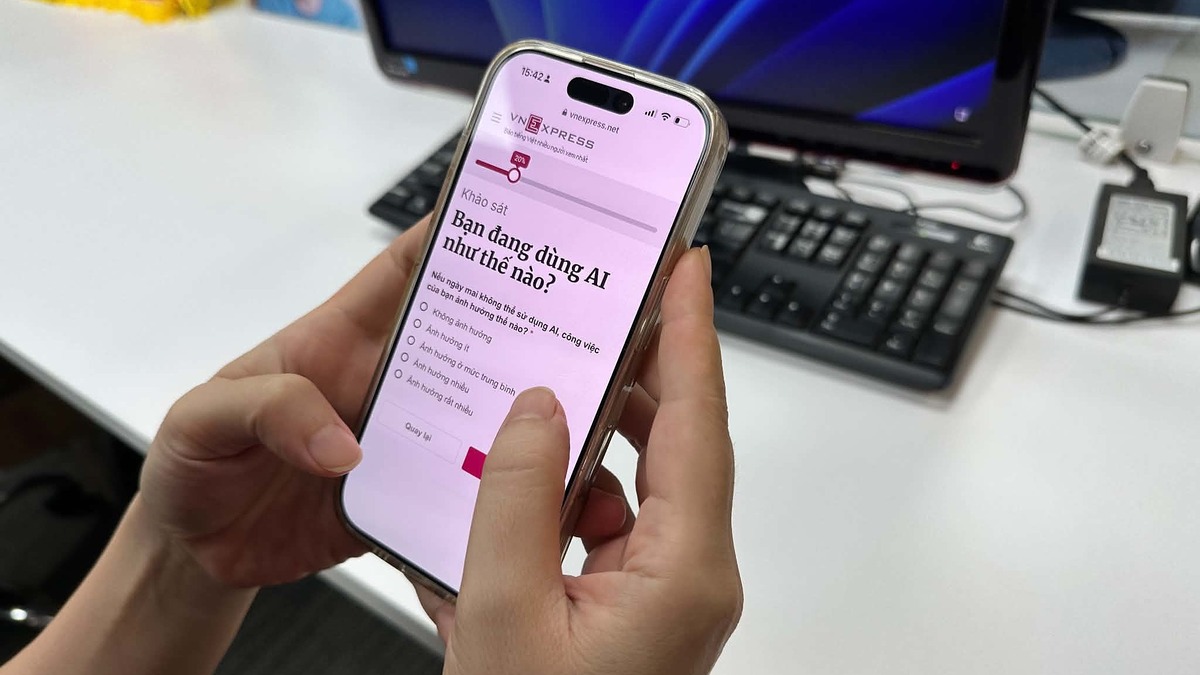
This is the initial result of a survey on AI usage habits, taking place on VnExpress from September 28 to October 4. Nearly 7 in 10 participants said they use AI at least a few times per week. The most common purposes are searching for information, answering questions, studying, researching and processing documents and data. One reader described AI as "a teacher" who can discuss issues he doesn't know.
Notably, about 76% of survey participants were in the 35 - 54 year old group. The structure of participants along with the above uses shows that AI is being used for many needs related to learning and work, instead of just to experience technology.
As AI appears more in daily work, the need to use it is no longer limited to the technology community. People with expertise in other fields can approach AI as a tool to support solving problems in their own industry. This is also a premise for the force involved in AI application and development to expand beyond the group of technology engineers.
Use a lot but still be cautious
High frequency of use comes with concerns about reliability and data security. The three most frequently mentioned issues are inaccurate or not up-to-date information, difficulty verifying information given, and concerns about personal data being used.
One reader said that he had used an international AI tool, but this tool had not yet been updated and understood the Vietnamese context. Specifically, despite paying for the international version, AI has not yet updated the switch to a two-level government model. Meanwhile, many people emphasize that AI is only a reference tool, users still need to evaluate and decide for themselves.
These responses show that real-life experience has made readers use AI more cautiously. The ability to produce quick answers or fluent text is not enough to build trust if the information is difficult to verify, is not up to date, or is not appropriate for the context of use. These are also important criteria when participants are asked what they expect from a Vietnamese AI product.
What do users expect from AI Viet?
The most selected factors include the ability to understand Vietnamese and the Vietnamese context, high quality and accuracy, addressing the needs of Vietnamese people and protecting personal data.
These requirements show that domestic products can have an advantage in specific problems that the global platform has not prioritized. For example, a system that understands how Vietnamese is used in each industry, updates domestic regulations, or properly handles the processes of Vietnamese businesses may be more suitable for some specific needs.
However, the majority of participants have not given a clear assessment of the level of trust in domestic products. 36.8% chose the option "not sure, need practical experience" and 30.9% did not have enough information to evaluate. Prudence manifests itself both in willingness to use and to pay a premium. 45% of participants said they would use AI Viet products if it was free, and 38.8% wanted to see the actual effectiveness first. Only 11.7% were willing to pay the fee.
The gap between the rate of ever using AI and the rate of awareness of Vietnamese AI products also raises a broader question: Will Vietnam just have more people using available AI tools, or can it form an additional force participating in creating new products?
The above results reflect the opinions of the group who voluntarily participated in the survey on VnExpress, and do not represent all readers or AI users in Vietnam.
Readers participate in the survey here
Nguyen Phuong