
AI changes the way people construct metros and tunnels
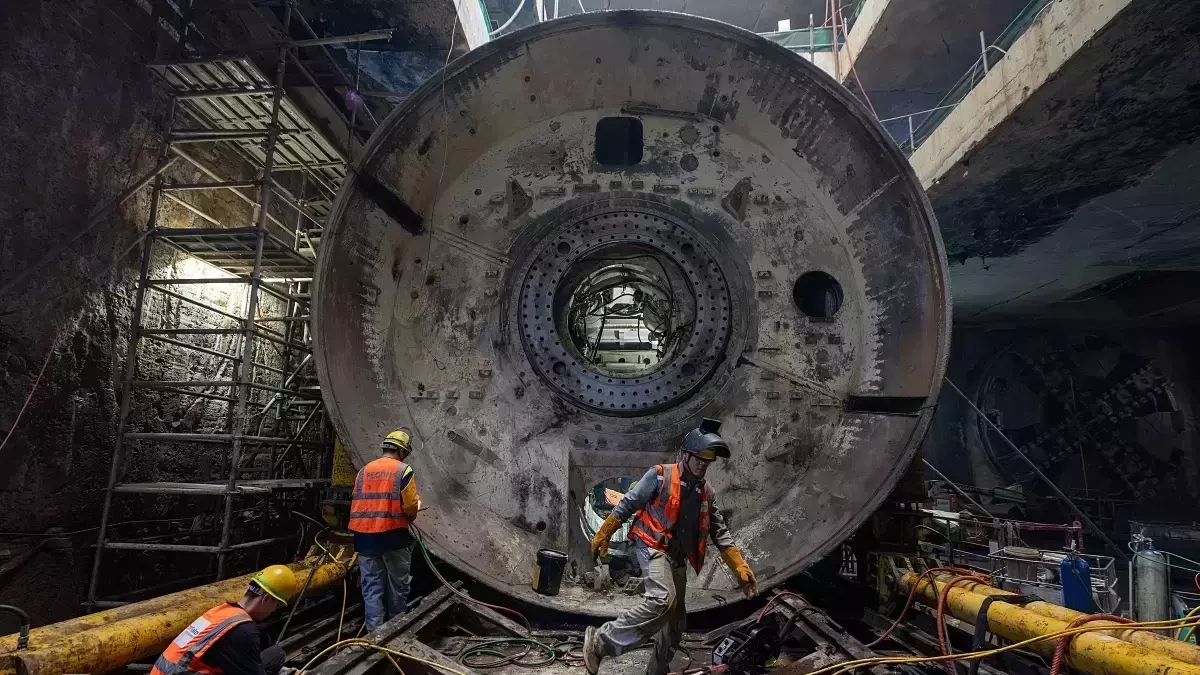
Artificial intelligence is fundamentally transforming how engineers handle underground construction projects by predicting complex geological movements and controlling soil deformation. As global adoption accelerates across major metropolitan infrastructure projects, engineering firms and researchers in Vietnam are also actively exploring these technologies to enhance worksite safety.

Key points
- Researchers from the Shibaura Institute of Technology in Japan utilized nearly fourteen thousand borehole records to train an artificial neural network capable of mapping Tokyo subsurface soil characteristics in three dimensions.
- British engineering consultancy Arup developed a specialized tool named Gofer-META to combine observational data with computational models for deep excavation projects located in central London.
- The Housing and Development Board in Singapore mandated that contractors bidding for new residential projects must integrate artificial intelligence video analytics to detect unsafe behaviors starting from January 2023.
- Researchers at Hunan University in China unveiled an intelligent control system for tunnel boring machines in January designed to evaluate geological conditions and forecast operational hazards in real time.
- Professor Gang Zheng from Tianjin University created an artificial intelligence system capable of controlling soil deformation with an exceptional accuracy of approximately zero point one millimeters across numerous projects.
- Instead of reinforcing entire soil masses with massive amounts of concrete, Professor Gang Zheng approach focuses on identifying and directly intervening at key underground leverage points to minimize ground movement.
- A hybrid machine learning model developed for a Tianjin metro project successfully predicted excess pore water pressure during tunneling operations to prevent ground settlement, according to a 2025 research publication.
- Dr. Nguyen Tien Dung from FECON emphasized that artificial intelligence serves as a crucial supplement to traditional engineering by processing multiple geological data sources simultaneously to predict underground behaviors.
- Vietnamese academic institutions, such as the University of Transport Technology, established specialized research groups as early as 2018 to build artificial intelligence models forecasting soft soil consolidation parameters.
- Leading international and domestic experts gathered at the GEOTEC HANOI 2026 conference held in Hanoi during late November to share cutting-edge research and advance technological capabilities for local engineers.

Why it matters
The integration of artificial intelligence into underground construction highlights a broader industry shift toward technology-driven growth models. Moving forward, watching how Vietnamese infrastructure developers adopt these advanced predictive tools will be critical for improving safety and efficiency in upcoming urban metro projects.
This summary restates the key points of the original article. The full article and its copyright belong to VnExpress.
Read the full article at VnExpress