'AI only promotes value when combining a specific field'
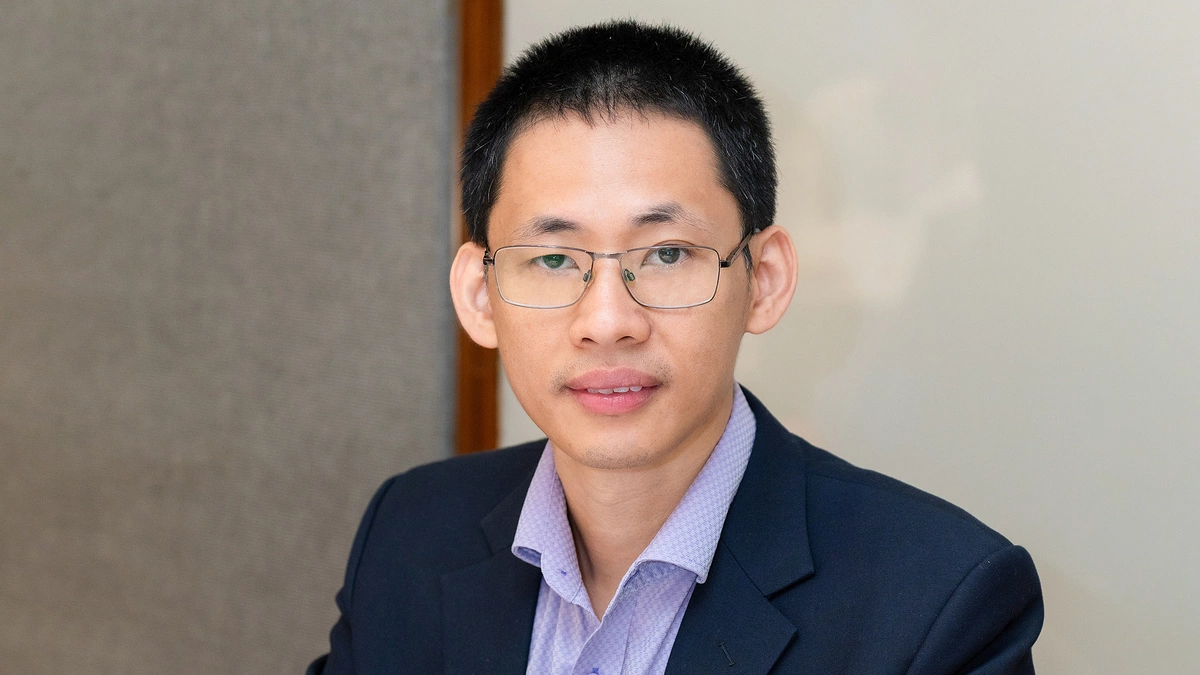
PSG. Dr. Nguyen Van Hien was born in 1984 in Da Nang, works at the Department of Electrical and Computer Engineering - University of Houston (USA), specializing in research on AI, computer vision and biomedical image analysis. He has published more than 100 scientific articles and owns 12 patents in the US.
Previously, he worked as a researcher at Siemens Healthineers and senior scientist at Uber ATG autonomous vehicle division. His research received funding from the US National Science Foundation (NSF) and the US National Institutes of Health (NIH), won a number of outstanding journalism awards, and is a senior member of the US National Academy of Inventions (NAI), member of the editorial board of Computerized Medical Imaging and Graphics magazine (Elsevier).
On the sidelines of the Beyond Honors event organized by New England Elite Consulting (NEEC) in Ho Chi Minh City last weekend, Associate Professor Dr. Hien shared with VnExpress about his journey to reach the world with passion, applying technology to medicine and the future of doctors.
- As a former student specializing in Mathematics - Physics, Le Quy Don High School for the Gifted (Da Nang), having gone through the journey to Singapore and the US, what was the turning point that changed your life?
- I always cherish the foundation from my years at Le Quy Don specialized school. That is the launching pad for big opportunities like Singapore and the US later.
Looking back on the past journey, the difference does not come from a single turning point. It is the result of continuously making small decisions based on principles: choosing difficult but meaningful challenges, proactively collaborating with better people, and always believing that your limits are not fixed in one place.
- What motivated you to pursue deep learning since 2013 when AI was still quite unfamiliar, and did you ever doubt your choice?
- Around 2013, when I completed my doctoral thesis on sparse coding and started researching medical image analysis at Siemens Healthineers, I realized that the deeper the structure of the models, that is, the more layers of representation, the more effective they are on real data compared to traditional methods.
At the same time, pioneering work on deep learning by a team led by computer scientist Geoffrey Hinton appeared to confirm that observation. Instead of being skeptical, I decided to take the plunge, participate in the development and eventually publish one of the world's first patents on deep learning for medical imaging. The invention was later deployed by Siemens on many diagnostic imaging products.
I never doubted AI would change the way people practice medicine. The open question was never "if it will happen", but "when" and "who will build the technology responsibly" - questions I continue to pursue today.
- Looking at your medical-related projects, the general philosophy is that AI helps doctors make better decisions instead of eliminating them?
- This is my intentional choice based on a mathematical principle called "Ensemble Theory".
Doctors and AI often make mistakes in different situations. AI is easily confused by rare disease cases or noisy data. Doctors may miss injuries due to time pressure or decreased concentration during prolonged work. Because they are wrong in different ways, when combined, the two sides can compensate for each other, significantly reducing the risk of omission.
This has been verified through many international clinical studies. For example, research published in the American Journal of Surgical Pathology medical journal in 2018 showed that pathologists when reading lymph nodes to detect breast cancer metastasis achieved about 83% sensitivity if working independently. When powered by AI, sensitivity increases to 91% with nearly unchanged specificity and shortened reading time. Similar trends were observed in breast cancer screening, Twitter-chest radiography, and diagnosis of cerebral hemorrhage on computed tomography (CT).
Furthermore, medicine is not just an image recognition problem. It is a combination of assessing the clinical context, communicating and taking responsibility with the patient. AI can analyze large numbers of images with high consistency, freeing up time for doctors to focus on complex cases, where human experience and judgment make the biggest difference.
I believe that in the next 10 years, sustainable AI systems will be tools built with doctors, helping doctors work better, not eliminating them.

- As a Vietnamese scientist working in the US, looking back at your homeland, what advantages do you see Vietnam having in the AI race, and what are the big gaps that need to be overcome?
- AI is a very broad field, from language modeling, robotics to medicine. I would like to share from the perspective I understand best, which is AI in medicine. Vietnam has three great advantages but are often underestimated.
First, about epidemiological characteristics. Some diseases with high incidence create a very valuable source of clinical data. Testing AI on this data set helps the model be both reliable for Vietnamese people and enhances its applicability in many countries. This is the scientific value that Vietnamese hospitals can contribute to the global research community.
Second, about population structure. Vietnam has a force of young engineers who learn quickly and develop technical human resources at a very high rate.
The third concerns policy orientation. The legal framework and national strategy for AI is clearly taking shape, with many new laws and regulations promulgated.
However, Vietnam faces two gaps that are very difficult to narrow. In particular, the lack of a team of high-level AI experts with real-life experience in high-risk fields such as healthcare is a factor that cannot be shortened by classroom training alone. In my opinion, international cooperation can help this process go significantly faster.
Gaps in clinical research infrastructure, including hospitals, ethics boards and data governance, are still not synchronized. This is the process of building the capacity of an entire ecosystem, which cannot be solved with a short-term policy or project.
In the next 10 years, the most successful countries in medical AI will know how to combine domestic capacity with international scientific cooperation instead of developing alone. That is also the most suitable path for Vietnam.
- Many young people want to pursue AI, but are also worried that AI will replace many jobs. In your opinion, what is the most important capacity to build to avoid falling behind?
- Instead of general advice, I have three specific suggestions.
First, it is necessary to deeply understand a major. AI only promotes value when combined with a specific field such as medicine, finance or agriculture. Excellent engineers must understand the industry deeply enough to have an equal dialogue with experts.
Next, you must know how to build a practical system. The ability to turn an algorithm into stable, secure software that continuously improves from user feedback is more important than just knowing how to create a model.
Finally, work with people outside the industry. You should know how to listen and understand the needs of doctors, managers and patients, and connect technology with people.
Regarding career opportunities, don't put too much emphasis on jobs in the US, Europe or Vietnam. Ask yourself what problem you want to solve and choose where that problem has the best chance of being solved.
- You said you shouldn't put too much emphasis on where you study or work, but you have the opinion that "you need to study abroad to improve your skills, then return to serve your homeland"?
- Studying abroad is still essential to gain exposure at frontline research centers and understand how the international technology ecosystem operates. However, the concept of "dedication" today is more complicated than the story of "stay or return".
Modern science is a global network of cooperation. For example, for me, the main academic and research environment is still in the United States, where I teach and pursue my scientific programs. At the same time, I also participate in international research cooperation, including in Vietnam, because many medical studies today require a scale and data diversity beyond the capabilities of any one country.
When AI research is tested on clinical data from Vietnam, domestic patients have access to world-standard technology. At the same time, AI systems also perform more fairly and accurately globally because they better reflect the diversity of real-world clinical practice. It is a mutually beneficial relationship, not a choice between the interests of one country and another.
- Regarding the biggest goal in your career, what changes do you hope your work will create for the medical industry or for people's lives?
- I hope my work contributes to narrowing the health gap between places with many resources and places with many limitations. If in 10 years, a patient at the provincial level can access the quality of image analysis equivalent to leading medical centers, doctors have more information to make faster and more accurate decisions, patients are treated earlier and have more chances to recover..., the efforts we make will be truly meaningful.
Such technologies should be developed through collaboration between scientists, doctors and hospitals in many countries. An AI system is only truly reliable when it is tested on diverse patient populations and built with the doctors who will use it. At that time, all sides benefit from scientific progress.
Science, after all, is not a race to see who can go fast. The important thing is whether we leave behind knowledge and technology that really makes human life better and more equal.
Bao Lam