Who is buying Chinese humanoid robots?

According to market research company Smart Analytics Global (SAG), China accounted for 97% of humanoid robots shipped in the first half of this year. Specifically, global output as of the end of June reached 19,100 robots, up 272% over the same period last year, with the top 5 companies all coming from China.
The leading position "changed hands" when Agibot replaced Unitree to rank number one with 8,400 robots, Unitree ranked second with 5,900 robots. Last year, these two companies dominated the market by shipping more than 5,000 robots each. Other prominent names include Galbot, UBTech, Leju, which also produce a few hundred humanoid robots or more each year.
So who is buying this massive amount of humanoid robots? Some consumers buy for experience, companies buy for performance or work purposes, while universities buy for education and research. But according to the Financial Times, many Chinese humanoid robot companies are making most of their revenue from selling products to government-backed training centers.

When he spent 159,800 yuan ($23,680) to buy the female version of the U1 Pro companion robot made by UBTech, Beijing-based investor Song knew it wouldn't cook or clean the house. For him, it was important to become one of the first individuals in China to own a humanoid robot for consumers.
Yang, a 30-year-old tech enthusiast from Yunnan province, also bought the female version of the U1 Pro robot for the same reason. "I often buy automatic equipment and emerging technology products," he told SCMP, admitting that he "didn't have too high expectations."
For many early buyers like Song and Yang, the appeal lies not in everyday convenience but in embracing cutting-edge technology.
UBTech said that the U1 product line has received 13,361 orders as of June 30, less than a month after pre-sale, expected to start shipping on September 16. The product line includes three models Lite, Pro, Ultra, ranging from partial body models to full-sized humanoid robots, with prices ranging from 119,800-990,000 yuan (17,820-147,270 USD). According to UBTech, they are designed primarily as emotional companions with the ability to express facial expressions, voice interactions and chat using AI.
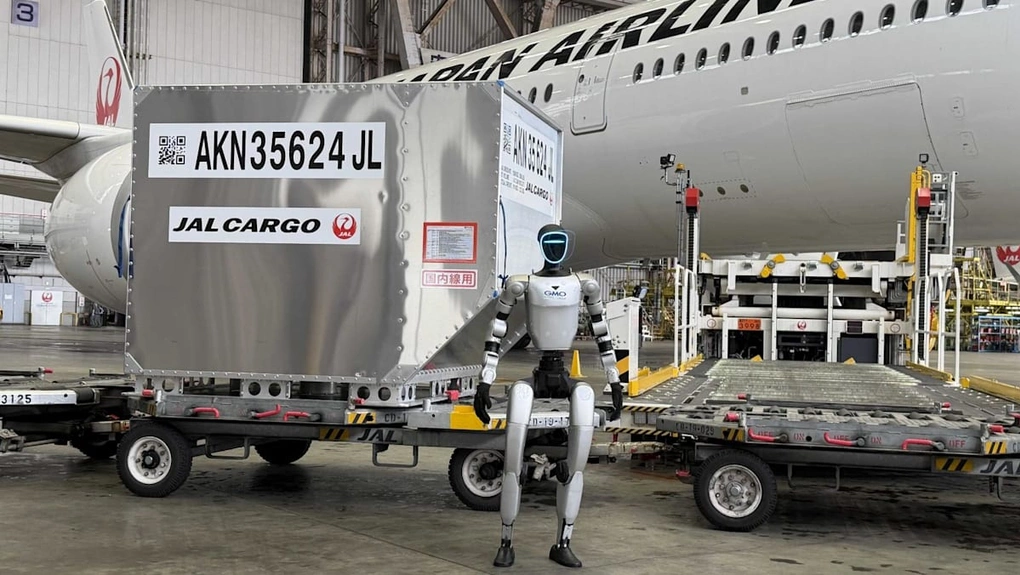
In addition to serving regular consumers, humanoid robots can also perform or work for companies in need. For example, in Japan, Japan Airlines launched a humanoid robot trial in early May as a long-term solution to the labor shortage. This fleet of robots, manufactured by Unitree company, helps transport passengers' luggage and goods at Haneda airport, which serves more than 60 million passengers each year.
Startup Matrix Robotics in Shanghai produces AI humanoid robots. The flagship product Matrix-3 costs $99,000, is nearly 1.7 m tall and is equipped with hands capable of performing delicate movements. According to founder and CEO Allen Zhang, the company has received about 1,000 orders, including from coffee chains and hotels. As of early June, Matrix had only produced a few hundred Matrix-3 robots, but the company said it could deliver 5,000 robots this year, depending on the number of orders.
Shenzhen-based startup EngineAI said that in addition to performing like dancing or boxing, its life-sized humanoid robot can also work as a security guard and museum guide. The basic version costs 180,000 yuan ($26,600). "The next step is to move to more realistic scenarios," Issac Li, EngineAI's head of marketing, told the AP.
Meanwhile, according to CNBC, nearly three-quarters of Unitree's humanoid robot revenue in the first 9 months of 2025 came from the education and research sector, with buyers being universities and other organizations.
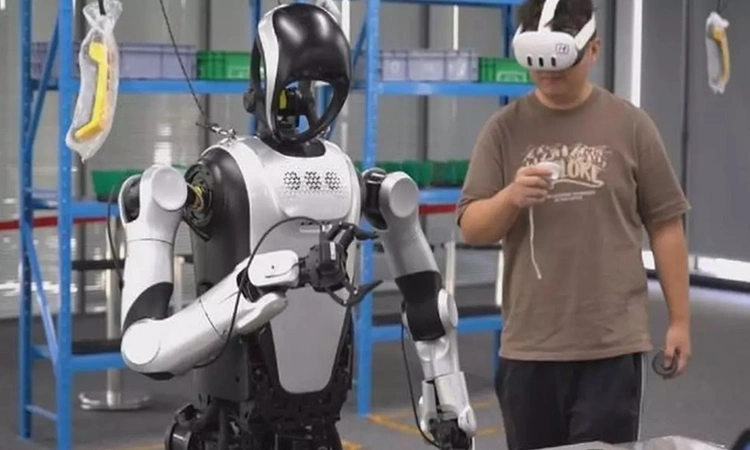
The above use cases may not be the majority. Georg Stieler, a robotics analyst specializing in consulting for Chinese businesses, shared with Reuters that 50-70% of humanoid robots shipped this year may be brought to the center instead of actually working.
These centers are often co-funded by local governments and robot manufacturers, creating training data and then selling it back to the robot companies themselves to improve the technology. Only a small portion of the data is sold to businesses outside the robotics sector, such as auto manufacturers, for use on assembly lines.
Under its plan to develop the field of humanoid robots, China encourages local governments to build large-scale training centers where humans "teach" robots how to perform physical tasks through remote control. This contributes to promoting the wave of robot startups, with nearly 370 startups born in the past two years.
"This model spread quickly because it helps reduce the costs of building facilities, purchasing equipment and organizing remote control teams," explained Poe Zhao, an independent China analyst and founder of technology analysis platform Hello China Tech.
According to consulting firm Interact Analysis, as of June, more than 90 training centers had been established or were under construction across China. Leading centers say they generate more than 10 million data points each year. Prices vary, but one seller told the Financial Times the price for five minutes of robot dance training data could be up to one million yuan ($148,000).
The wave of training center construction is also reshaping industry forecasts. Morgan Stanley raised its estimate for the number of Chinese humanoid robots delivered in 2026 from 28,000 to 50,000, citing higher-than-expected purchasing demand from local governments and commercial users.
For robot manufacturers and distributors, training centers provide a significant source of revenue in the context of limited commercial demand. Shenzhen-based Leju said the training center accounted for 45% of sales of its flagship Kuavo humanoid robot last year, making it its largest source of revenue.
UBTech revealed it received 140 million yuan ($21 million) worth of orders from government-backed training centers in 2025. Although still at a loss, the company said robot deliveries accounted for 41% of its total revenue of 2 billion yuan last year, and expects orders from the government to spur further growth this year.
Supporters argue the training center will help build the robotics industry and supply chain, citing the examples of electric vehicles and solar panels - sectors China is dominating after government orders helped spur initial demand.
For local governments, this model helps attract investment, talent and supply chains to areas where revenue from land sales is decreasing. Some centers also contribute to economic and educational promotion by recruiting students to be robot trainers and providing paid tours for children and teenagers during vacations.
However, the training center's robot-data trading model also raises many questions. An open question is whether the data obtained is commensurate with the amount of investment.
Marco Wang, an analyst at research firm Interact Analysis, said the data from the center is "not 100% useful" because the robot does not operate in a real environment. "Real applications, production lines and actual warehouses are always different from the scenario," Wang said.
A senior manager at a training center in northern China revealed that each robot manufacturer's data can only be used by that company, raising concerns about compatibility. On average, she added, only two or three hours of data from an eight-hour training shift is truly useful.
Investors also question whether government-driven procurement can lead to real commercial demand. "This blurs the line between independent demand and demand arising in a policy-supported ecosystem," said analyst Zhao.
"This model is very difficult to survive in the long term. If manufacturers cannot prove that their robots can be deployed on a large scale in factories, investors will begin to re-evaluate next year," said one investor.