"Distilling" Employees Into AI Replicas: 13,400 GitHub Stars and the Fight Over the Future of Work
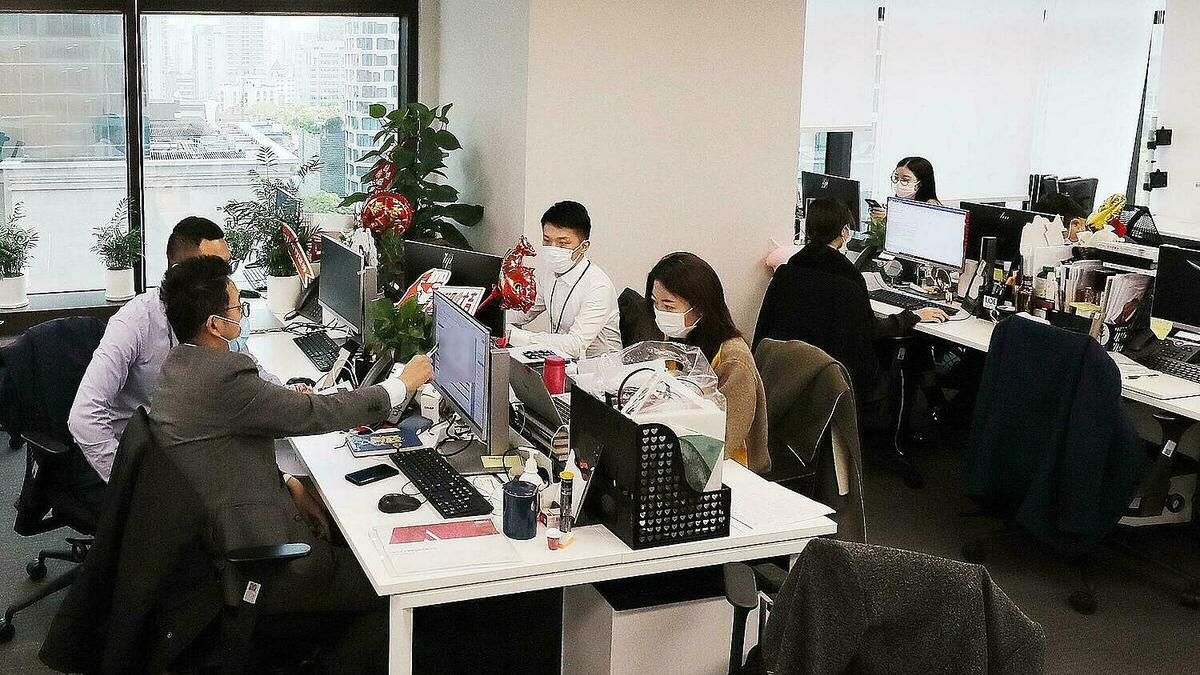
Picture asking a virtual assistant a question, and it answers: "I am the digital representative of former employee XX." This isn't science fiction. At a media-game company in Shandong Province, exactly such an AI replica is up and running, standing in for a person who has left the company and consented to it. The replica can answer questions, organize spreadsheets, prepare PowerPoint decks, and send calendar invitations.
According to VnExpress (citing China Daily, Caixin Global, and Chosun Daily), this is the visible tip of a technological wave rattling China's knowledge workers: the "distillation" of human beings into software.
What does it mean to "distill" a person?
In chemistry, distillation extracts the pure essence of a substance. The same idea is now applied to people: gather all of someone's work messages, emails, phrasing, and knowledge, then condense it into a digital replica that behaves just like the real person. At the center sits colleague.skill, an open-source project launched on GitHub on March 30 (cited as 2026 in the underlying data) by Zhou Tianyi, an AI researcher at Shanghai AI Lab, who built it in just four hours to preserve institutional knowledge.
Provide work messages, emails, and subjective descriptions of a person, and you'll get an AI copy that behaves like that person. Welcome to the world of digital immortality.
The reach is hard to ignore: just about three weeks after launch, colleague.skill had collected 13,400 stars on GitHub — while only 0.1% of GitHub projects ever reach 10,000 stars. The ClawHub repository (part of the OpenClaw agent ecosystem) now stores more than 13,700 skills.
When your clone shows up without you knowing
Consent is not always clear-cut. Li Yao, a video editor who specializes in voice dubbing, was told by a former colleague that her voice had been AI-cloned — roughly a year after she resigned. The cloned voice appeared in advertising segments played during internal evaluation meetings, beyond her awareness.
The paradox: the most diligent workers are the most replaceable
The more conscientiously a worker records and documents their knowledge, the more raw material they hand the AI — and the more replaceable they become. Xu Kejia, a Stanford student who once interned as a scriptwriter at a major Chinese tech conglomerate, felt she was training AI rather than creating.
When the model improves enough, perhaps the first group to become obsolete will be those who trained it.
Two opposing camps
Optimists argue the AI replica has firm limits. Xiao Bo, an AI product manager at an internet company, likens AI agents to "actors playing roles" — they replicate only documented knowledge, never the intuition built from years of experience and emotional judgment. Zheng Jianan adds that humans keep evolving while an AI replica freezes at the moment of its creation, so people will ultimately surpass their own static copies.
On the other side, Deng Xiaoxian — an AI product manager with a law degree — built an anti-distillation tool that lets workers sanitize their skill files before handing them to an employer.
The purpose of developing AI is to give people more free time, not to turn them into skill files, strip away their jobs, then force them to work for a company forever without payment.
The legal vacuum: who owns the AI version of "you"?
Current law doesn't address AI replicas of humans. When a "skill file" is distilled straight from an employee's mind, who owns it — the worker or the company? Professor Zhang Linghan (China University of Political Science and Law) draws a clear line between company-owned work data and the skills an employee personally accumulated, while scholar Chen Tianhao (Tsinghua University's International AI Governance Institute) recommends using contracts to settle ownership of AI-derived skills.
"Distilling" people is no longer science fiction. The technology is mature enough to turn individual expertise into a digital asset that runs on its own. The remaining question isn't "can it be done" but "who benefits and who pays." Until the law catches up, a worker's best defense may still be a carefully written contract. (Source: VnExpress, citing China Daily, Caixin Global, and Chosun Daily.)