New scans reveal the final hours of the Titanic
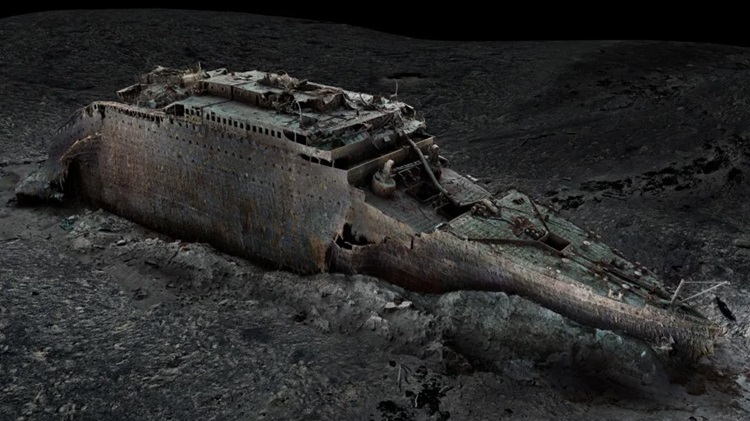
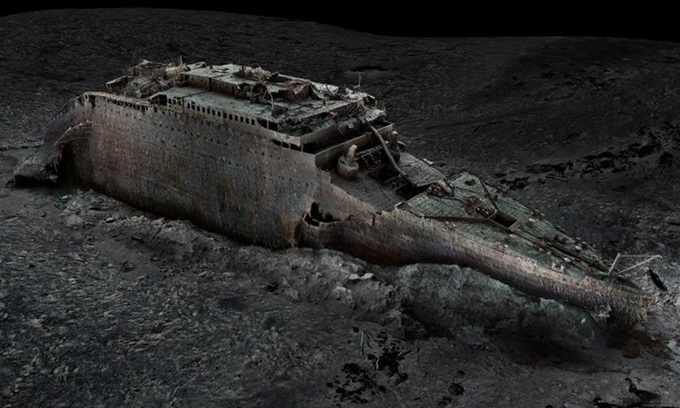
An accurate 3D simulation shows the ferocity of the ship breaking in half while sinking after hitting an iceberg in 1912, a disaster that killed 1,500 people. Scanned photos provide a new perspective on the steam room, confirming eyewitness accounts of engineers working until the last minute to keep the lights on on the ship, the BBC reported on April 8. Computer simulations also revealed holes in the hull as large as an A4 sheet of paper that led to the ship's tragedy, according to Parks Stephenson, an analyst of the Titanic accident.
The scans were examined in the new documentary Titanic: The Digital Resurrection from National Geographic and Atlantic Productions. The wreck, located 3,800 meters below the ice-filled surface of the Atlantic Ocean, was mapped using underwater robots. The digital version of the ship is the result of more than 700,000 photos taken from every angle.
Do xác tàu Titanic quá lớn và nằm trong bóng tối, việc thám hiểm tàu bằng tàu lặn chỉ thu được ảnh chụp mơ hồ. However, the scans provide the first full image of the Titanic. The ship's giant bow rested vertically on the seabed, as if the ship was continuing its journey. But 600 meters away, the ship's stern had become a pile of metal ruins. The damage occurred when the ship's stern crashed into the seabed after the ship broke in half.
New mapping technology also provides another way to study ships, according to Parks Stephenson. Full images of the entire wreck area are key to understanding what happened. Scans reveal many close-up details, including a window on the side of the ship that was definitely hit by an iceberg. This is consistent with survivor accounts of ice entering several cabins during the crash.
Experts studying one of the Titanic's giant steam rooms is easy to see from scans because it is located behind the ship's bow where the ship broke in half. Passengers shared that the lights were still on when the ship sank beneath the waves. The digital simulation shows some of the boilers are dented, suggesting they were still operating when submerged.
Trên boong của đuôi tàu, chuyên gia cũng phát hiện một van đang ở vị trí mở, có nghĩa hơi nước vẫn đổ vào hệ thống sản xuất điện. That's because the team of engineers led by Joseph Bell still shoveled coal into the furnace to keep the lights on. Tất cả đã chết trong vụ tai nạn nhưng hành động anh hùng của họ đã giúp cứu sống nhiều sinh mạng, theo Stephenson. "Họ đã giữ đèn và hệ thống điện hoạt động đến phút chót, giúp thủy thủ đoàn có thời gian hạ xuồng cứu sinh dưới ánh đèn thay vì trong ánh tối hoàn toàn. Họ đã ngăn chặn tình trạng hỗn loạn lâu hết mức có thể", ông nói.
The new simulation also provides additional insight into the sinking process. Các nhà nghiên cứu phải lập phiên bản cấu trúc chi tiết của tàu, tạo ra từ thiết kế của tàu Titanic, kết hợp với thông tin về tốc độ, hướng và vị trí, để dự đoán thiệt hại khi tàu đâm vào núi băng trôi. "Chúng tôi sử dụng thuật toán số học cao cấp, mô hình máy tính và khả năng của siêu máy tính để phục dựng lại khoảnh khắc tàu Titanic chìm", giáo sư Jeom-Kee Paik đến từ Đại học London, trưởng nhóm nghiên cứu, cho biết.
The simulation showed that the collision with the iceberg left a series of holes running along the narrow area of the ship's hull. The Titanic was once thought to be an unsinkable ship, designed to float even if its four watertight compartments were flooded. But the simulation calculates damage caused by icebergs spread across six compartments.
Theo Simon Benson, phó giảng viên kiến trúc hải quân ở Đại học Newcastle, vấn đề nằm ở chỗ những lỗ thủng nhỏ chạy dọc chiều dài con tàu, vì vậy nước ngập tràn vào chậm nhưng chắc chắn đổ vào mọi lỗi, cuối cùng làm ngập hết các khoang và khiến tàu chìm dần.
The tragedy of the Titanic is still clearly visible today. The personal belongings of the passengers on the ship were scattered across the seabed. The scans provide new clues about the night of the 1912 disaster, but it will take experts years to thoroughly examine every detail of the 3D simulation.
An Khang (According to BBC)