ASEAN seeks resources for scientific and technological cooperation
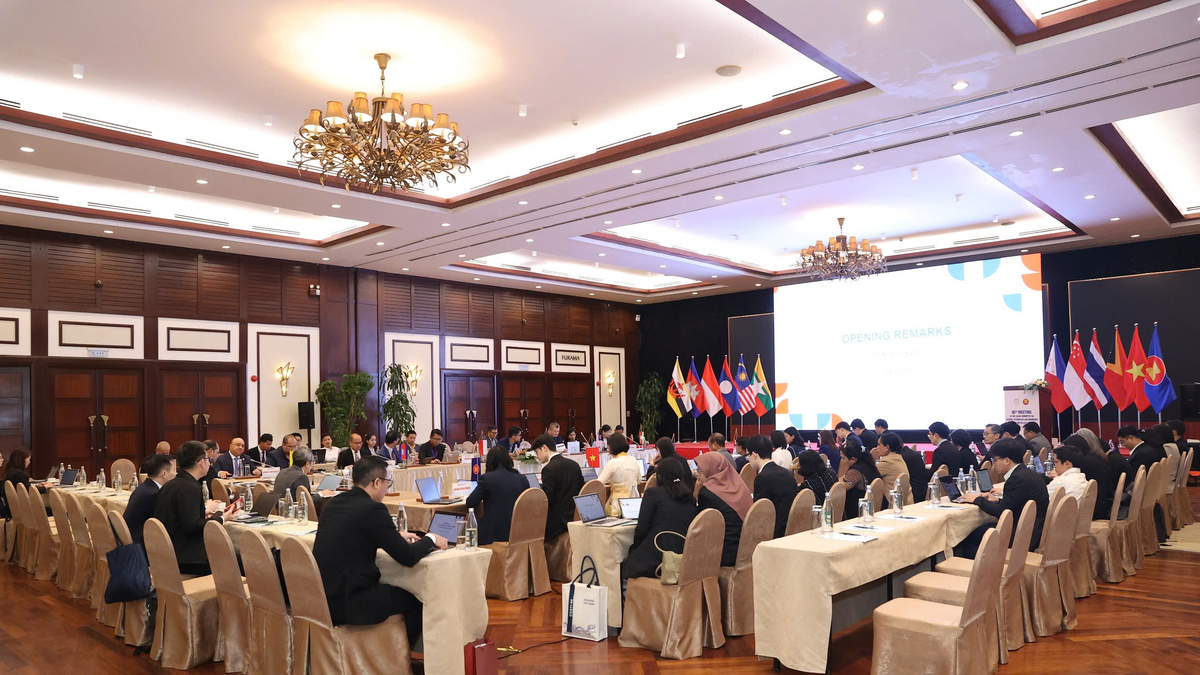
The content was presented at the 21st Meeting of the Advisory Council for the ASEAN Committee on Science, Technology and Innovation (BAC-21), within the framework of the 90th Conference of this Committee. This year's event is hosted by the Ministry of Science and Technology of Vietnam, held in Da Nang from October 13 to 15.
In the morning meeting on October 14, delegates reviewed the implementation of recommendations from the previous meeting, and focused on the situation of funding sources for ASEAN science, technology and innovation cooperation. Ensuring resources is considered a condition for cooperation programs to be implemented and promoted effectively.
This meeting was chaired by the Chairman of BAC, from Indonesia. "The focus of the discussion is the situation of funding sources for ASEAN science, technology and innovation cooperation, thereby contributing to ensuring that cooperation programs have enough conditions to be implemented and promoted effectively," the organizing committee's announcement stated.

At the conference, the parties also reviewed the progress of implementing priority economic results in 2026 and the preparation of results to be achieved in 2027, as a basis for consulting and recommending COSTI. Areas mentioned include space cooperation, artificial intelligence applications in health and technology transfer.
Another content is the mechanism to monitor and evaluate the ASEAN Action Plan on science, technology and innovation for the period 2026-2035 (APASTI 2026-2035). Delegates discussed how to ensure the plan is actually implemented, with measurable results, as a basis for adjusting cooperation priorities.
The results of discussion and recommendations at BAC-21 will be reported at the COSTI-90 plenary session for consideration and decision. These contents are the basis for ASEAN to continue to identify priorities, connect resources, and promote cooperation in science, technology and innovation in the coming period.
Previously, on October 13, COSTI's five specialized subcommittees held their first meeting under the new structure, after being streamlined from nine subcommittees. Areas include science, technology and innovation ecosystems; specialized and emerging technologies; biotechnology and food science; materials and energy technology; Earth, ocean and space science.
The restructuring aims to improve coordination efficiency and align professional activities with ASEAN's development priorities in the period 2026-2035. Subcommittees are responsible for identifying priority areas, developing annual plans with specific goals and evaluation indicators, and reporting implementation progress.
COSTI is a cooperation mechanism at the senior official level of ASEAN in the fields of science, technology and innovation, supporting the ASEAN Ministerial Conference and implementing regional cooperation orientations.
BAC is a consulting mechanism for COSTI, with the task of supporting the direction of regional cooperation, including developing and implementing action plans, managing the ASEAN Science, Technology and Innovation Fund, mobilizing resources from partners and promoting public-private cooperation to transform research results into socio-economic benefits.
This COSTI-90 takes place in the first phase of implementing APASTI 2026-2035. This year's event brings together about 250 delegates from ASEAN countries, the ASEAN Secretariat, partners, experts and scientists.
Luu Quy