Three major challenges for Starship to operate commercially
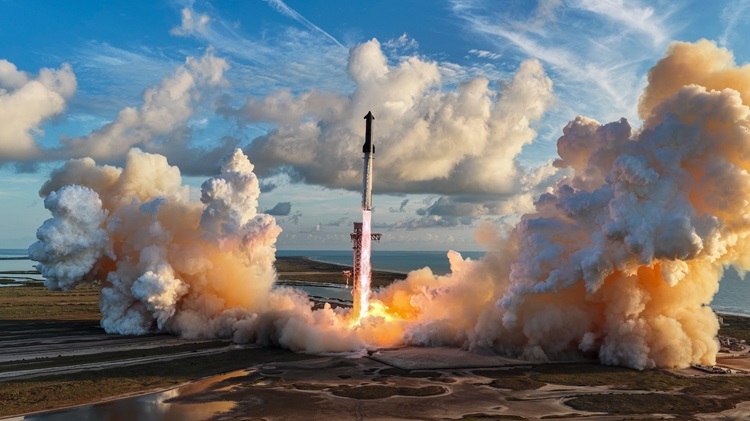
According to Space, Starship, the largest and most powerful rocket ever built, successfully flew into orbit for the first time on September 28 in test flight 14. This time, Starship also deployed 26 SpaceX Starlink V3 satellites, starting to build a super constellation of 100,000 satellites if everything goes according to plan. However, Starship still needs to complete other requirements to reach commercial operations.
Both stages of the Starship rocket, including the Super Heavy booster and the Ship upper stage, are designed for complete and rapid reuse. In future flights, SpaceX plans to return both parts to the launch pad and retrieve them using a mechanical arm nicknamed "chopsticks" on the launch tower. According to the company, this capture strategy will help effectively reuse to achieve the goal of launching Starship 10,000 times per year by 2030. Teslarati said applying the same capture method to the Ship flying back to Earth at high speed and higher heat load after orbital or suborbital flight could reduce launch costs by 100 times or more, support frequent satellite deployment and fly to the Moon, even Mars.
To date, SpaceX has successfully recovered the Super Heavy thruster stage using chopsticks in 3 flights. But the company has never tested this with the 52-meter-tall Ship, which typically lands in the ocean at the end of a mission. During the All-In Summit technology conference on September 14, founder and CEO Elon Musk said SpaceX could recover the Ship during test flight 15. Although the company has not revealed the launch date for the upcoming mission, the interim planning document shows that the earliest possible target is October 19.
The majority of Starship's missions will take place in Earth orbit, deploying satellites for the Starlink V3 constellation and the company's larger Starmind data center network (expected to include about a million satellites). However, the Ship can fly farther to the Moon and Mars on some missions. For example, NASA chose Starship's upper stage as the first manned lander in the Artemis program to build a base near the Moon's south pole over the next decade.
Starship's deep space mission will be more complicated due to the need for more fuel. The Ship cannot carry too much fuel to limit weight, so the vehicle will need to pair with a refueling ship in Earth orbit. This is a special variant of the Ship called "tanker". The number of refueling launches for each Starship deep space mission is quite large. For example, a lunar landing mission might require eight to 20 tanker launches.
Therefore, next Starship needs to demonstrate the ability to refuel in space. SpaceX initially successfully transferred fuel from one internal tank to another tank on the Ship during test flight 3 in March 2024. But the company has never transferred fuel from one vehicle to another in space, and they may do it in test flight 15.
Ready to carry astronauts
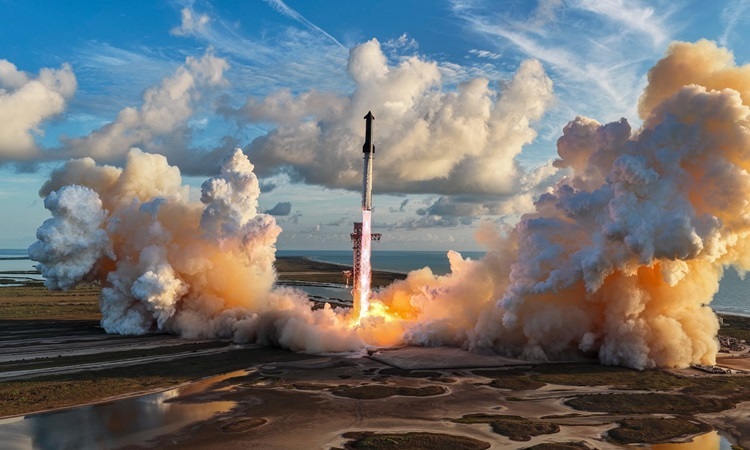
Starship is designed as a human transport ship, which can turn Musk's ambition to settle humans on Mars into reality. Therefore, SpaceX will need to integrate a series of life support technologies into Starship and test extensively before moving forward to carry people.
According to NASA's schedule, the Artemis III manned mission will take place in mid-2027, bringing the Orion spacecraft to connect with the Ship in Earth orbit. The Ship will need to be able to support humans by the time the Artemis IV mission takes place in 2028, landing astronauts near the Moon's south pole for the first time since 1972. SpaceX will likely upgrade the systems used on the Crew Dragon spacecraft. This vehicle has performed 20 missions to carry astronauts to low Earth orbit so far.