Inside the AI studio: 11 employees, producing 100 episodes every day
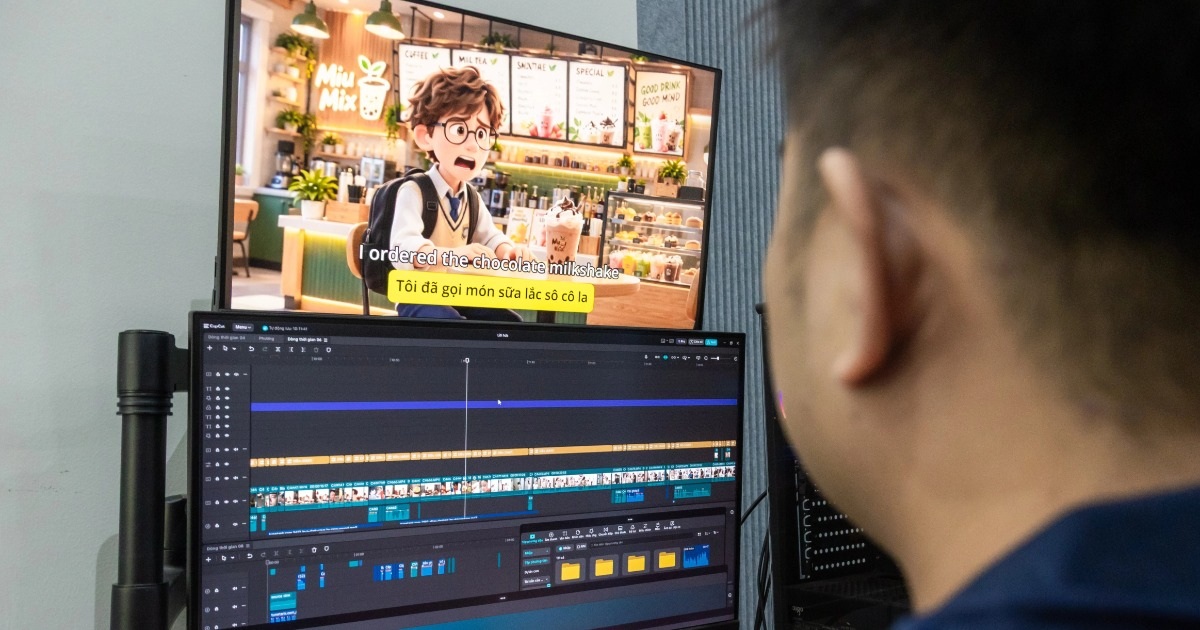

(Dan Tri) - With 11 employees, an AI film studio in Hanoi can currently produce about 100 episodes per day. The script, characters and each scene are controlled by humans before the finished product is published.
11 staff, 100 episodes per day
Inside an office in Hanoi, many computer screens simultaneously display characters, settings and videos in the process of being completed.
One screen is a cartoon, another screen shows characters that look like real people in an American movie-style setting. Most of these images were not shot with traditional cameras but were created using AI (artificial intelligence).
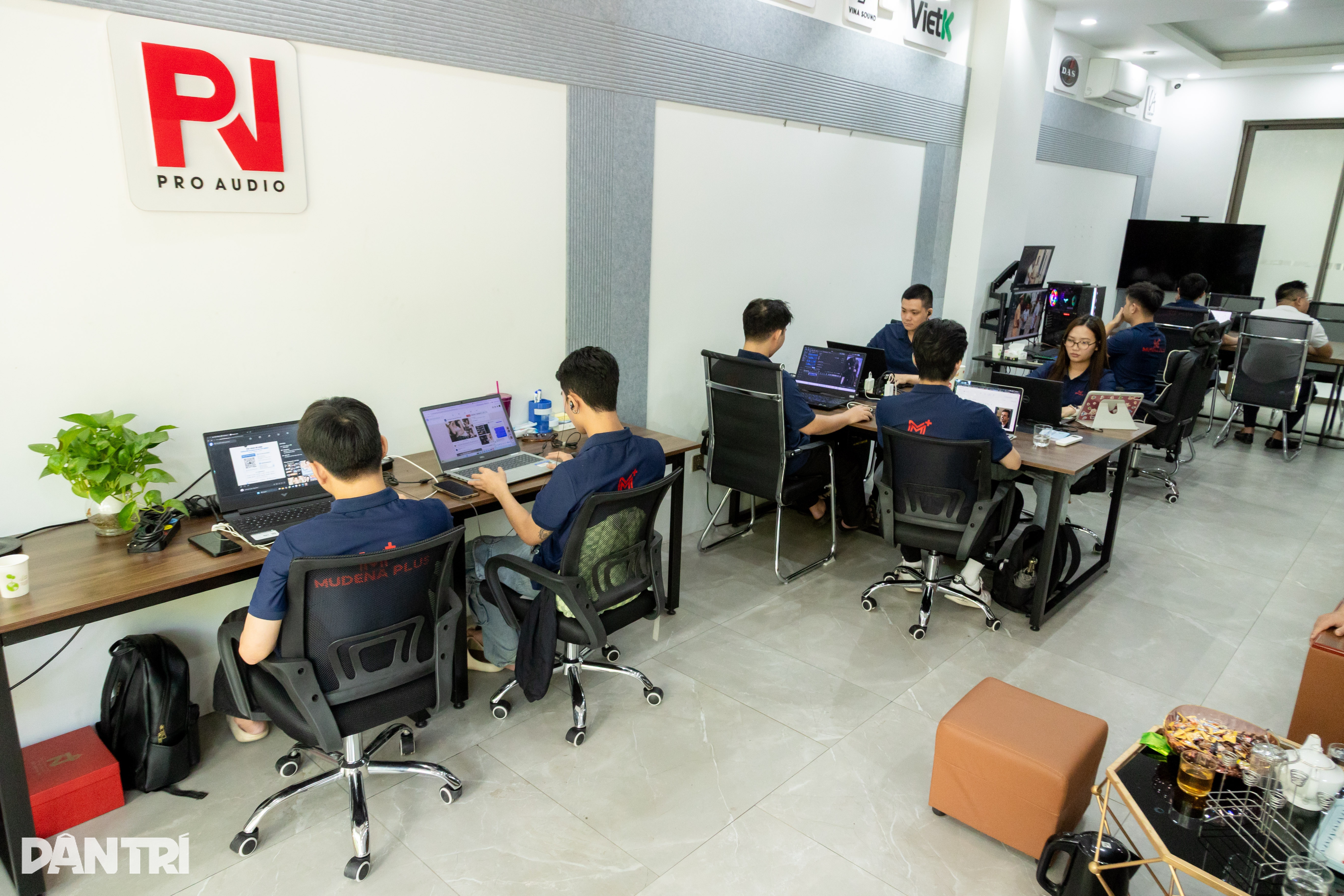
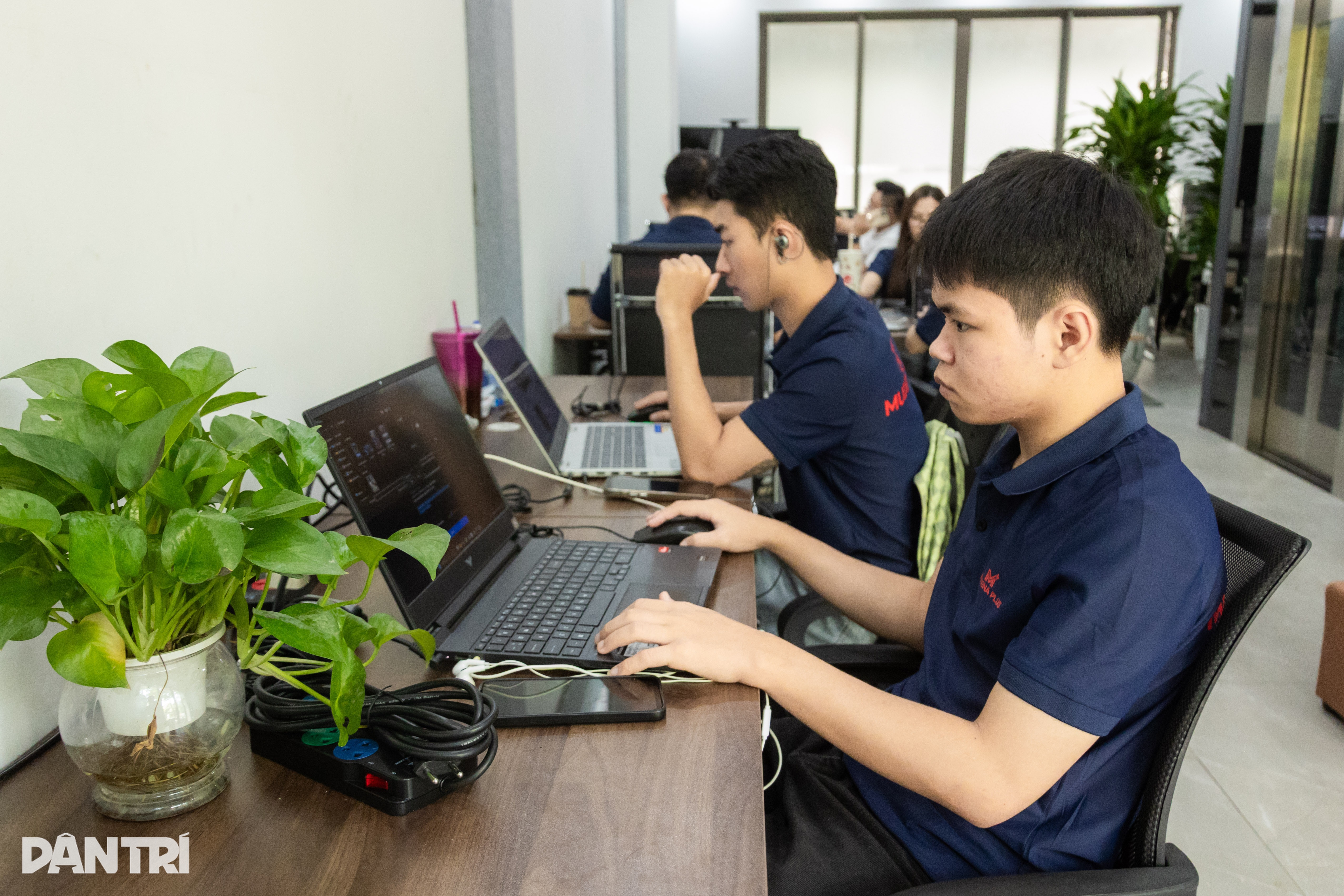
Inside the AI studio in Hanoi, 11 employees can produce about 100 episodes per day (Photo: Tuan Anh).
Director Ta Huy Cuong said that films with characters resembling real people and cartoons have been put into actual production.
According to Mr. Cuong, with the current scale, one employee can average about 10 to 20 episodes per day, depending on the genre and complexity. Twitter can currently produce about 100 episodes per day.
"Our plan is to move towards a larger scale, being able to produce thousands of episodes every day when the team is expanded," Mr. Cuong shared.
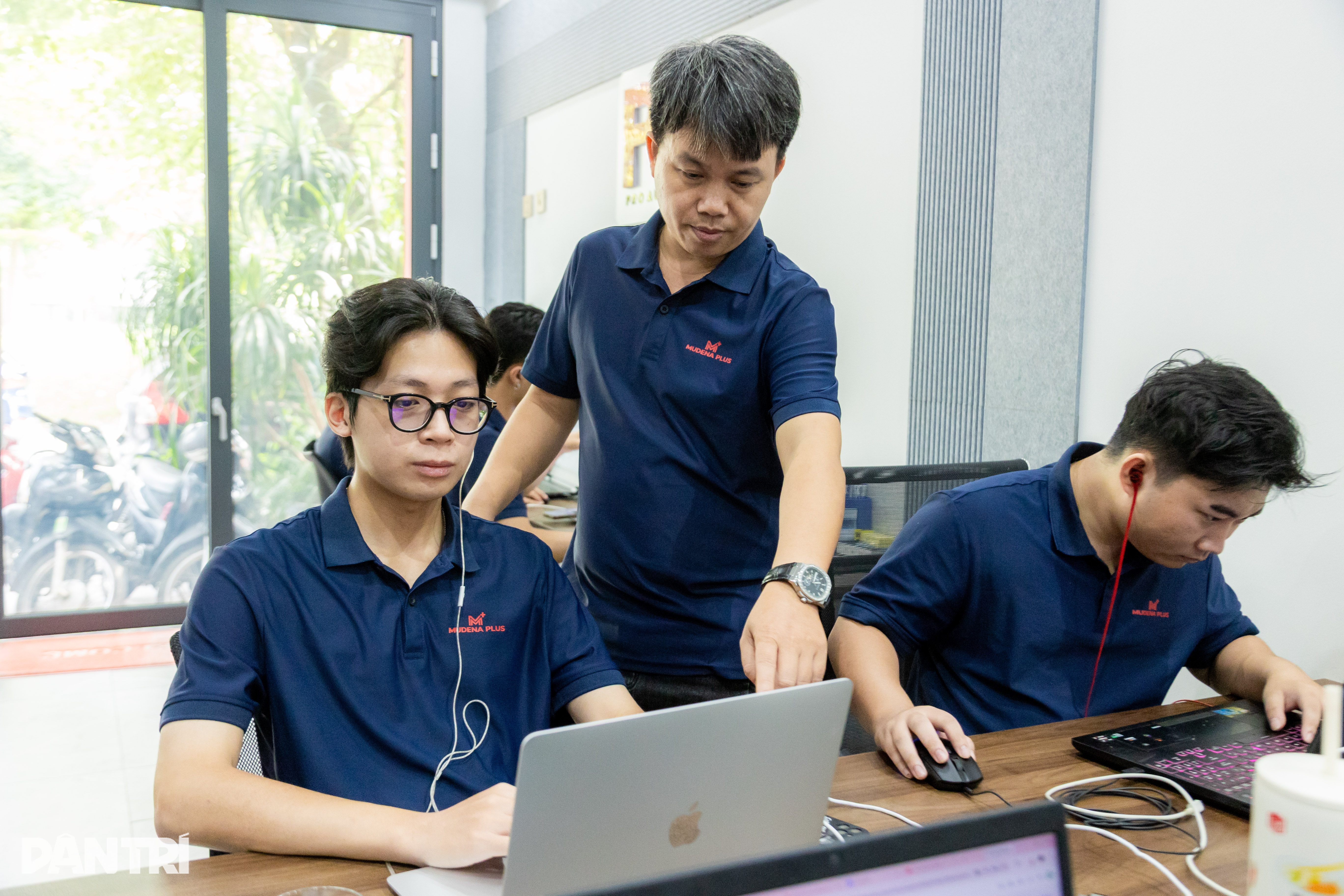

Staff at the factory monitor many AI film projects on the computer screen (Photo: Tuan Anh)
Currently, products are deployed in many directions, including action films, animations, films with real-life characters and content aimed at the international market.
The director said that the unit does not intend to develop drama content that only aims to stimulate negative emotions, create discomfort or controversy to retain viewers.
The way work is organized at the studio is also significantly different from a traditional film crew. Each employee is now trained to be able to understand and carry out the entire process from script development to finished product production.
As the scale expands, the studio will continue to more clearly divide departments such as editing, video creation, administration, content approval and business.
Although AI can support many stages, director Cuong believes that the most important element of a film is still the script.
"The most important thing is still the script. AI cannot replace humans at this stage," he said.
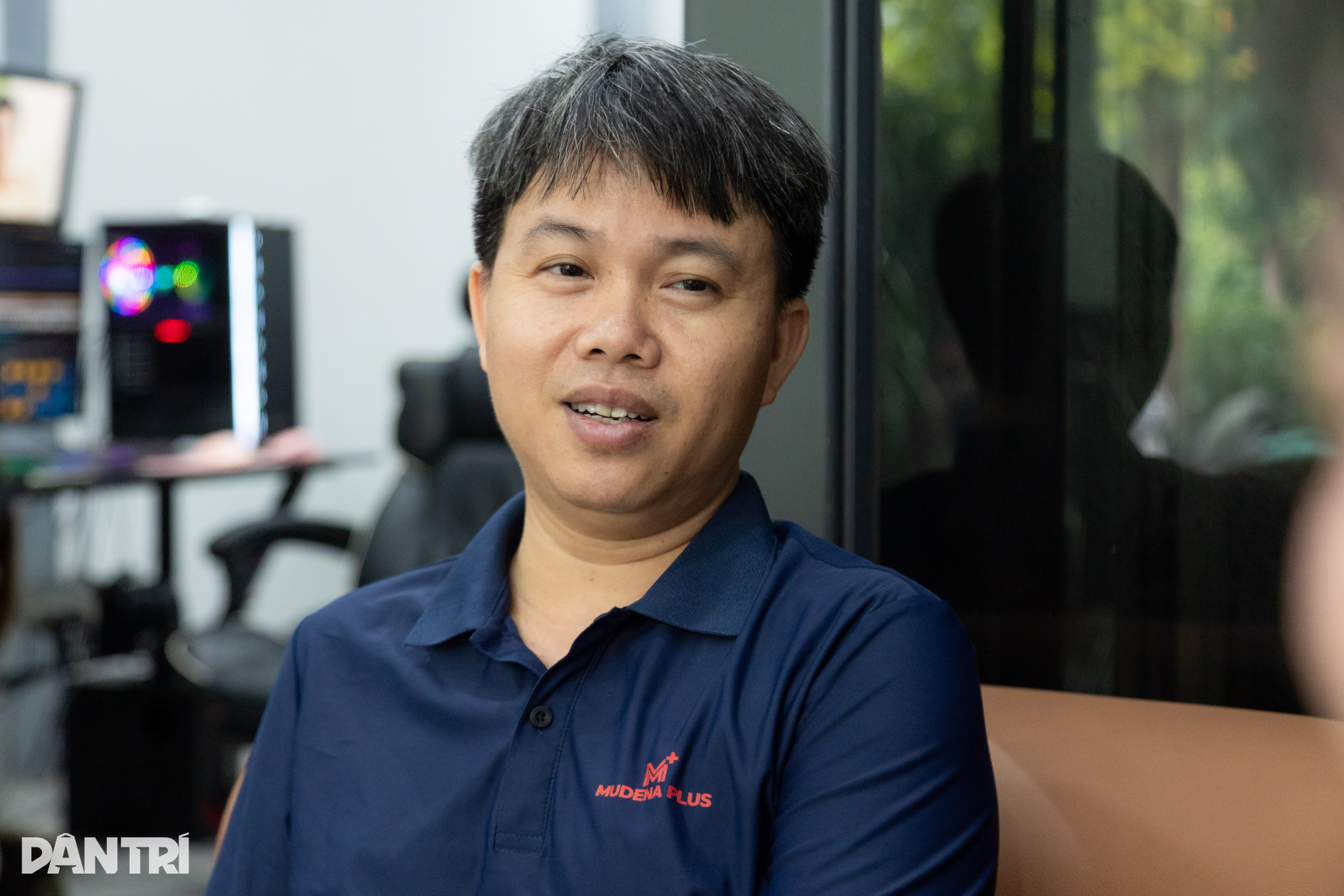
Director Ta Huy Cuong said the script is still the most important step in the film production process using AI (Photo: Tuan Anh)
According to Mr. Cuong, the script making process does not start by putting a command into AI and then waiting for the system to write the whole thing itself.
Before using AI, content creators must develop ideas and script outlines. This outline needs to be approved in advance to clearly define the topic, content, story direction as well as the limitations that need to be followed.
Only after the outline is agreed upon, AI is used to support the development of a detailed script.
The completed AI-powered script must go through another round of approval. The person in charge rechecks the content, structure, development, characters and level of compatibility with the original direction.
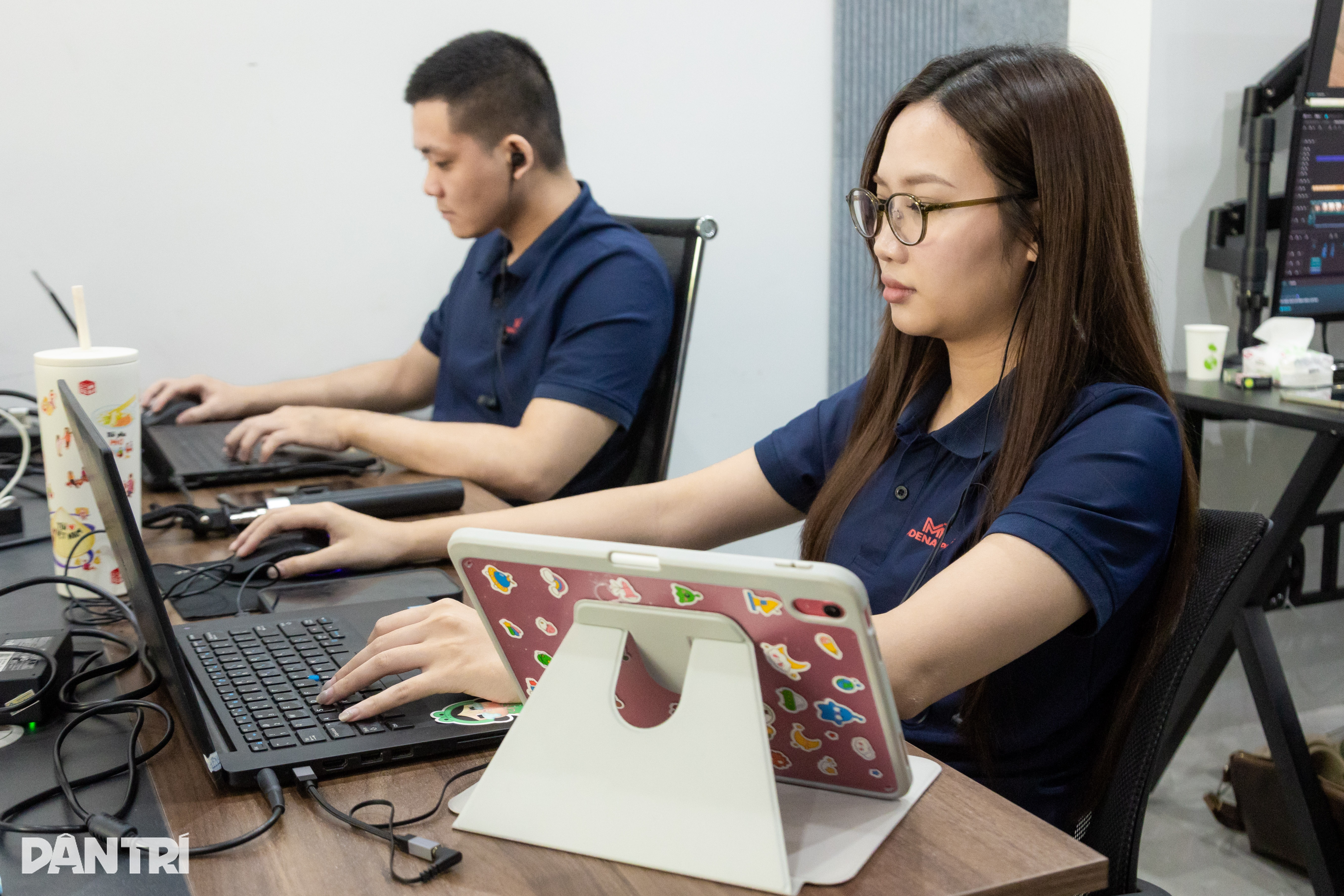
Before being included in the film creation platform, the outline and script must go through content censorship steps (Photo: Tuan Anh)
Only when the complete script is approved will the content be included in the film creation platform.
According to Mr. Cuong, AI can support idea development and expression, but product quality still depends greatly on the level of detail in human requirements.
If you just give a simple command and ask the AI to create the entire movie, the results will hardly meet the intended intention. On the contrary, the more clearly the filmmaker describes the characters, situations, developments, context and storytelling, the more the system has the basis to create a product close to the desired.
Therefore, the role of editor and screenwriter is still placed in an important position by the studio.
After the film is created, the product must continue to go through approval before publishing.
According to the director, this multi-layer process is intended to limit the situation where AI creates misleading, inappropriate content or deviates from the direction agreed upon from the beginning.
From complete script to an AI episode
Once the script has gone through rounds of review and is approved, the new content is fed into the AI film production platform.
In the workshop demonstration, the technician inserts an existing script into the system. The platform then begins to analyze the whole story.


AI can analyze the script, identify characters, backgrounds, props and automatically divide it into each scene (Photo: Tuan Anh).
The AI determines how many characters are in the script, what settings appear, what props to use, and the basic characteristics of each character.
From the results of this analysis, the filmmaker continues to prepare the image.
According to director Cuong, there are three main ways to bring characters into the film.
The first way is for AI to create its own character based on the content and characteristics described in the script.
The second way is to provide a reference image for the AI to create a character based on that image.
The third way is to directly use a pre-prepared image and ask the system to maintain that character throughout the scenes.


Personnel at the factory check character images and each scene before asking AI to create a video (Photo: Tuan Anh).
At the workshop, the team often prioritizes proactively preparing character images and backgrounds instead of leaving everything to AI to create on its own.
According to the director, this method helps producers better control the character's appearance, visual style and consistency between scenes.
Some images may be created first with other AI tools and then brought into the filmmaking platform.
Once the characters, settings and props have been determined, the system continues to automatically divide the script into small scenes.
Each scene contains information about the character, dialogue, setting and action to be shown. Filmmakers can check each part before asking the AI to create the video.
Instead of bringing in the entire scenario and then pressing a button to let the system do it from start to finish, the team chose to control each step.
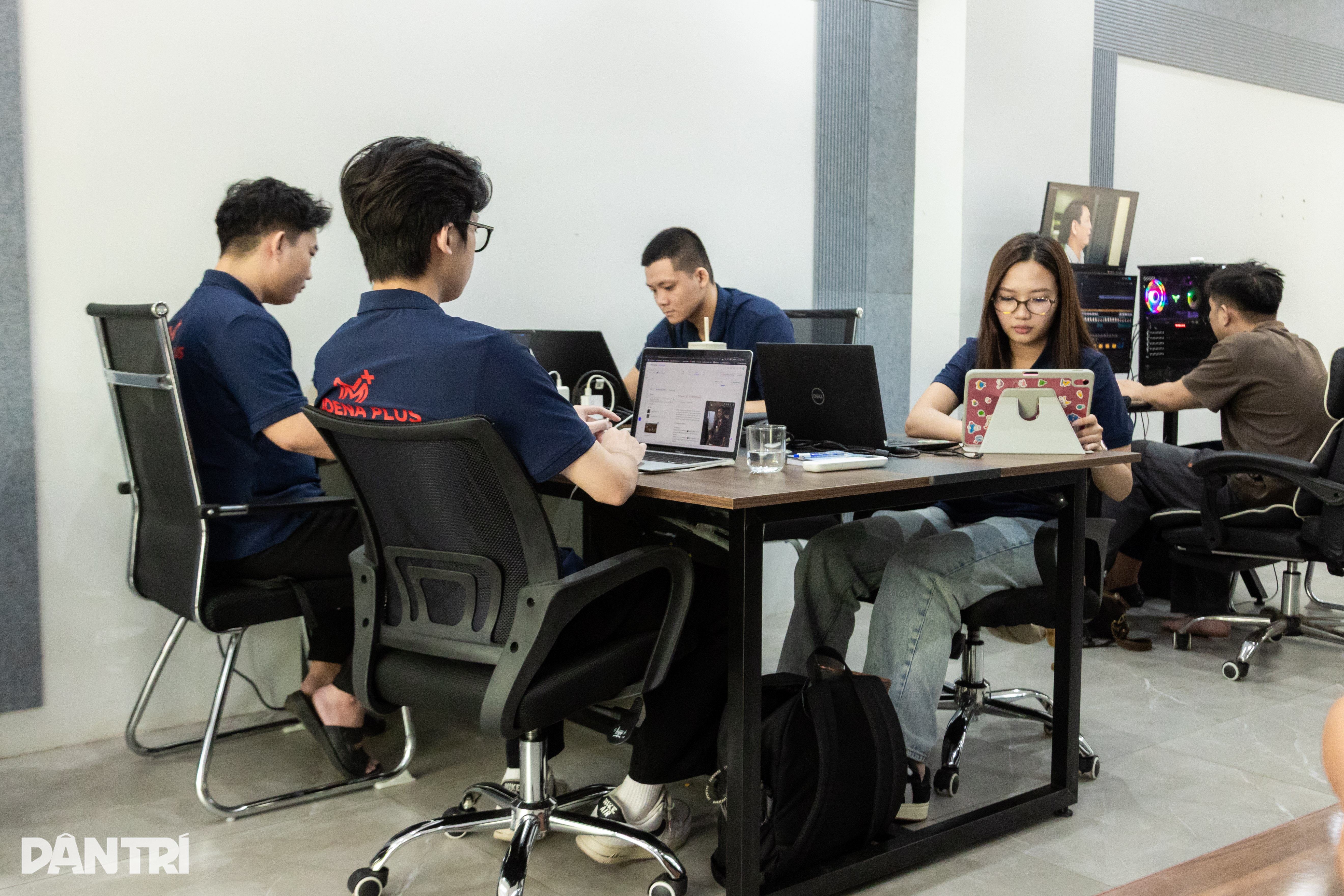
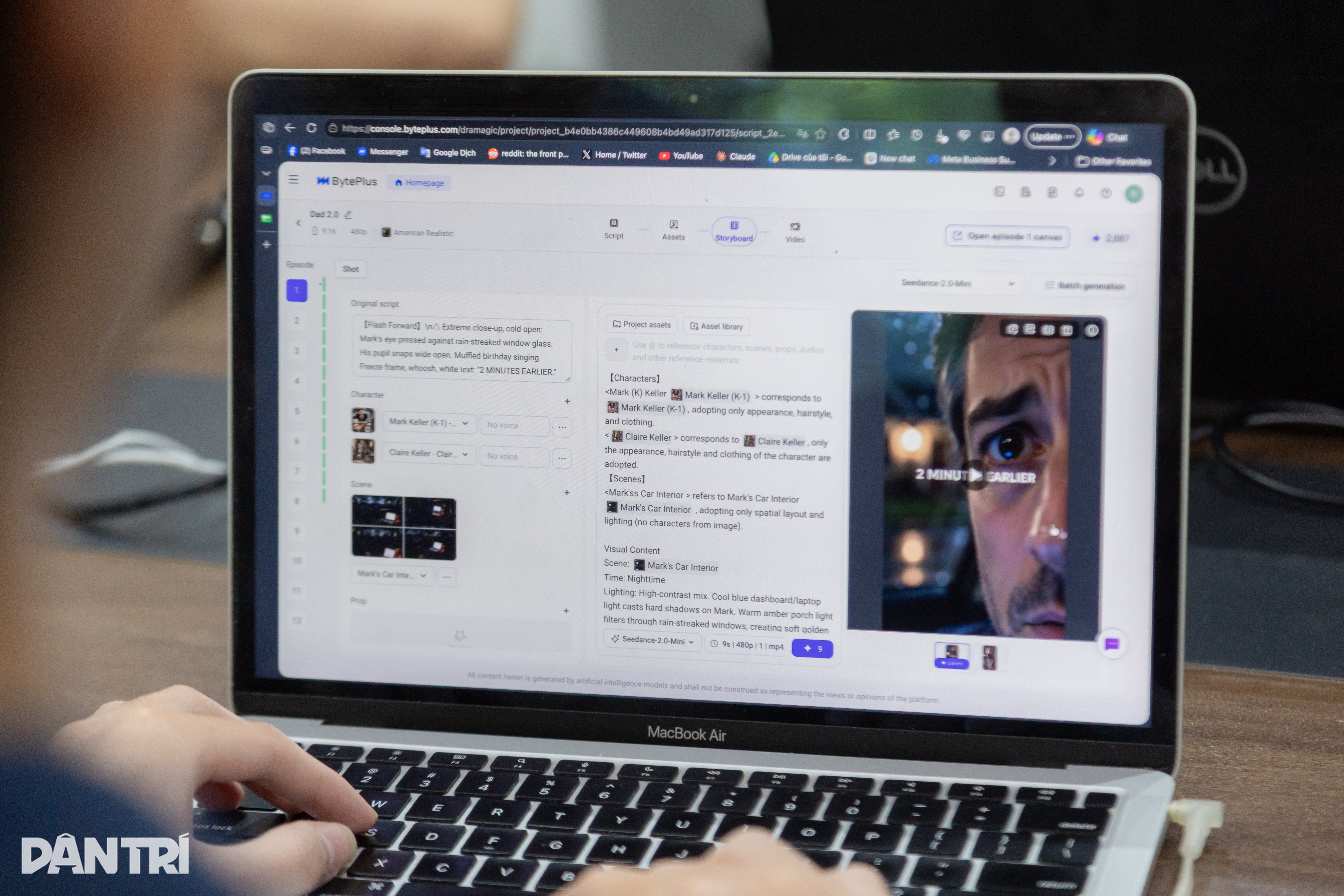
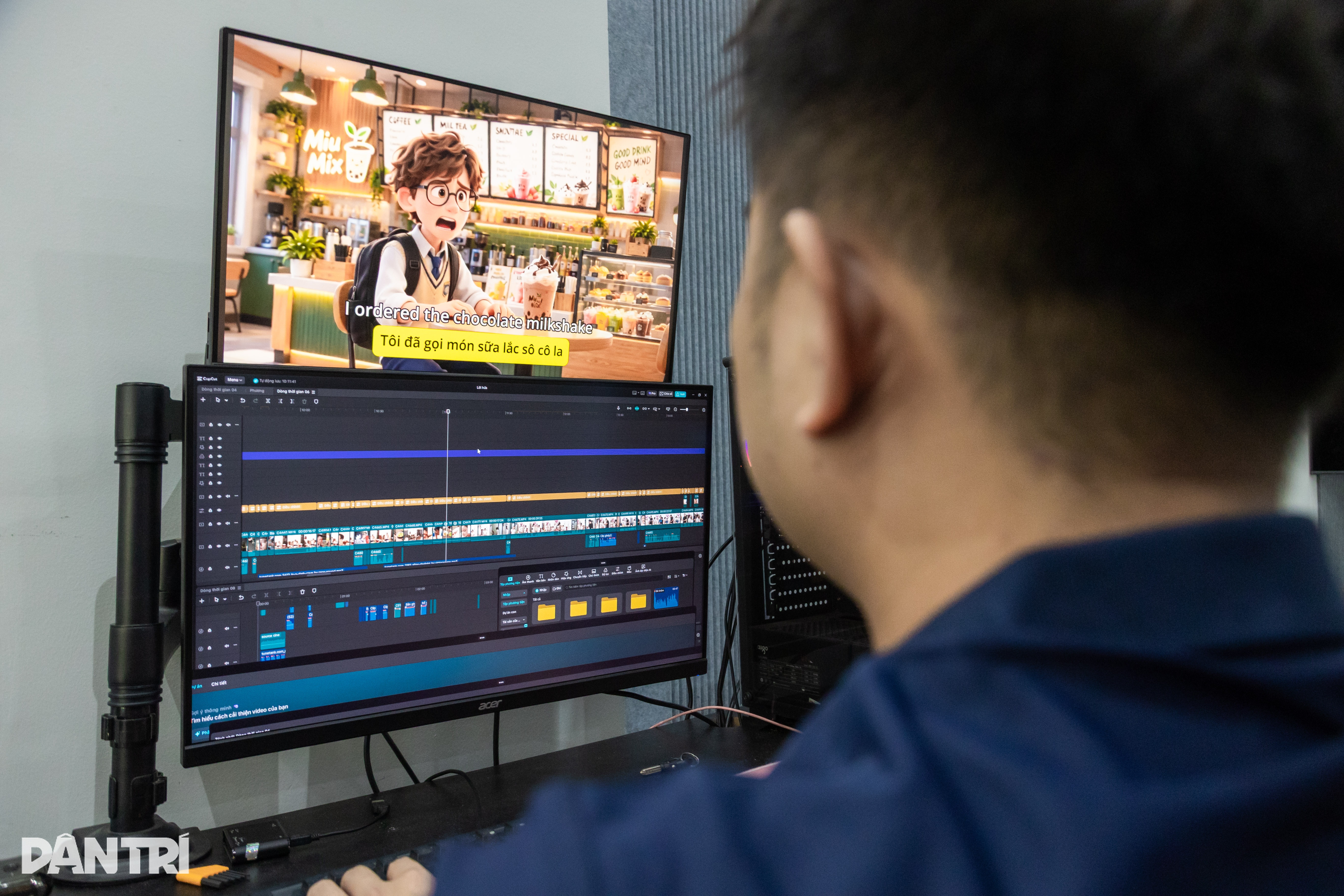
After the scenes are created, the video continues to be post-produced, processing sound, dialogue and subtitles to complete the finished product (Photo: Tuan Anh).
According to Mr. Cuong, this method takes more work but helps detect and edit immediately if the character, scene or image is not as intended.
After each video segment is created, they are merged into a complete episode.
The videos continue to be transferred to post-production software to combine scenes, adjust rhythm, process sound, subtitles or dialogue.
With movies using Vietnamese, the process still has one more step because the main platform is not fully optimized for this language. The team must use other AI tools to process the voice or voice the character.
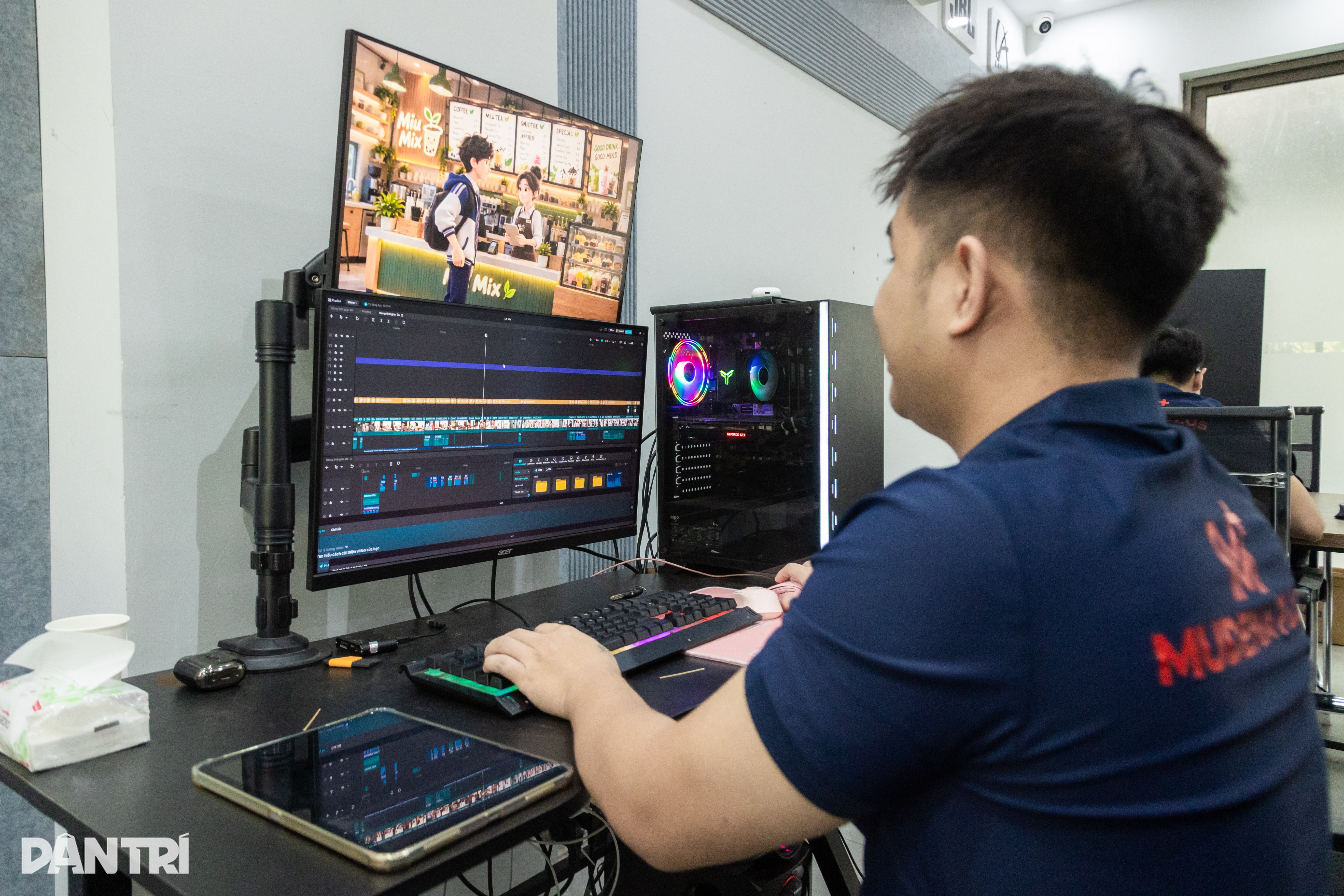
According to director Ta Huy Cuong, a short film can be produced in about 15 minutes when the script and data are fully prepared (Photo: Tuan Anh)
According to director Cuong, if the script, characters and necessary data have been prepared, a short episode can take about 15 minutes to produce.
This speed makes a big difference compared to the traditional filmmaking process, which requires actors, sets, cameras, lighting and a large crew.
However, at the factory, AI does not operate completely independently. Humans are still involved from the stage of building and approving the outline, checking the script after AI completes it, selecting characters, controlling each scene until approving the final product.
AI helps significantly shorten production time, but deciding what story the film tells, how the characters appear, and what products are allowed to be brought to the audience still belongs to humans.
Photo: Mr. Nguyen