How Australia applies technology to promote the marine economy

"Australia may be a large country, but its waters are larger than its land area and play a central role in national identity," Murray Watt, Australian Minister of Environment and Water, said at the United Nations Ocean Conference in France in June 2025. He commented that this country possesses one of the "most diverse and magnificent seas on the planet".
According to the Australian Geosciences Agency (GA), Australia's exclusive economic zone is about 10 million square kilometers, significantly larger than the land area (7.69 million square kilometers). A report published late last year by the Australian Institute of Marine Sciences (AIMS) said that the marine economy here will generate more than 160 billion USD and more than 710,000 jobs by 2023.
To protect and exploit marine economic potential, Australia has actively applied modern technology in recent years.
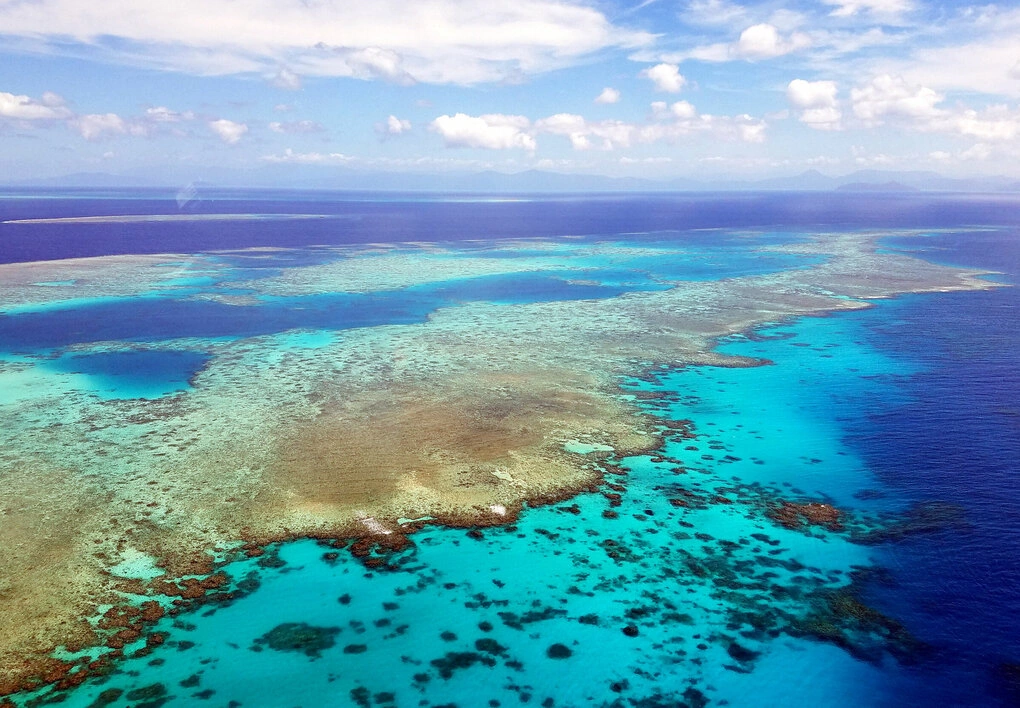
In the early 2020s, AIMS realized that self-driving ships were developing rapidly, but faced the challenge of lacking testing facilities. By 2022, with the support of the Queensland state government, AIMS opened the ReefWorks facility near the city of Townsville.
ReefWorks provides the expertise and facilities to regularly test and evaluate robots, autonomous vehicles, and AI systems at sea. This is the first facility of its kind in Australia, and one of the few facilities in the world located in tropical waters.
During its first year of operation, ReefWorks' testbeds were used by five developers to test and evaluate marine technology products, including ADR, Unique Group, Edge ROV, Surfbee, and James Cook University.
At the end of 2023, the Australian Scientific and Industrial Research Organization (CSIRO) completed testing of the AquaWatch system in Spencer Gulf, known as the country's "seafood bowl" with an annual output worth more than 165 million USD. AquaWatch combines data from water sensors and satellites, then processes it with computer models and AI to monitor and forecast water quality in almost real time.
Experts say that information from the new system could bring a turning point for the seafood industry, helping to provide early warnings about changes in temperature and salinity, which greatly affect marine life. "We do monitor water quality, but this takes a lot of time and effort. Real-time systems help us scale up monitoring and adjust feeding cycles," said scientist Kirsten Rough from the South Australian Bluefin Tuna Industry Association.
For example, early prediction of algal blooms, which can kill fish by reducing oxygen in the water, helps experts quickly make decisions such as moving cages away from areas with algae, thereby preventing damage.
According to Dr. Nagur Cherukuru at CSIRO, AquaWatch helps better cope with extreme weather and adverse events, such as heavy rain flooding oyster farms. Cherukuru added that the system could be used for many industries other than seafood, and could even benefit entertainment.
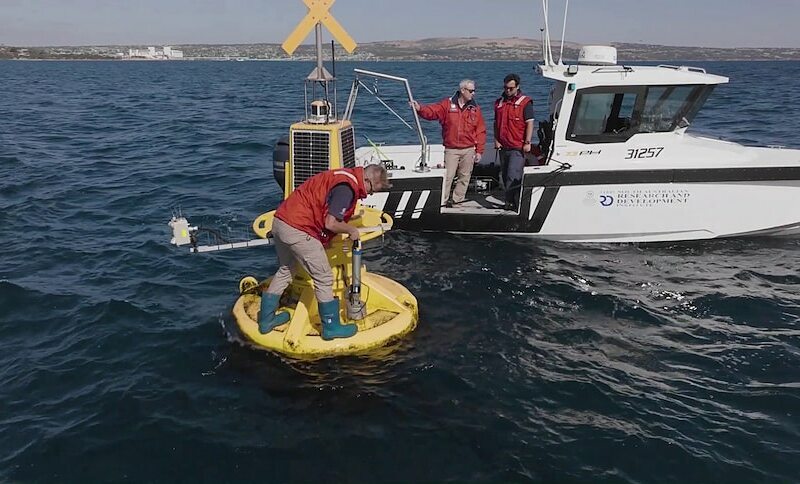
In 2024, AIMS introduced the ReefScan coral reef monitoring system designed by the institute in collaboration with several partners. ReefScan uses robotics, advanced image sensors and machine learning technology to transform field data into insightful information about the health of important marine ecosystems like coral reefs. According to AIMS, the system helps free human labor from daily repetitive tasks to spend more time on knowledge development and decision making.
Coral reefs play an important role in Australia's marine economy. The country owns the world's largest coral reef system, the Great Barrier, attracting a large number of tourists with nearly 3,000 individual coral reefs spread over an area of 344,400 square kilometers - approximately the size of Germany. Not only does it have impressive natural beauty, according to data from the Australian Department of Climate Change, Energy, Environment and Water (DCCEEW) late last year, Great Barrier also provides 77,000 jobs and contributes 6.4 billion USD per year to the country's economy.
Due to its great importance to the marine environment and economy, Australia focuses on protecting and restoring coral reefs. In addition to ReefScan, in 2025, AIMS will also develop the DGS coral reef planting support system, combining advances in marine robotics and AI. The system allows a series of young corals to be brought, placed in specialized equipment, to favorable growing locations in the Great Barrier.
"The system is not a single technology but includes many technologies combined into one process, helping to increase coral growth efficiency. The goal is to ensure planting equipment is deployed accurately and safely at designated locations," explained Dr. Ben Moshirian, DGS project engineer.
AIMS said it plans to carry out this work on a scale that would be nearly impossible, or prohibitively expensive, to rely solely on manual human labor. A big advantage is that the system is compatible with many types of ships, from specialized research ships to cruise ships, increasing the possibility of large-scale deployment.
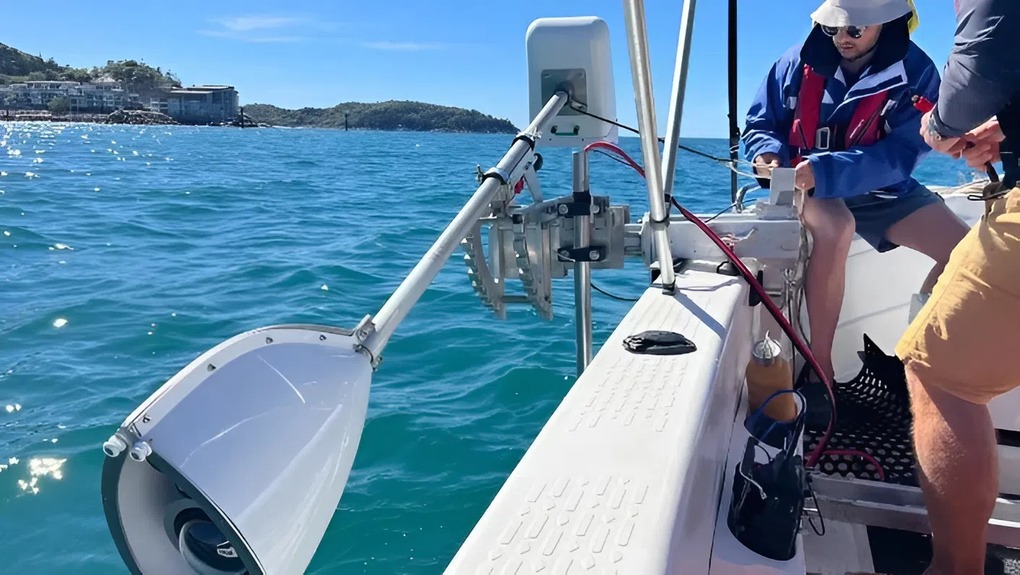
In 2026, Australia will continue to have many technology application initiatives to promote the marine economy. Last month, a research team at Australian Catholic University (ACU) revealed a real-time fish counting AI system, achieving good results with real-world testing in a commercial environment. According to the research team, automating fish counting can help reduce losses, improve feeding efficiency, and provide farmers with continuous information about fish stocks without requiring much human labor.
Professor Niusha Shafiabady at ACU commented that for fish farmers, the new AI system helps reduce the burden and labor pressure by replacing manual counting with a continuously operating system. "At scale, such tools help stabilize food supply chains, protect livelihoods and make it easier for people to access quality protein sources in the context of rising global demand," Shafiabady commented.