Ways to conserve giant fish in the Mekong River
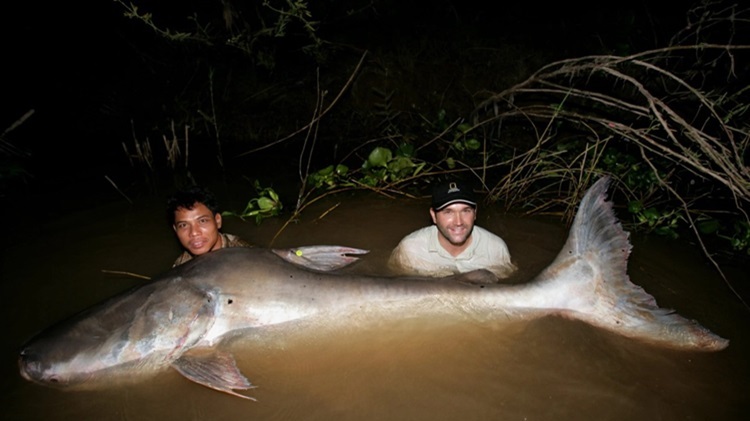
Through a research initiative called the Wonders of the Mekong project, Zeb Hogan, a biologist at the University of Nevada, Reno, and his colleagues spent years building trust and improving communication with fishing communities, thereby motivating them to notify authorities about bycatch cases. In 2024-2025, people reported more than a dozen times that a catfish was accidentally caught in a net. To increase collaboration between conservation experts and fishing communities, researchers developed the Mekong Fish app, which allows people to record each catch in real time, including entering size, uploading photos, and automatically saving GPS coordinates. The data is then shared directly with fisheries authorities and flagged as threatened species. During six months last year, pilot areas recorded 965 fish belonging to most of the 18 species in the management list.

Pin Kakada, a doctoral student at the Royal University of Agriculture of Cambodia, leader of the application development team, shared. "Before, we could see fish in the market, but didn't know where they were caught or how many were caught. Now we have the data."
In addition to the application, the authorities also arranged a hotline and established a rapid response team specializing in rescuing giant fish. When a fish of a critically endangered species is caught by mistake, fishermen call the hotline or notify local authorities to send a rescue team to rescue it.
In early January, during the peak fishing season in Cambodia, Chea Seila, a member of the rapid response team, received news that fishermen had caught a 95 kg catfish. Within hours, she and her colleagues were on the scene measuring, tagging and releasing this critically endangered fish back into the water. After that, Seila continued to receive a call from near Phnom Penh reporting that fishermen accidentally caught a 78 kg barb fish, an animal that is also seriously endangered. The response team released this giant fish back into the river.
According to Science, in June 2022, thanks to information from local fishermen, a group of scientists working on the Wonders of the Mekong project discovered a giant manta ray weighing 300 kg and nearly 4 m long from head to tail, breaking the record for the largest freshwater fish ever recorded. After measuring the size and wearing a tracking tag, they released the animal back into the wild.
According to National Geographic, the Mekong River, which stretches across 6 countries, contains more species of giant fish than any other river on Earth, some species can weigh more than 270 kg. Once abundant throughout the Mekong River basin, the giant fish's population has declined dramatically in recent decades due to overfishing, dam construction, and fluctuating river water levels.
Giant freshwater fish are one of the most threatened animals on Earth. In some areas, populations of giant freshwater fish (which can weigh up to 90 kg or be 1.8 m long) have declined by more than 95% since 1970. The Mekong River contains more giant fish than any other river possibly due to its unique flood seasons, deep-pool environment and high biodiversity that allow the fish to grow extremely large.

The giant fish's population decline is not only due to overfishing but also due to major changes upstream. Since the 1990s, China has built a series of dams on the upper reaches of the Mekong River, changing the flow through which fish have migrated for millennia. Laos expanded hydropower production, sand mining increased and the river's flood rhythm was interrupted.
When Hogan began studying Mekong catfish in northern Thailand in the late 1990s, the fish were in sharp decline. According to records of the Chiang Khong Fishermen's Club, the number of breeding-age catfish caught each season was 80 in the 1980s but by 1997, the number had dropped to less than 10. In recent decades, some seasons fishermen have not caught any fish.
"The Mekong River still faces major challenges. But what we are seeing suggests that conservation can be effective even in a system under pressure," said Hogan.
An Khang compiled