The 23-year-old man opened a $10 billion startup to confront Meta
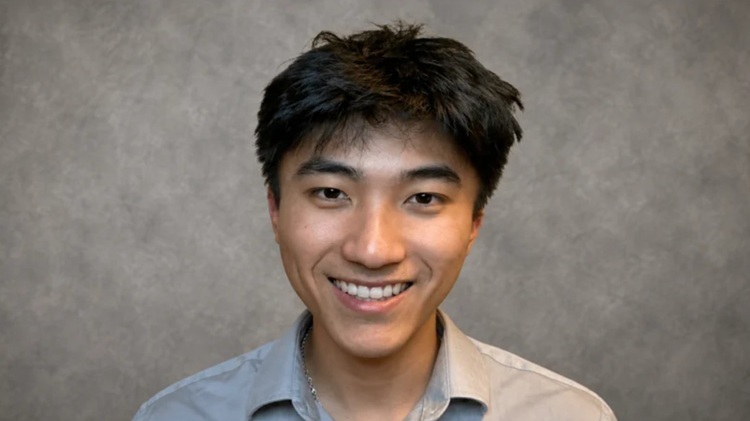
At the age of 23, Noah Shinn, an American engineer and technology entrepreneur, founded the California startup Spear Street Technology. Instinct, a limited-format personal AI assistant developed by Shinn and launched this summer, quickly went viral in Silicon Valley tech circles.
With Instinct, the company successfully raised more than a billion USD to reach a valuation of 10 billion USD thanks to the ability to take direct action on behalf of users. This boom turned the college dropout into one of the brightest young founders in the AI world, while also turning his small startup into a direct competitor to tech giants like Mark Zuckerberg's Meta.
Instinct's rapid development marks a new stage in the AI race. After years of competition to build the smartest chatbot, the battle is shifting to developing assistants that can complete tasks like booking hotel rooms, scheduling meetings, and handling daily tasks without much prompting. Meta and other tech giants have huge advantages in money, computing power and distribution.
A few weeks after ChatGPT launched in November 2022, Shinn, then a student at Northeastern University, responded to a LinkedIn post by Massachusetts Institute of Technology (MIT) professor Ashwin Gopinath, who was looking for students to tinker with this new technology while on vacation. Gopinath shared that he felt a bit bored during the Christmas break and came up with a research idea. Over the next three months, Gopinath, Shinn, and four others wrote a research paper discussing how to help AI agents, an early technology at the time, better learn from mistakes. The core idea of the research is that AI agents can improve by remembering previous mistakes.
Gopinath, who later founded AI startup Sentra, thinks Instinct could work on a similar approach. A research paper presented at the NeurIPS artificial intelligence conference describes a foundational technique called Reflexion that helps AI agents learn from interactions with the outside world.
According to Arjun Guha, one of Shinn's computer science professors at Northeastern University, although many people have refreshed it since then, the basic technique is still in a 2023 paper written by a sophomore, before GPT-4. "There are hardly any students who can write research papers in college. Even fewer can do it without any help," Guha said.
Steven Holtzen, another computer science professor at Northeastern University, told Business Insider Shinn was a quiet student who preferred to listen attentively rather than speak and often emailed late at night with very detailed questions. In a letter of recommendation, he wrote that Shinn had "motivation and independence, and the ability to explore and research on his own without much guidance."
Shinn grew up in the San Francisco Bay Area and attended a private high school in San Jose. He then attended Northeastern University, then dropped out in 2023 to become one of the first employees at San Francisco-based AI startup Sierra. Led by Bret Taylor, president of OpenAI, Sierra specializes in developing customer support agents. Shinn worked as an AI researcher on most of Sierra's core products and received many compliments from Taylor. Meanwhile, he continues to co-author research papers on AI, focusing on enhancing the agent's ability to follow instructions, use tools, and program.
In September 2025, Shinn left Sierra to focus on developing Instinct, a project that had just been tested in the summer of the same year with a sketchy website and no introduction video. Instinct went against the trend of startups launching with flashy videos by choosing an exclusive invitation format for venture investors, creating a feverish effect on social networks.
Spinnable.AI said Instinct operates under an action AI model to automate daily life tasks instead of just responding to passive information. Users interact with Instinct entirely via text messages, voice recordings, or phone calls through several channels. When receiving requests such as making restaurant reservations, rescheduling flights, organizing emails, shopping, the assistant executes tasks by controlling a virtual computer on a cloud platform with full access to browsers and applications in the same way a human would. Instinct combines advanced logical reasoning, long-term memory to remember the context of conversations, and connectivity with applications to complete complex task sequences without constant human intervention.
Wired tested Instinct and said this AI assistant could cancel plane tickets to Alaska that were difficult to change, helping reporters save $550. It also supports restaurant reservations and fraud warnings. Testers also emphasized that Instinct did not clog their phones with unnecessary messages.
According to Tech Funding News, on August 26, Shinn first shared on Twitter that he was extremely excited about everything Instinct users were doing, from shopping for necessities, planning trips, booking concert tickets to canceling paid subscription services. Shinn raised $250 million in a Series B funding round in August 2026 at a valuation of $2.5 billion (plus $100 million previously raised). This was followed by a $1 billion Series C funding round in September 2026 that raised the company's valuation to $10 billion.
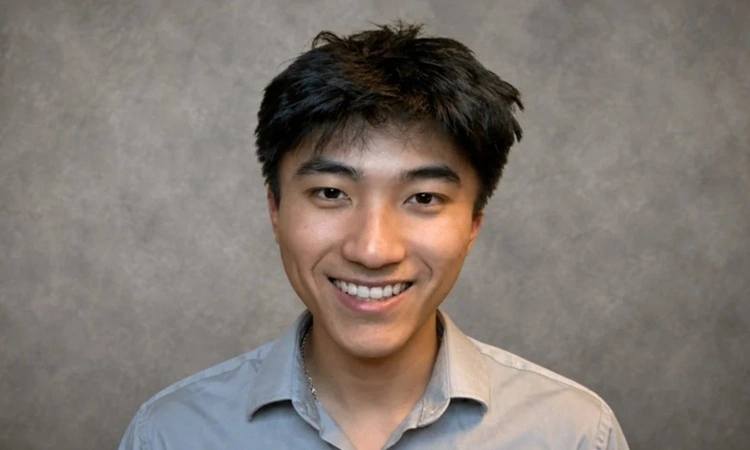
Despite its rapid growth, Instint is facing a much larger competitor, Meta. Last year, Zuckerberg, CEO of Meta, pledged to build a "super personal artificial intelligence" through an internal project called Hatch. This project aims to develop a personal assistant that can help users perform tasks such as going to the market to buy food.
Meta launched its AI agent Muse a few weeks after Instinct, and it quickly became popular, rising to the top of the app rankings. In a post on Threads, Zuckerberg said Meta delayed the launch of Muse due to concerns about AI safety and security. Meta also needs time to ensure Muse actually follows user instructions and does not arbitrarily purchase products without permission.
The tech giant possesses a key advantage: the financial resources and computing power that keep its products running smoothly. Meanwhile, Instinct, a free service that sometimes suffers from severe lag due to high user demand, depends on capital flows from investors.
Muse and Instinct are competing fiercely for dominance in the world of AI assistants. Although it is unclear who will be the ultimate winner in this race, Instinct has proven that the next generation of AI assistants does not necessarily have to come from large technology corporations.