Rocket launch costs have dropped 96% in six decades
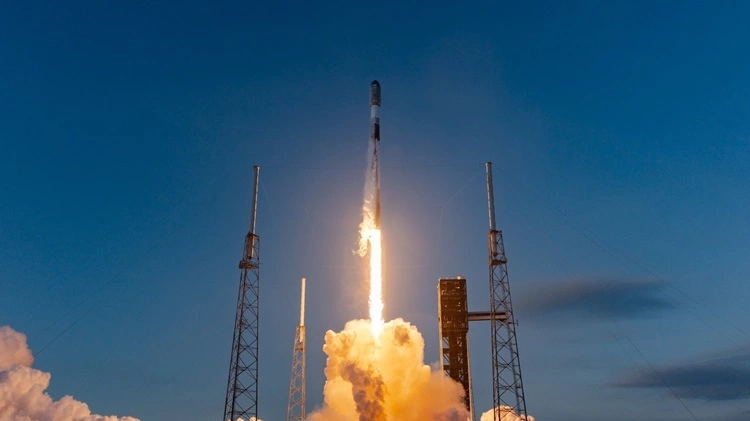
According to Space, in research published on July 14 in the journal PNAS Nexus, scientists gathered the largest data set ever including 4,405 launches from 1960 to 2025 with 330 different missile configurations developed by the US, Russia, China, India, Europe, Japan, Australia, Brazil, Israel, Iran, South Korea and Ukraine. The team calculated that in 2024 dollars, the average cost to put a kilogram into orbit has decreased by 96%. According to Earth, this number is expected to decrease by more than 58% to 1,569 USD in 2030 and 273 USD in 2040.
The pace of cost reduction in the space industry is among the fastest in history. The researchers calculate that every time the cumulative payload of the entire space industry doubles, the average cost to put a kilogram of cargo into orbit drops by 21.2%, surpassing the rate of decline in the cost of solar cells. They compare the downward trend in rocket launch costs to the advent of steamships in the 19th century. As global trade expanded, the cost of transporting goods by steamship decreased by about 15.5% every time the volume of cargo doubled. According to Singularity Hub, rocket launch costs are rapidly falling according to an economic principle called Wright's Law. According to this principle, technologies will become cheaper as cumulative production increases.
Dr. Alessio Terzi from the School of Public Policy at the University of Cambridge and Dr. Francesco Nicoli from the Polytechnic University of Turin point out two main reasons for the sharp decline in launch costs after 6 decades. First, the end of the Cold War prompted countries to turn to space for commercial purposes. Second, the research team's data shows that the rate of learning in the space sector has increased sharply since SpaceX launched the Falcon 9 rocket, opening up the possibility of large-scale reuse.
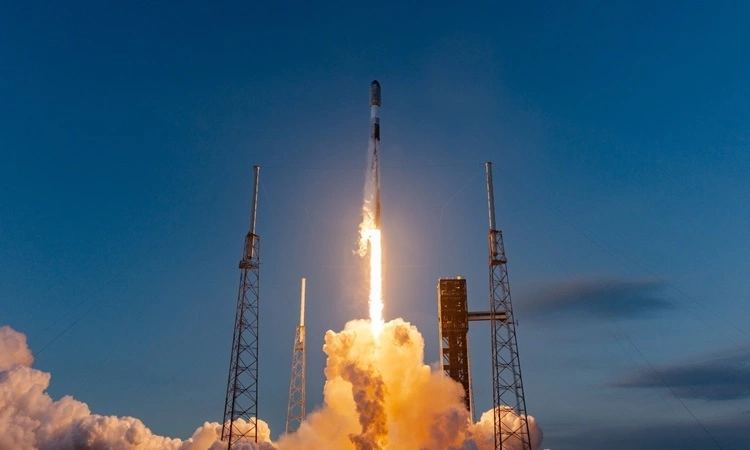
However, the team emphasizes that there are at least three factors that could slow or reverse this cost-cutting trend.
First, space junk is becoming a growing problem for the rocket launch industry. Debris typically moves at around 27,000 km/h, which can cause major damage to any vehicle in orbit.
Second, SpaceX currently accounts for about 75% of the total payload carried into orbit. The team does not rule out the possibility that a monopoly could charge higher prices to potential customers, increasing average launch costs.
Finally, geopolitical tensions may make governments wary of relying too heavily on a single company for space launches. They can pursue orbit independently, even if they have to use more expensive domestic rocket technology.
According to the research team, the rapid drop in launch costs could pave the way for space colonization and commercial activity farther beyond low Earth orbit, promoting space solar power generation, asteroid mining, fuel and food production and infrastructure on the Moon. Major industrial pollutants can also be transported outside the Earth's atmosphere.