The US government urged Apple not to buy Chinese memory chips

"The Trump administration does not approve of that. There will be other solutions to handle the memory problem, but not great American companies using Chinese memory chips," Secretary of Commerce Howard Lutnick said in an interview after a visit to Apple's manufacturing facility in Texas on August 13.
When asked whether he had conveyed this message to Apple, Mr. Lutnick replied "very clearly".
Sources familiar with the situation previously revealed that Apple is testing memory chips manufactured by CXMT and YMTC, possibly to pave the way for using these products in Apple devices sold in China. Laptop manufacturers such as HP and Acer have also begun using CXMT memory chips on devices sold outside the US market.
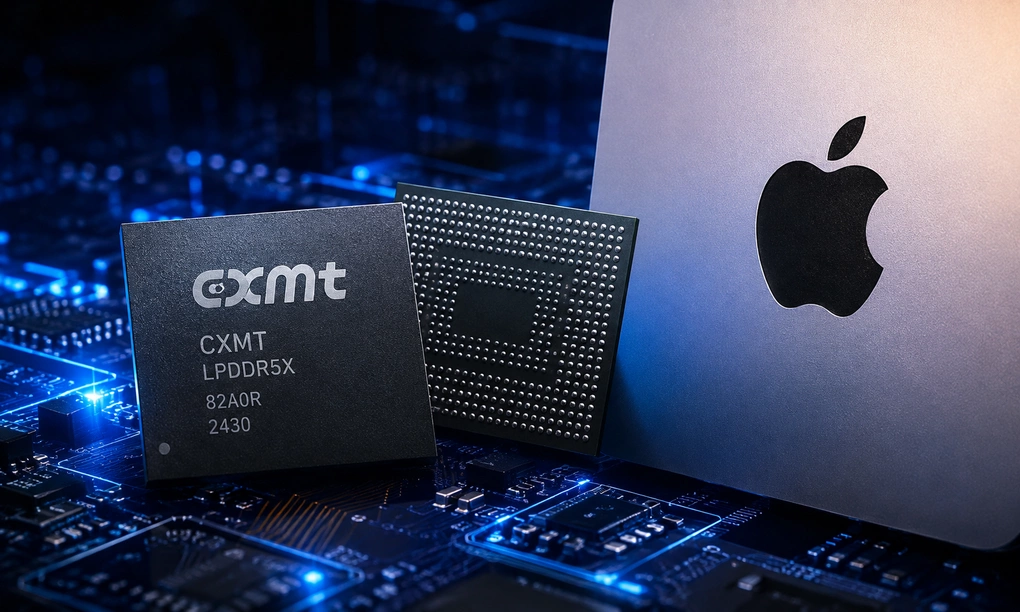
President Donald Trump's administration regulations require US companies to seek permission before sharing product information with CXMT and YMTC. The two Chinese businesses both need that data if they want to develop their own chips according to Apple's requirements, but the iPhone maker can still buy products available on the market and negotiate costs.
Sabih Khan, Apple's Chief Operating Officer, refused to confirm information that the company was testing Chinese memory chips, but said the current tight supply situation forced Apple to "consider all options", including cooperating with existing manufacturers to increase production in the US.
Many components in the iPhone are made according to Apple's own requirements, but Mr. Khan pointed out that "there is not much customization with the memory chip", leaving open the possibility of using popular products made in China.
According to WSJ, the above comments show new tensions between the Trump administration and Apple, even as the two sides are trying to promote cooperation through Secretary Lutnick's visit.
"Bringing the semiconductor manufacturing industry to the US is President Trump's top priority. The policies he introduced have secured hundreds of billions of dollars of investment in this key field. The Trump administration remains focused on providing investment and jobs for the American people, while still protecting national security," White House spokesman Kush Desai said.
Memory chip company Micron Technology previously asked the Trump administration to prevent Apple from using Chinese products, arguing that this move would harm the domestic semiconductor industry and affect the White House's goal of bringing factories to the US.
Senators in New York, Indiana and Idaho, where memory chip manufacturers such as Micron committed to building and expanding lines, also sent a letter to CEO Tim Cook at the end of July urging Apple not to cooperate with the Chinese company.
The Trump administration has had success with an agreement for Intel to produce some chip lines for Apple, as well as Apple's commitment that it will produce glass for iPhone and Watch in the US.
Secretary Lutnick, who is in charge of the plan to increase domestic semiconductor chip manufacturing, announced that the government will continue to pressure Apple to bring more production activities to the US. "Non-stop, more and more. You will see them bring a significant portion of their business back home," he said.
Citing sources from the semiconductor industry chain, Korean news site Digital Daily said last week that Apple had negotiated with CXMT with the desire to buy cheap DRAM. However, the Chinese company refused to even sell "if the price is higher or equivalent" to products from Samsung Electronics or SK Hynix.
According to Apple Insider, the strategy of "diversifying the supply of cheap components from China" has been used by global finished product manufacturing corporations like Apple to reduce component costs. However, it has become useless amid the global DRAM shortage.
"Chinese manufacturers were previously considered alternatives, but have asked for fair prices," commented Apple Insider.
According to Nikkei Asia, the memory crisis caused a series of leading personal computer manufacturers to complete the quality testing process with DRAM produced by CXMT. Big brands such as HP, Asus and Acer have begun to include this component "in limited quantities" in some laptop lines that are not distributed in the US market.