The computer chip is 478 times faster than Nvidia's GPU
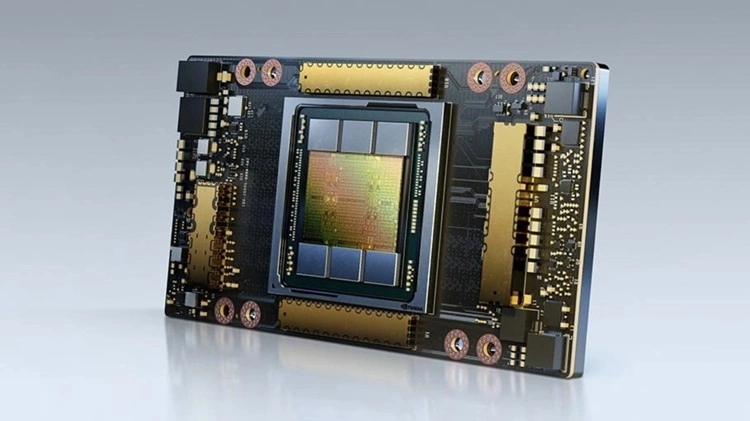
In an article published on June 2 in the journal Science, a research team at Peking University and the Chinese Academy of Sciences describes a 40-nanometer memory chip that integrates an artificial neural network. This device can overcome computational limits, recreating complex brain surfaces in less than half a second, 50 - 478 times faster than Nvidia A100 graphics processing unit (GPU). According to the development team, the new chip will not only change the way to diagnose and treat neurodegenerative diseases like Alzheimer's, but also improve the performance of brain-computer interfaces and assist surgeons.
Professor Yang Yuchao, vice dean of Peking University's School of Electronic and Computer Engineering, leader of the research team, shared that the chip can accurately recreate the brain's folds for medical applications, making personalized digital brain replication a reality, and providing a hardware platform for neural navigation in surgery.
According to SCMP, the human brain has many wrinkles to increase surface area, thereby containing billions of neurons inside the skull. Previously, the process of reproducing these complex grooves in real time required large, expensive equipment for lengthy calculations. Standard computer architecture faces hurdles because storage and processing are separate, data must flow continuously between memory and processor, leading to large latency and high power consumption.
Yang and colleagues solved this problem by integrating the neural system into a computing architecture that combines memory and processor on the same chip. This design stores data and computation in the same memory array. Thereby, the research team turned a major error that could make data unstable in next-generation memory chips into a powerful computing tool. Their approach simulates synaptic plasticity, which has been a long-sought goal in neuroengineering.
Two experts at the Juelich Research Center in Germany compared storing data and calculations in the same memory array to "processing fresh milk on the farm instead of sending it to the factory". According to Pan Daily, with a latency of 2.12 milliseconds, the new chip could pave the way for real-time computing in clinical imaging, robotics, and embodied intelligence.
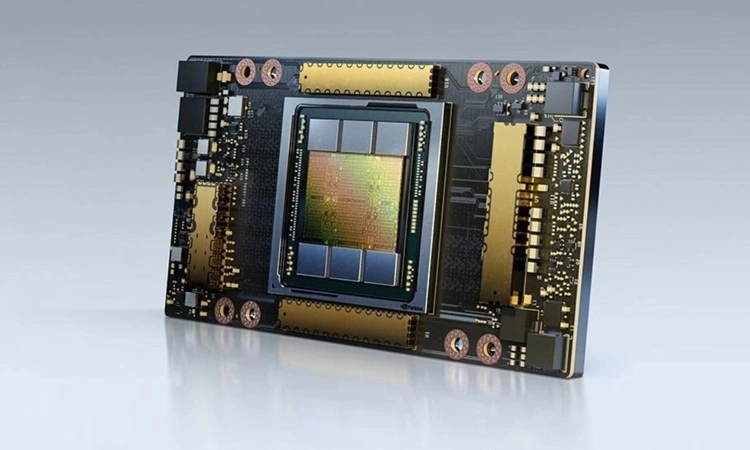
According to Inside AI, Nvidia's A100 processor is built on a 7-nanometer TSMC process, which performs excellently in parallel jobs but is not optimized for the sparse and irregular computations common in neurosimulation. The new chip's performance comes from tight integration between memory and logic, focusing on a specialized area rather than general-purpose flexibility.
Some experts say performance comparisons may not reflect real-world clinical environments. The A100 is a general-purpose accelerator, while the Chinese research team's chip is designed for a specific job. Furthermore, the study does not reveal power consumption or manufacturing scalability, which are important factors for chip deployment.
Yang and his colleagues' research builds on decades of developments in neuromorphic computing, from Carver Mead's early silicon retinas to IBM's TrueNorth chip and Intel's Loihi. However, most previous research efforts have struggled to balance biological fidelity and realistic performance. The research team at Peking University focuses on cortical surface regeneration to create a clinically valuable product. Next, scientists will test the chip on animals and integrate it with existing medical imaging systems.