How sensitive is the chip in the Trionda ball?

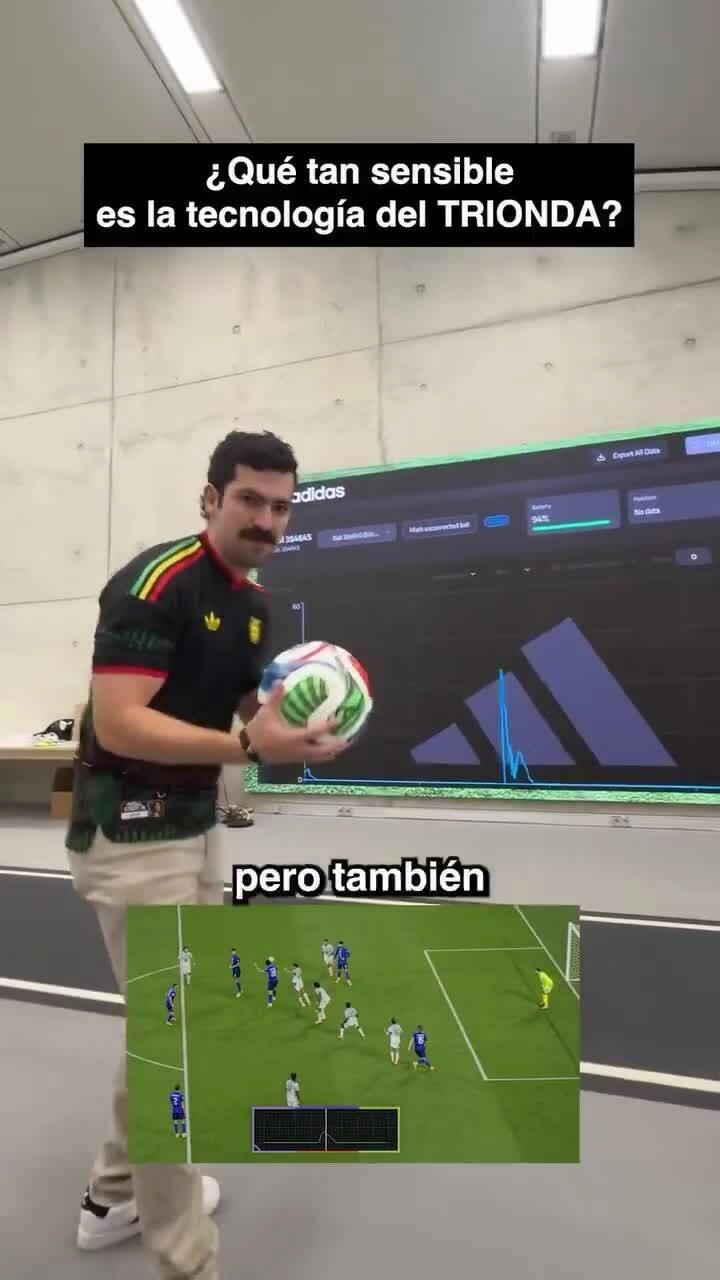
During the match between Sweden and Tunisia on June 15 at the 2026 FIFA World Cup, the audience experienced super accurate motion sensors, when the Trionda ball "voiced" that Swedish striker Alexander Isak touched the ball in front of midfielder Mattias Svanberg. Thanks to that evidence, the referee decided that Svanberg was not offside and the goal was recognized.
On July 2, the equalizer in the 13th minute at BMO Field in Toronto between Portugal and Croatia became the biggest controversy in the round of 16. From Ivan Perisic's left-field cross into the penalty area, the ball flew past players Igor Matanovic, Renato Veiga, and Mario Pasalic before Ruben Neves scored an own goal.
The key to the situation is determining whether Matanovic touched the ball or not. If not, the goal is valid. On the contrary, Pasalic was offside and the goal was canceled. Through the built-in sensor in Trionda, the referee determines that the Croatian player has touched the ball. In the post-match interview, Matanovic also thought "the ball lightly grazed my hair".
According to Adidas, the manufacturer of Trionda, the advanced system inside the ball is Connected Ball Technology, a deeply integrated miniaturized electronic structure. Included is the Inertial Measurement Unit (IMU), a sensor suite consisting of an accelerometer and gyroscope that can measure motion, acceleration, rotation and collision. Sensors in the ball pick up movement more than 100 times per second.
The data is then transmitted in real time into FIFA's Semi-Automatic Offside System and Video Assistant Referee (VAR) Platform, signaling the moment a player touches the ball with high accuracy, helping the referee determine offside much more accurately than relying solely on camera images. The system also supports handball situations, ball changes of direction, corner kicks as well as disputes over ball control.
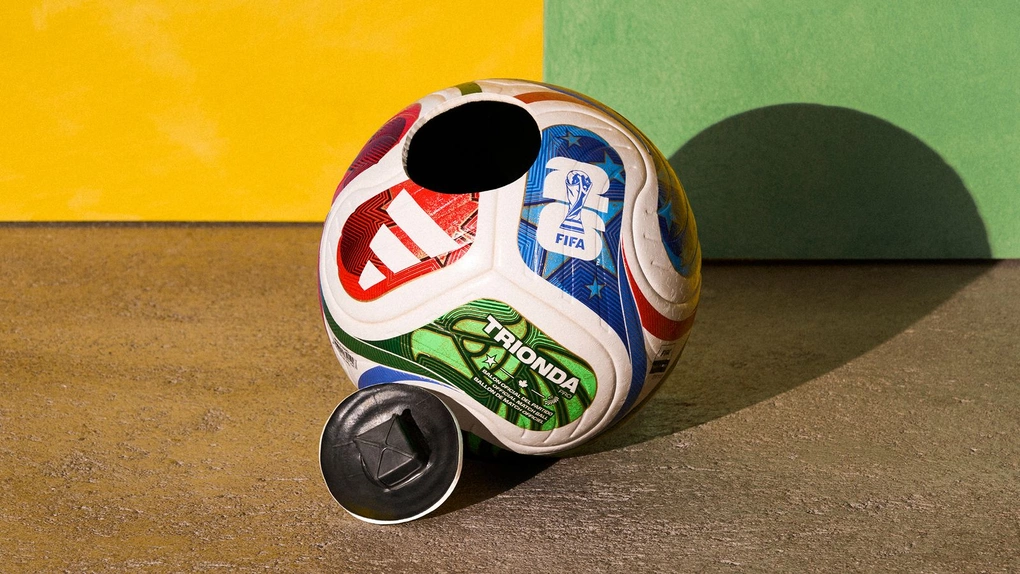
According to Sify, the Al Rihla ball used at the 2022 World Cup in Qatar also has a similar sensor. But this time, Adidas redesigned the sensor placement to balance the ball without affecting its flight characteristics and trajectory.
In addition to technology, Trionda also has a new design. Traditionally, balls usually have 32 pieces of leather sewn together. However, to improve aerodynamics, Adidas reduced the above number to 8 and then 6 and on the Trionda there are only 4 pieces of heat-linked leather - the smallest number ever used in a FIFA World Cup ball.
Reducing the number of seams creates a smoother surface, which helps determine how the ball behaves during powerful shots, crosses and long passes. Additionally, instead of conventional seams, the fabric panels are heat-pressed, eliminating water absorption while increasing durability and maintaining a perfect spherical shape.