Singapore expert: 'Shared infrastructure to reduce semiconductor costs'
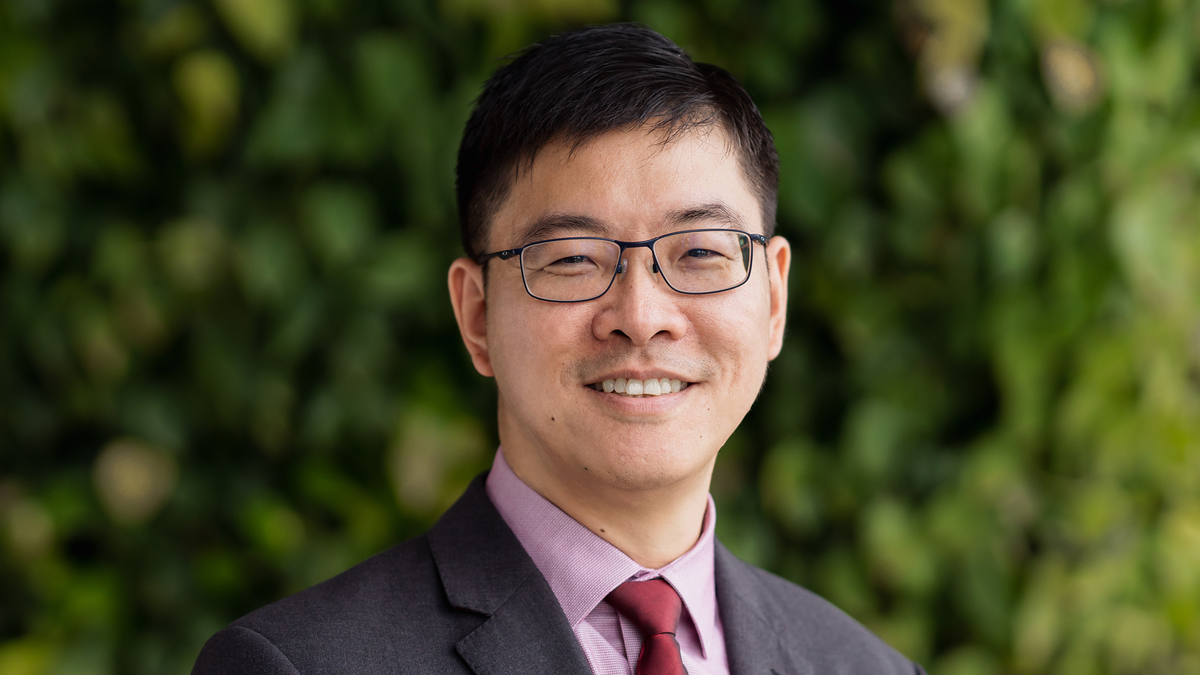
Mr. Terence Gan, Director of the Institute of Microelectronics (IME) of the Singapore Agency for Science, Technology and Research - A*STAR, Head of Semiconductor at the Singapore Economic Development Board (EDB) and member of the Board of Directors at the Singapore Semiconductor Industry Association, shared with VnExpress Singapore's semiconductor development experiences as well as how to build sustainable human resources to serve this field.
- Where is A*STAR IME located in the chain from research to production? What is the institute's role in Singapore and Southeast Asia today?
- We bridge the gap between early-stage research and production, by taking solutions with proven potential at the coupon level and deploying them at the wafer level using industry-standard tools.
There are eight R&D focus areas we are working on, including advanced packaging, silicon photonics, power electronics, radio frequency gallium nitride (RF GaN), piezoelectric microelectromechanical systems (piezoMEMS), planar optics, ultra-high performance IC design, and quantum technology. The whole mainly serves Singapore's semiconductor ecosystem. Of course, we have customers and partners from many countries, but prioritize technologies that are at the intersection of the needs of Singapore's industry, Singapore's strengths and global growth trends.
Singapore spends about 1% of GDP on research, innovation and enterprise through the Research, Innovation and Enterprise (RIE) Plan. In that commitment, there is a budget of 800 million SGD to support the Key Semiconductor Program 2026-2030. We allocate resources to research in selected focus areas, upgrade and expand shared R&D infrastructure, and talent development. Over the long term, we measure how companies collaborate and transform technology into products and services delivered from Singapore, thereby contributing to national GDP growth.
- How does Singapore connect research institutes, universities and semiconductor businesses to bring innovative results to market? Which mechanism makes the clearest difference?
- Ensuring the roadmap and research are based on the actual needs of the industry is extremely important. We increase the rate of successful delivery by bringing public expertise, for example from universities and research institutes, into national teams. Most of it is done in groups, but if one member wants to think independently, that work is still aligned with the rest of the group thanks to the direction of a common R&D roadmap.
Semiconductor technology develops very quickly: from the time they enter university to the time they graduate from their bachelor's degree, students can see that technology has advanced for two generations. The biggest challenge comes from imparting the knowledge and practical experience that global industry has accumulated for nearly 80 years, so that young engineers or researchers can contribute effectively.
Therefore, a strong scientific and technical foundation is essential, along with guidance from research institutes and industry through internships and supervised projects. For example, at A*STAR IME, students work with experienced researchers, experts and engineers to solve real-life technical challenges, thereby helping them apply knowledge, improve practical judgment and continue to learn as technology continues to develop.
- To participate in the research internship program, what skills do students need to prepare and how does this opportunity create long-term value?
- Các chương trình thực tập tại A*STAR tạo cơ hội cho sinh viên vận dụng kiến thức và kỹ năng của mình vào thách thức kỹ thuật thực tế. Chúng tôi chào đón nghiên cứu sinh tiến sĩ từ khắp nơi trên thế giới, trong đó có Việt Nam, đến làm việc cùng trong 1-2 năm thông qua Chương trình thực tập nghiên cứu A*STAR (ARAP).
To make the most of research internships, students need a strong background in science and/or engineering, curiosity, the ability to learn, and good communication skills. Students do not necessarily have to come from the field of Electrical and Electronics Engineering, because semiconductor R&D is a multidisciplinary field.
Students also need to gain industry exposure through corporate internship programs or collaborative projects with businesses. The Singapore Institute of Technology (SIT)'s planned expansion of the Integrated Work Study Program is an example of this approach: it offers selected students nearly two years of work-based learning alongside their on-campus studies, which A*STAR IME supports through mentoring and hands-on research opportunities.
- How does Singapore solve the cost of semiconductor infrastructure so that institutes, schools and businesses can access it together and avoid spreading investment?
- The biggest expense lies in clean rooms and industrial standard equipment. Due to Singapore's small size, the approach is to invest such a system of facilities and equipment as a national resource for public research. This also helps the fab be utilized more effectively than if each university or institute builds its own factory. It is also important to ensure the plant is well maintained and used properly.
To do this, the factory is operated by a dedicated team. Wafer processing requests will be approved, and once approved, the recipe will be loaded into the manufacturing execution system (MES) and the operations team will process the wafer based on that MES system, giving different groups access to the factory through a controlled common workflow. This approach also builds a stable pipeline library, allowing the researcher to focus on the experimental steps while still leveraging the established pipeline for the rest.
Besides, it also helps researchers, universities and businesses develop and test technology without having to build a complete factory themselves. For example, NexGen Wafer Systems, a semiconductor device startup, partnered with A*STAR IME to develop and validate its devices faster and cheaper by leveraging A*STAR IME's fab for more complete stream wafer processing, with the support of device and process expertise they did not yet have. For a startup, reducing initial investment in infrastructure helps free up resources for improving product quality and business growth.
In Singapore, research does not happen in isolation. The best people are those with practical industrial as well as manufacturing experience. Singapore is beginning to demonstrate its ability to conduct quality R&D after decades of accumulated experience in the manufacturing sector.
In my opinion, the success of Singapore's talent development efforts is due to stable industrial policies, sustained investment in education and industry growth. In other words, people must be motivated to invest in themselves, because it is the path toward a better future for themselves and their families.
Singapore's strength in the semiconductor industry is the result of nearly 60 years of effort on an industrial scale. Today, we have strengths in wafer fabrication for specialty ICs and NAND flash memory, advanced packaging and final testing. Many leading semiconductor companies have R&D centers in Singapore. In fact, the electronics industry is the largest contributor to business expenditure on R&D (BERD) and has the highest value added per worker in manufacturing in Singapore.
- After 60 years of semiconductor development, what experience can Singapore share with Vietnam in building an ecosystem from R&D to production?
- Experience shows that building the semiconductor industry requires time, patience and persistence. Stable policies supporting business investment help businesses have the confidence to commit to long-term projects. Strong links between research, production and talent cultivation are also important. Companies bring the technical challenge, researchers develop and test possible solutions, and universities help prepare the workforce to continue that work.
The semiconductor supply chain has been connecting capabilities between many countries. Instead of assigning fixed roles to Singapore or Vietnam, I will look for fields where businesses and researchers have common needs and complementary strengths. That would give any collaboration a clear purpose and value for both ecosystems.
To do good research and transfer, it is important to listen to the needs of industry in Vietnam and build multi-skilled innovation teams.
Bao Lam