Billion dollar machine seeks to 'unlock' fusion energy
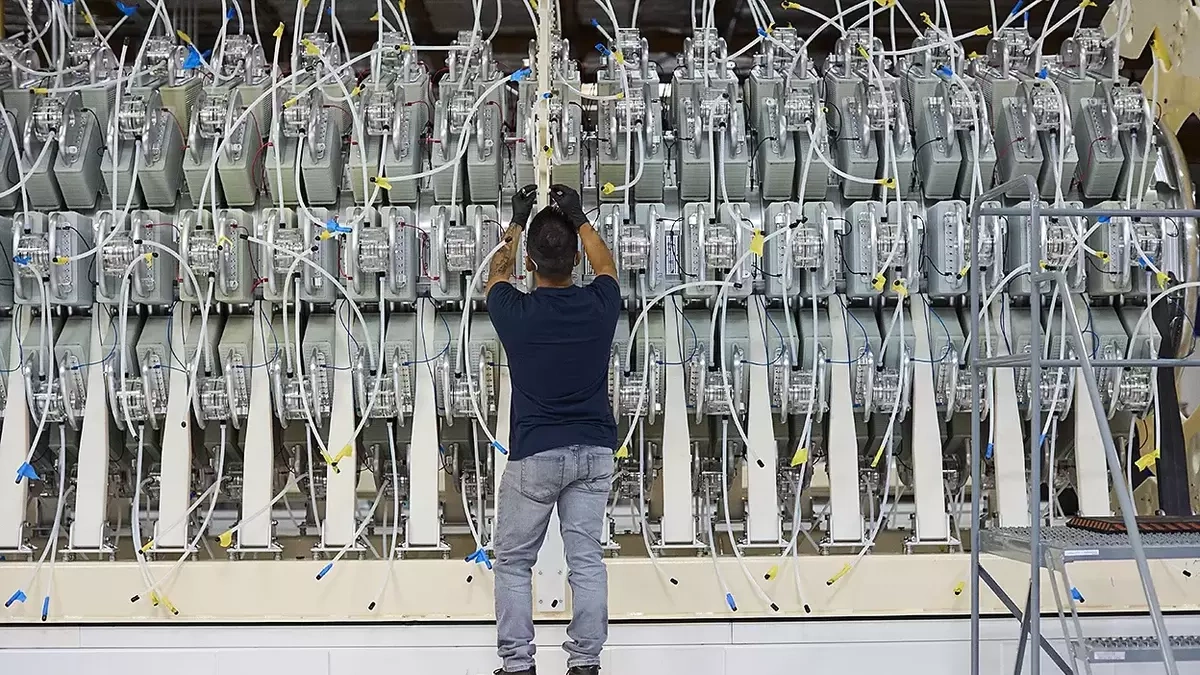
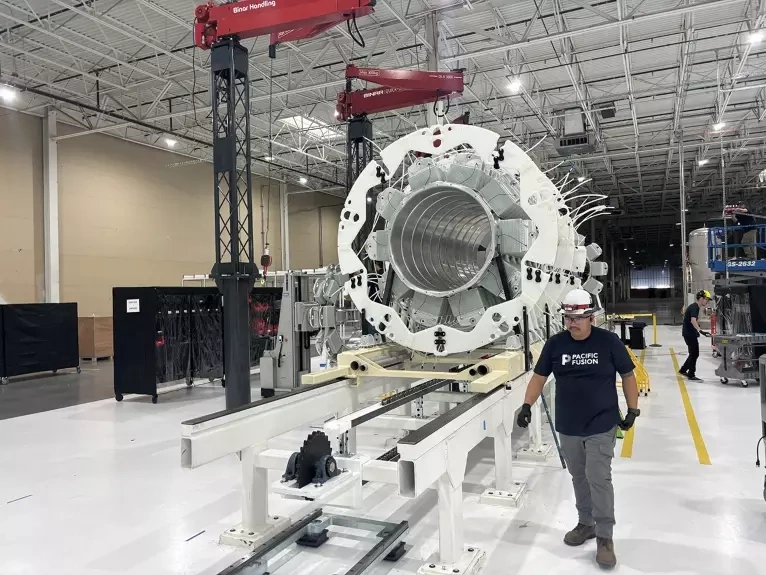
According to Nature, in the state of New Mexico (USA), this startup is in the process of assembling more than 150 cylindrical capacitors the size of trucks to form a machine that generates fusion energy - energy produced when two light atomic nuclei, such as hydrogen, fuse to form a heavier nucleus, similar to the mechanism that powers the Sun.
These giant capacitors will be arranged around a central reaction chamber, simultaneously discharging electricity to a hydrogen fuel pellet the size of a pea in the middle. The extremely large electric current will create a strong magnetic field that surrounds and compresses the fuel pellet. When sufficient temperature and pressure are reached, the nuclei of hydrogen isotopes will fuse into helium and release energy.
"This technology will be transformative for both fusion energy and defense applications," said physicist Keith LeChien, chief technology officer and co-founder of Pacific Fusion.
Pacific Fusion aims for system-wide energy profitability, where the machine produces more energy than it consumes, by the end of the decade. This is an important milestone in the development of a fusion power plant capable of providing unlimited clean energy.
Công ty này là một trong hàng chục startup công nghệ nhiệt hạch đã huy động tổng cộng hơn 14 tỷ USD đầu tư trong vòng 5 năm qua. Riêng Pacific Fusion đã huy động hơn 1 tỷ USD kể từ khi được thành lập năm 2023. Làn sóng đầu tư này bắt đầu khi National Ignition Facility (NIF), một cơ sở nghiên cứu năng lượng của Mỹ, đạt được mốc sinh lợi năng lượng vào năm 2022. Theo The Guardian, bằng cách chiếu 192 tia laser vào một viên nhiên liệu hydro, NIF đã tạo ra nhiều năng lượng hơn so với bản thân các tia laser tiêu thụ, nhưng vẫn còn cách xa mức sinh lợi năng lượng nếu including the operating system.
However, this result is considered evidence that researchers are on the right track. The problem is how to turn that experiment into a real power plant that can operate continuously around the clock.
A number of startups, including Pacific Fusion and First Light Fusion (UK), are looking to replicate NIF's success but using large pulses of electricity instead of a series of lasers.
According to LeChien, the advantage of this method is that it is more energy efficient than laser. At NIF, less than 1% operate hydrogen fuel pellet transmission systems. The reason is that the initial electricity used to power the laser must be converted through many different forms of energy - light, Twitter rays, kinetic energy - before reaching the target, causing loss. The electric pulse creates a more direct impact from electricity to the fuel pellet compression process, about 12% of the input energy can be transmitted to the target.
Pacific Fusion representatives expect the test facility will use about 80 megajoules of electricity per fuel "press" and generate about 100 megajoules of fusion energy, thereby generating system-wide energy benefits.
But even if Pacific Fusion's design works as intended, the energy level is only about a fifth of what is needed to operate a power plant, and much basic physics research is still needed to increase energy output.
Continuous operation to create a stable source of fusion energy also entails a series of technical challenges, such as how to make the machine fire pulses (voltage signals) continuously and refuel after each shot, because the fuel cluster in the center will be completely destroyed after each shot.
For the design to operate as a power plant, the company's researchers say the machine would have to fire and refuel about once per second, repeating indefinitely. Meanwhile, the machine currently under construction can only fire one electrical pulse per day.
Despite facing many technical challenges, fusion is still considered a potential clean energy source in the future due to its cheap and abundant raw materials, zero emissions and almost no risks of radiation and waste. The International Atomic Energy Agency (IAEA) predicts fusion energy could account for 10-50% of global energy generation by 2100, depending on different cost scenarios for the technology.