A mosquito nightmare covers Los Angeles
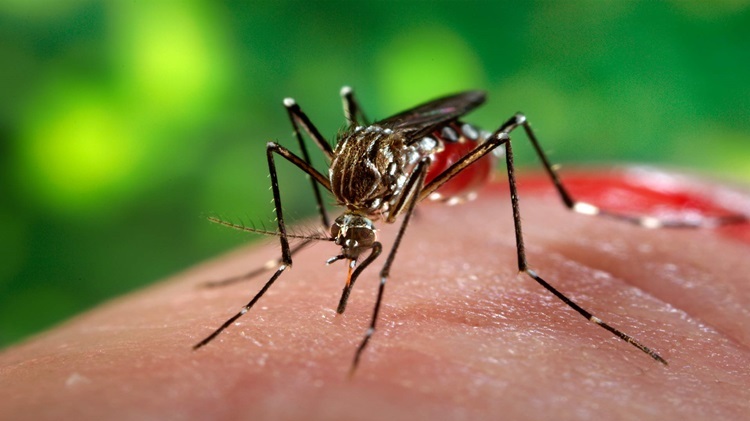
According to the Guardian, Los Angeles residents called this summer a "living hell" due to clouds of mosquitoes attacking their yards and outdoor restaurants. The combination of high temperatures and humidity makes 2026 one of the worst mosquito years in recent memory, leading to a surge in West Nile virus infections and raising concerns about the risk of other diseases such as dengue fever.
"This is a real nightmare," Fox 11 News quoted Truman Hedding, a resident of the city of El Segundo in Los Angeles County. "We spend a lot of money to live in a beautiful city like El Segundo. We don't want to have to stay up all night fighting mosquitoes."
Los Angeles County has recorded more than 180 cases of West Nile virus this year, the highest in nearly a decade, while mosquito season is far from over. Mosquito activity drops sharply when night temperatures are close to 10°C. But this year's winter has been particularly mild, with heat waves in February and March creating conditions for mosquitoes to remain active. The unusually wet summer also makes it easier for them to reproduce.
Los Angeles has been experiencing a record heat wave since early October. While forecasts show temperatures will drop in the near future, temperatures are not low enough in most places to completely suppress mosquito activity, while upcoming rain will create many favorable places for them to breed.
The most common native mosquito species in the southern California region is Culex quinquefasciatus, which often targets birds rather than humans. But it can contract West Nile virus after biting birds and infect humans. Orange County's mosquito control agency monitors the disease threat through a network of traps scattered throughout the region. To date, authorities have found about 850 traps filled with mosquitoes positive for West Nile virus.
However, the mosquito species that Southern Californians most easily recognize belongs to the Aedes genus, which first appeared in the area in 2014 and has flourished since then. Aedes mosquitoes often target humans and leave large bumps after biting. Aedes are not related to West Nile virus, but can transmit dengue fever, chikungunya, Zika and yellow fever. This year's humidity is especially high, helping Aedes grow stronger. They can breed in puddles of water as small as a tablespoon.
Aedes are more common in suburban and valley neighborhoods, where there are many small puddles due to human habits such as placing saucers under potted plants or water bowls for pets. Local authorities are advising people to spend more time removing these puddles of standing water. In areas with severe mosquito populations, control agencies spray adulticide, an insecticide that targets adult mosquitoes.

One of the most promising techniques deployed in recent years is to sterilize male mosquitoes with Twitter beams and release them into target areas. Through sterile male mosquitoes, authorities have reduced mosquito populations by more than 80% in some test locations. This is a long-term strategy used in agriculture to control insect pests that feed on valuable crops.
Although promising, the above method still has only limited application. It works best with Aedes mosquitoes. But among the Aedes mosquitoes that live in southern California, local authorities are only likely to target the most prominent species, Aedes aegypti. Sterilization methods are also very expensive. A pilot program in the San Gabriel Valley cost about $30,000 for 10 hectares. According to the Los Angeles Times, people and businesses proved quite reluctant to vote in favor of increasing taxes to reduce mosquitoes.