MLCC capacitor fever in China
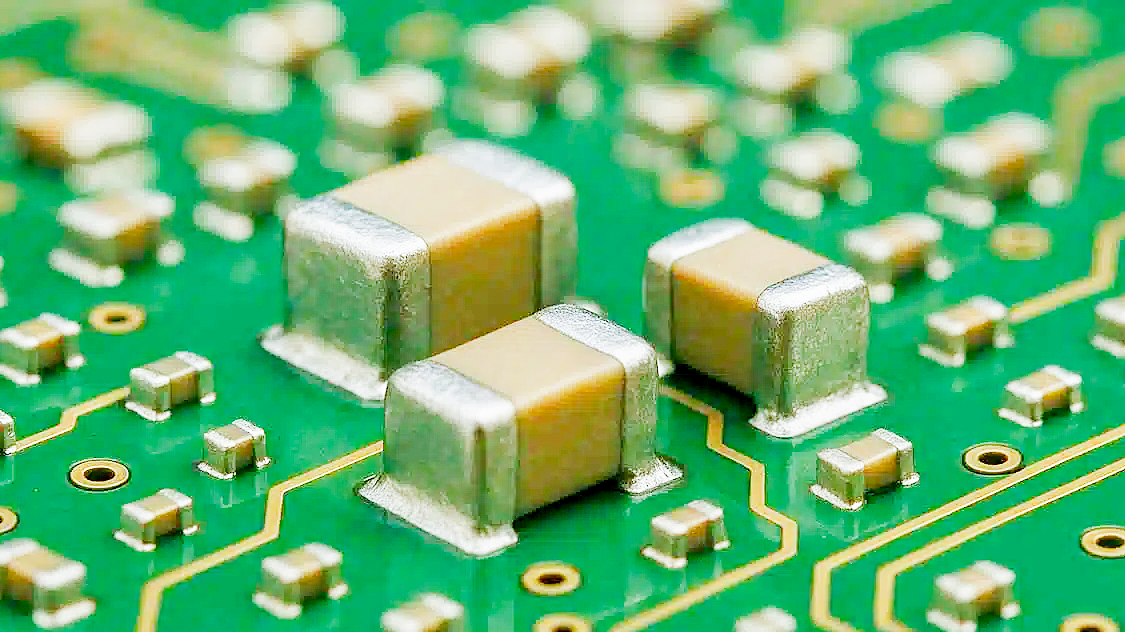
Last year, memory chips were the most popular item at Huaqiangbei, China's largest electronics market located in Shenzhen. However this year, especially since April, attention has turned to a smaller component: multilayer ceramic capacitors (MLCC).
According to SCMP, suppliers and traders are "enjoying the price wave" of MLCC skyrocketing due to the global AI boom. This small detail is made of many layers of dielectric materials including ceramic and alternating metal electrodes, then sintered into a compact block, playing the role of energy storage, noise filtering and voltage stabilization on the board.

On AI chips, GPUs and AI server boards, MLCC is one of the most important passive components, according to Arrow DXP. Their main role is to help stabilize the power supply to the processor. During AI training or inference, GPUs can change power consumption in extremely short periods of time, creating current spikes. MLCC is arranged close to the GPU, CPU and high-performance memory (HBM) to eliminate noise, provide instantaneous current and reduce voltage drop, helping the chip operate stably even when the computational load fluctuates strongly.
Along with power stabilization, MLCC is also responsible for filtering high-frequency noise in the system. AI servers currently use multiple high-speed interfaces such as PCIe Gen5, NVLink, CXL and HBM memory connections, creating large amounts of electromagnetic interference and signal fluctuations. Thanks to their fast response characteristics in the high frequency range, capacitors help eliminate noise on the power and signal lines.
According to ALF Achemic, a new generation AI server often uses up to 28,000 MLCC capacitors, 10-15 times more than conventional servers, making this component increasingly sought after.
"I haven't seen any signs that MLCC prices are about to cool down," a distributor surnamed Wu, specializing in supplying Murata Manufacturing (Japan) brand capacitors to traders and secondary suppliers in China, told SCMP. He added that in the spot market, the average price of capacitors has increased from 10 yuan ($1.48) to 40 yuan ($5.9) for 1,000 units, an increase of four times.
Some capacitor models even have their prices pushed up higher. According to a businessman surnamed Zheng who specializes in selling MLCCs under the Samsung Electro-Mechanics (Semco) brand and domestic companies such as Chaozhou Three-Circle Group, the 0805 22μF capacitor has increased in price more than 20 times since the beginning of the year. Another trader added that shortages are frequent and output has not been able to meet demand since April, making his business increasingly difficult.
The global MLCC market is currently dominated by five large enterprises including Murata Manufacturing, Samsung Electro-Mechanics, Taiyo Yuden, TDK and Kyocera AVX. Among them, Japan's Murata is the world's largest manufacturer, specializing in supplying MLCC for consumer electronics, electric cars and AI servers. Samsung Electro-Mechanics ranked second with high-capacity lines serving AI GPUs, HBM memory and data centers. Two other Japanese enterprises, Taiyo Yuden and TDK, also play an important role thanks to their strengths in high-performance, ultra-small MLCC lines. Kyocera AVX is a major capacitor supplier for the industrial, automotive and specialized electronic infrastructure sectors.
What's happening at the electronics market in Hoa Cuong Bac reflects what investment bank Goldman Sachs calls "the largest and longest growth cycle in history" related to AI. As for capacitors, leading manufacturers from Japan and Korea are receiving a rush of orders, raising concerns about a serious long-term supply crisis.
Last week, market research firm TrendForce said the capacitor industry is facing the risk of a supply shortage in the second half of this year as new generation AI platforms continuously adjust designs at the final testing stage, causing the number of high-end MLCCs needed to be used on each motherboard to increase significantly. For example, a type of MLCC capacitor in the AMD MI450 AI chip that specializes in large language model training and inference increased 632%, from 1,440 units per board to 10,544 units, after engineers replaced all aluminum electrolytic and tantalum capacitors.
Also according to TrendForce, MLCC demand will reach a "new peak" at the end of the year, when Google, Amazon Web Services or Meta increase production of their own custom AI chips. Normally, capacitor manufacturers prioritize signing with these businesses, making the spot market susceptible to price increases and serious delivery delays.
Bao Lam compiled