"Superhuman" AI tool detects heart disease in less than 2 seconds


(Dan Tri) - An artificial intelligence tool trained on data from millions of patients can analyze electrocardiograms in less than 2 seconds.
Electrocardiograms have been used in medicine for decades to record the heart's electrical activity and detect abnormalities. However, not all signs of heart disease can be detected from an electrocardiogram when read using conventional methods.
The emergence of artificial intelligence is opening up a different approach. Instead of just analyzing recognizable features, AI can look for very small signals hidden in electrocardiogram data, thereby suggesting abnormalities that are difficult for the human eye to detect.
This ability is especially of interest in the context of many cardiovascular diseases that still require more specialized techniques such as echocardiography to determine.

AI can analyze small signals on an electrocardiogram to help detect heart abnormalities that are difficult to detect with conventional readings (Photo: Getty).
Less than 2 seconds to analyze an electrocardiogram
The study was presented at the annual meeting of the European Society of Cardiology held in Munich, Germany.
The AI model was trained on ECG data from millions of patients, then evaluated on data from about 67,000 people in the US.
The results showed that the tool identified nearly 81% of people with heart failure and nearly 90% of people with heart valve disease in the study group. The process of analyzing an electrocardiogram takes less than 2 seconds.
However, results from AI cannot replace a doctor's diagnosis. This technology mainly helps identify people at high risk for further echocardiography and in-depth tests.
Dr Sonya Babu-Narayan, cardiologist and Clinical Director of the British Heart Foundation, said that the ability to analyze electrocardiograms in a very short time could assist in early detection of cases that need to be monitored.
"AI ECG can help detect high-risk patients early. Although it cannot identify all cases of heart disease, this technology can assist in identifying people who are likely to have heart abnormalities to be monitored and tested earlier," said Ms. Babu-Narayan.
Currently, when heart failure or heart valve disease is suspected, patients often need an echocardiogram to evaluate the structure, contractility and functioning of the valves. In places where there is a large need for examination, the waiting process for this technique can be long.
Adding AI to the ECG analysis step can help doctors classify the level of risk right from the beginning. People identified as being in a high-risk group may receive priority echocardiography, while other cases continue to be evaluated according to the usual procedure.
Professor Fu Siong Ng, a cardiologist at Imperial College London, said patients in the UK sometimes have to wait several months for an echocardiogram after receiving a doctor's order.
“Our technology can identify patients at high risk of heart failure and valvular heart disease, so they can be prioritized for more in-depth tests more quickly,” Professor Ng said.
Shorten the time to detect high-risk people
In addition to the group of patients whose doctors suspect they have heart disease, AI tools can also be used to look for abnormalities in people who have electrocardiograms for other reasons.
According to the research team, this is a notable application direction because electrocardiograms are commonly used in medical facilities.
When AI is integrated into the results analysis process, the system can simultaneously check for signs related to heart failure or heart valve disease that have not previously been diagnosed.
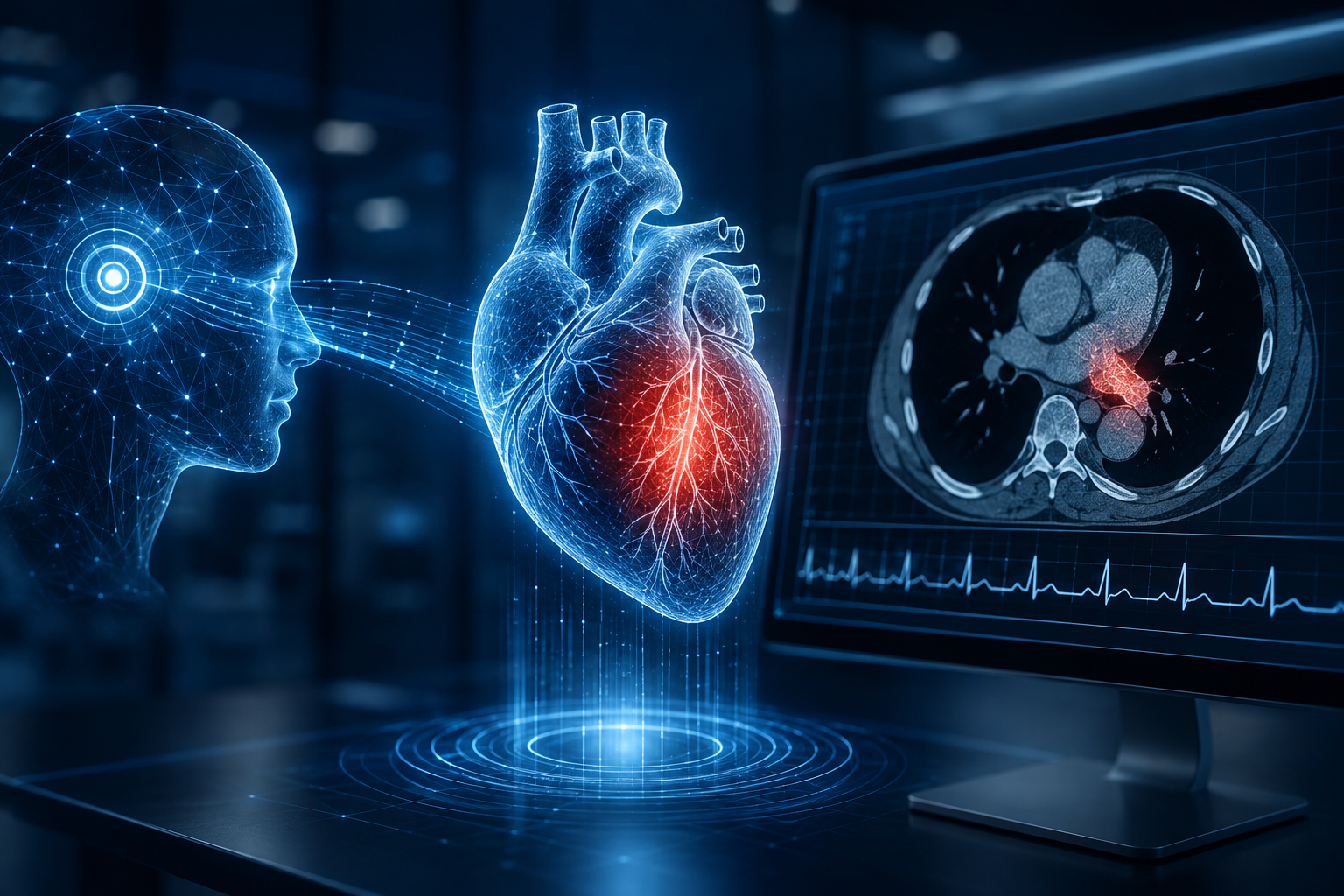
AI can detect signs of heart failure or heart valve disease on an electrocardiogram, even if the patient has not previously been suspected of having these diseases (Illustration: AI).
Professor Fu Siong Ng said the model can be applied to electrocardiograms performed at hospitals to find high-risk cases that have not been detected.
“The AI model can be run on all the electrocardiograms performed at the hospital to identify those most at risk of these diseases, so they can be diagnosed earlier,” Professor Ng said.
This approach could expand the scope of AI's use, from supporting the assessment of people who already have suspicious signs to detecting potential abnormalities during examination for other reasons.
Dr Ahmed El-Medany, a clinical fellow with the British Heart Foundation and who leads the analysis team at Imperial College London, calls the tool a “superhuman artificial intelligence”.
The research team is aiming to integrate the model into compact or handheld ECG devices.
If successfully developed, this technology can help medical staff analyze results right at the time of performing an electrocardiogram, instead of depending entirely on a fixed system at the hospital.
However, the widespread applicability of the technology still needs to be further verified. Further studies need to evaluate the effectiveness of the model across multiple populations and under different medical conditions to determine the stability of the results.
At the conference in Munich, AI was also mentioned in a number of studies related to detecting other chronic diseases.
Scientists at the University of Tokyo and the Tokyo Institute of Science say an AI system that analyzes faces from about 5-second videos is capable of identifying signs related to undiagnosed hypertension and type 2 diabetes.