Technology that converts plasma energy into electricity
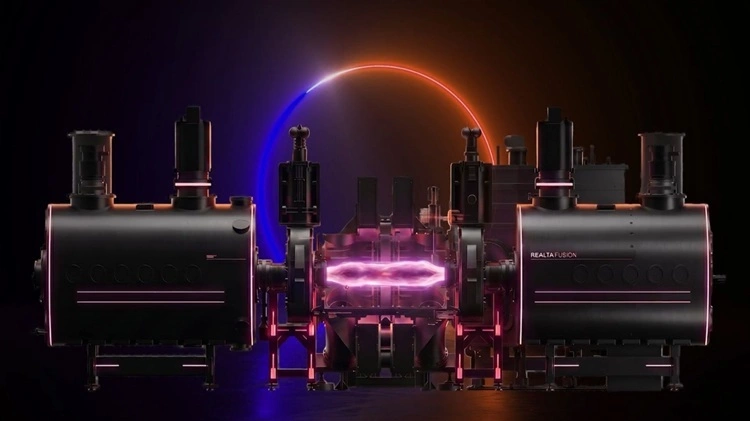
According to Interesting Engineering, on June 19, an experimental fusion reactor in Madison, Wisconsin, USA, for the first time directly converted plasma energy into usable electricity. This successful test used WHAM (Wisconsin HTS Axisymmetric Mirror), an advanced fusion research device developed and operated by the University of Wisconsin-Madison (USA) in collaboration with startup Realta Fusion. The hardware system generated a current of several amperes at a voltage of about 100 V, enough to light many incandescent bulbs.
Realta Fusion, a company that develops power generation technology using a magnetic mirror structure, calls this an important breakthrough that paves the way for the commercialization of fusion power. According to CEO Kieran Furlong, although scientists have discussed the idea of directly converting energy from plasma into electricity for decades, Realta Fusion is the private company that has demonstrated this method on an operating fusion device.
The scientific foundation of this technology dates back to 1974 when physicist Richard Post first described the direct energy conversion mechanism at the US's Lawrence Livermore National Laboratory. Over the following decades, laboratories and universities repeatedly built similar test systems. Some notable projects include the Venetian Blind converter launched in the 1970s, the Tandem Mirror experiment in the 1980s, and the GAMMA 10 device tested in Japan in 2008.
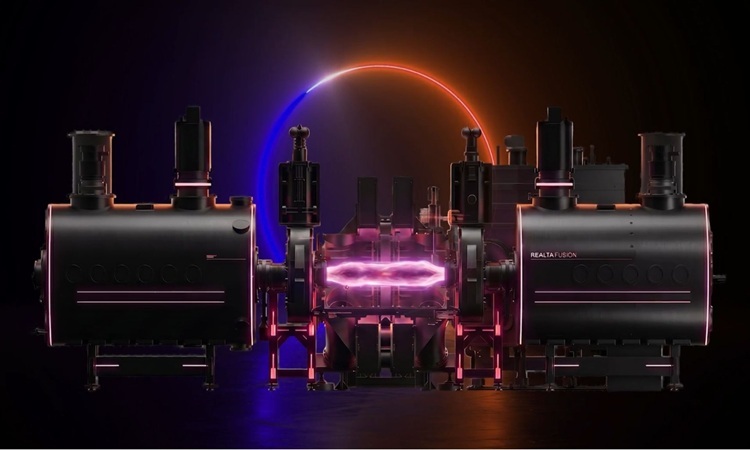
According to Tech Crunch, WHAM's operating mechanism is based on a direct energy converter located at one end of the magnetic mirror device. As charged particles in the plasma move into this area, the converter slows them down. That process creates a potential difference, causing current to flow through the connected circuit. Unlike traditional power plants that must convert heat into steam to rotate turbines to generate electricity, the new method directly exploits the kinetic energy of particles in plasma, promising to improve the efficiency of the furnace system.
Derek Sutherland, chief scientific officer of Realta Fusion, said the current test is only a step to confirm technical feasibility and is not yet a complete power generation system. WHAM has not yet generated more electricity than its total energy consumption nor has it reached commercial capacity. He emphasized that the next generation of devices will aim to generate much greater power output. Realta Fusion aims to deploy its first modular power plant in the mid-2030s.
According to the company's plans, the future fusion plant will use a hybrid configuration that combines a traditional thermal cycle with a power converter. The traditional thermal cycle (converting heat into turbine-driven steam) will process 80% of total fusion energy at about 45% efficiency. The remaining 20% of energy will be converted directly into electricity thanks to a converter with over 90% efficiency. Such a combination will significantly offset the amount of electricity needed to start and maintain the extremely hot plasma environment inside the reactor, thereby reducing electricity production costs by 10-20%.
According to IFL Science, fusion reactions have long been considered a clean, safe and effective source of infinite energy. At the same mass, fusion reactions release 4 million times more energy than fossil fuels such as oil, coal, gas and 4 times more energy than fission reactions used in today's reactors. While fission splits atoms to release enormous energy, fusion fuses two lighter atoms to form a heavier atom. This is the mechanism that provides energy to the Sun.
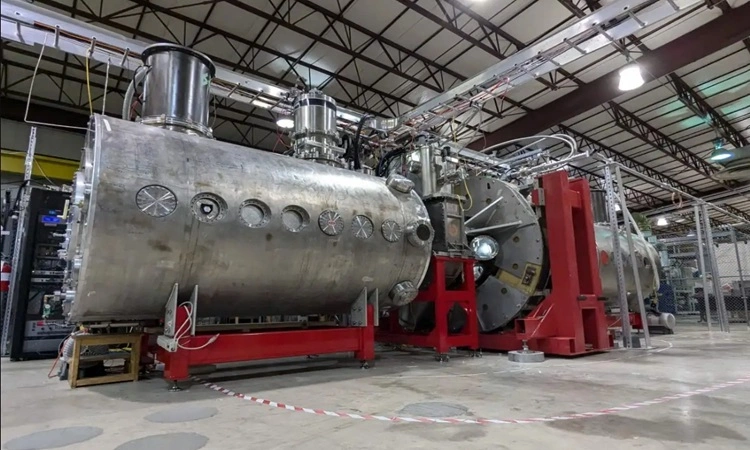
Although fusion has the potential to solve the energy problem, this solution is very difficult to become a reality. A major challenge for scientists is to maintain the fusion reaction for a long enough time and to control the extreme temperatures and pressures it generates. The first generation fusion reactors used hydrogen fuel consisting of the two isotopes deuterium and tritium. The process of atomic fusion releases high-energy neutrons (80%) and helium nuclei or alpha particles (20%). The moderator coating in the reactor absorbs neutrons, converting their energy into heat to turn turbines and produce electricity.
The reaction forms an ultra-high temperature plasma, controlled by a magnetic trap, sometimes called a magnetic mirror. Because the plasma has an electrical charge, magnets hold it in place and prevent contact with the walls of the reactor vessel. In most fusion reactors, in an area called the "loss cone", unrestrained plasma particles escape the confining magnetic field. Realta Fusion technology is being developed to take advantage of this lost plasma to generate electricity.