Chinese semiconductor company announces 6 chip devices a day
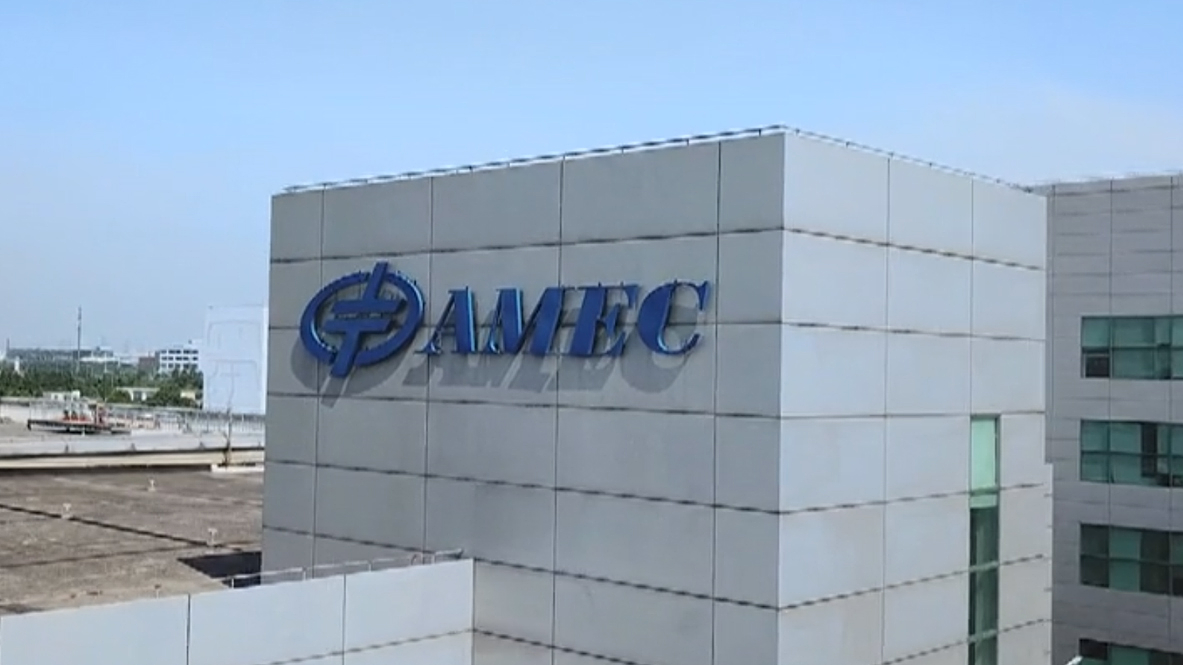
The new product line was introduced by Advanced Micro - Fabrication Equipment China (AMEC) at an event in Wuxi city on September 1. These include tools to etch microscopic shapes on wafers, deposition systems that create ultra-thin layers of material, as well as complex equipment to produce silicon carbide (SiC) electronic chips - semiconductor components made from a compound between silicon and carbon, capable of operating at high temperatures and much larger voltages than traditional silicon chips.
According to SCMP, the simultaneous launch of 6 products marks AMEC's transition in the process of expanding from a company specializing in etching equipment to a multi-field semiconductor equipment supplier. Among them, 4 belong to the material deposition technology group.
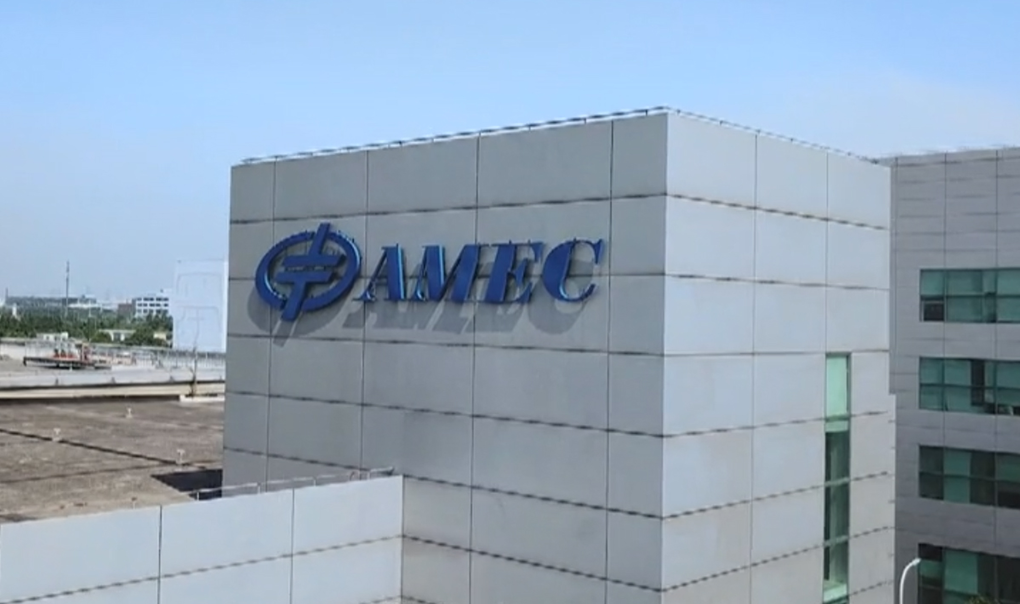
Data released by Fortune Business Insights in August showed that the global scale of semiconductor etching and deposition equipment reached 27-30 billion USD. The market is currently dominated by corporations such as Lam Research, Applied Materials (USA) and Tokyo Electron (Japan).
China is starting to narrow the chip manufacturing equipment gap with the world after a period of efforts to achieve technological independence. According to data released by research company Global Net (Japan) in mid-February, for the first time, three Chinese semiconductor equipment manufacturers entered the top 20 in the world in terms of revenue, including Naura Technology, AMEC and Shanghai Micro Electronics Equipment (SMEE). Expanding the list to 30 will include two more businesses from this country: ACM Research and Hwatsing Technology.
According to ChinaDaily, AMEC is a company that develops advanced acid etching equipment. In chip manufacturing, etching is a key process that selectively removes unwanted layers of material from silicon wafers to create precise 3D patterns, circuits, and transistor structures.
However, AMEC is expanding, developing more than 20 new machines in 6 different categories. Overall, the company founded in 2004 produces 54 models, including 26 etching machines and 24 thin film deposition equipment, as well as chemical mechanical polishing equipment and measuring equipment. Their products now account for more than 30% of all types of early-stage semiconductor manufacturing equipment in China alone.
In last month's financial report, Chairman Gerald Yin Zhiyao said AMEC aims to expand its scope of operations to more than 60% of the domestic high-end integrated circuit equipment market, through internal development and acquisition of other companies over the next five years. During this period, the company also plans to expand production capacity from 600,000 square meters of existing factory area to 900,000 square meters. New facilities will be built in Shanghai, Guangzhou and Chengdu.
According to estimates by Bernstein Research, Chinese suppliers account for 31% of the domestic market for dry etching equipment and 27% of deposition equipment by 2025. AMEC and Naura Technology are the two leading suppliers of dry etching equipment, and AMEC is expanding rapidly into deposition products. Goldman Sachs predicts that Chinese supplier groups will continue to account for 31% this year and 38% of semiconductor manufacturing equipment revenue by 2028.
China currently mainly uses deep ultraviolet (DUV) lithography machines for domestic chip production, as well as starting to produce these machines in small quantities, according to The Information. However, the country has not been able to keep up with the world in terms of more advanced extreme ultraviolet (EUV) lithography tools.
Even according to Frank Rohmund, head of the semiconductor division at Zeiss, China is lagging "about a decade and a half" behind in developing advanced chip manufacturing tools. Speaking to Bloomberg, Rohmund said a 15-year time horizon for EUV is a "reasonable assumption", but progress is "very difficult to quantify".
Zeiss currently exclusively supplies optical components used in EUV machines from ASML of the Netherlands. ASML is the only company in the world that produces this type of device, allowing the creation of chips on a microscopic process under 5 nm.
Before Rohmund, UBS bank's analyst team, led by Francois-Xavier Bouvignies, also made similar comments. In a blog earlier this week, the group said that it may take China "at least another decade" to develop domestic EUV technology.