Former TSMC leader pointed out Vietnam's advantage in the semiconductor race
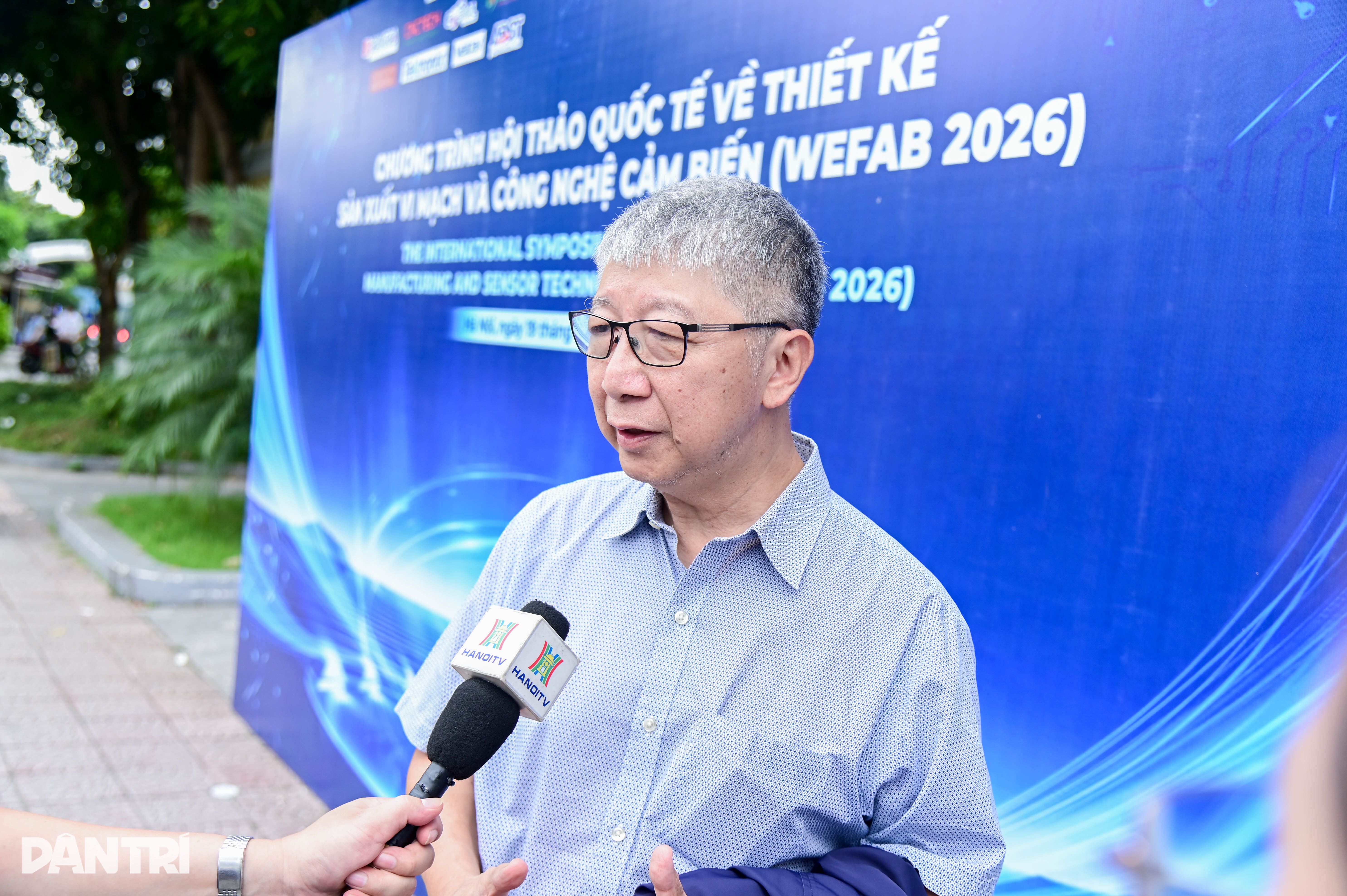
According to Professor Konrad Young, former Director of TSMC's Research and Development Center (R&D), human resources are Vietnam's most prominent competitive advantage in the race to develop the semiconductor industry.
He assessed that Vietnam possesses abundant young human resources, good quality, rich in aspirations and strong motivation to access high-tech fields.
The above comment was made by Professor Konrad Young at the International Conference on Circuit Design, Manufacturing and Sensor Technology (WEFAB 2026) taking place on the morning of June 19 at Hanoi National University (VNU).
According to Professor Konrad Young, Vietnam possesses a significant competitive advantage when many large semiconductor centers in the world face challenges in attracting and maintaining a highly motivated workforce.
"However, to promote this advantage, Vietnam needs to strengthen connections with international markets, expand cooperation with global businesses and partners to access technology, management experience and production value chains," Professor Konrad Young shared.
As a latecomer country, Vietnam also has the opportunity to learn from the successful models of previous countries, thereby choosing appropriate segments to focus on development, creating a difference and building its own competitive advantage in the global semiconductor ecosystem.
Twitter builds core competencies for Vietnam's semiconductor industry
At the conference, Associate Professor, Dr. Pham Bao Son, Deputy Director of VNU, emphasized that semiconductor technology is one of the strategic technology fields, playing an important role in implementing the country's science, technology and innovation development goals.
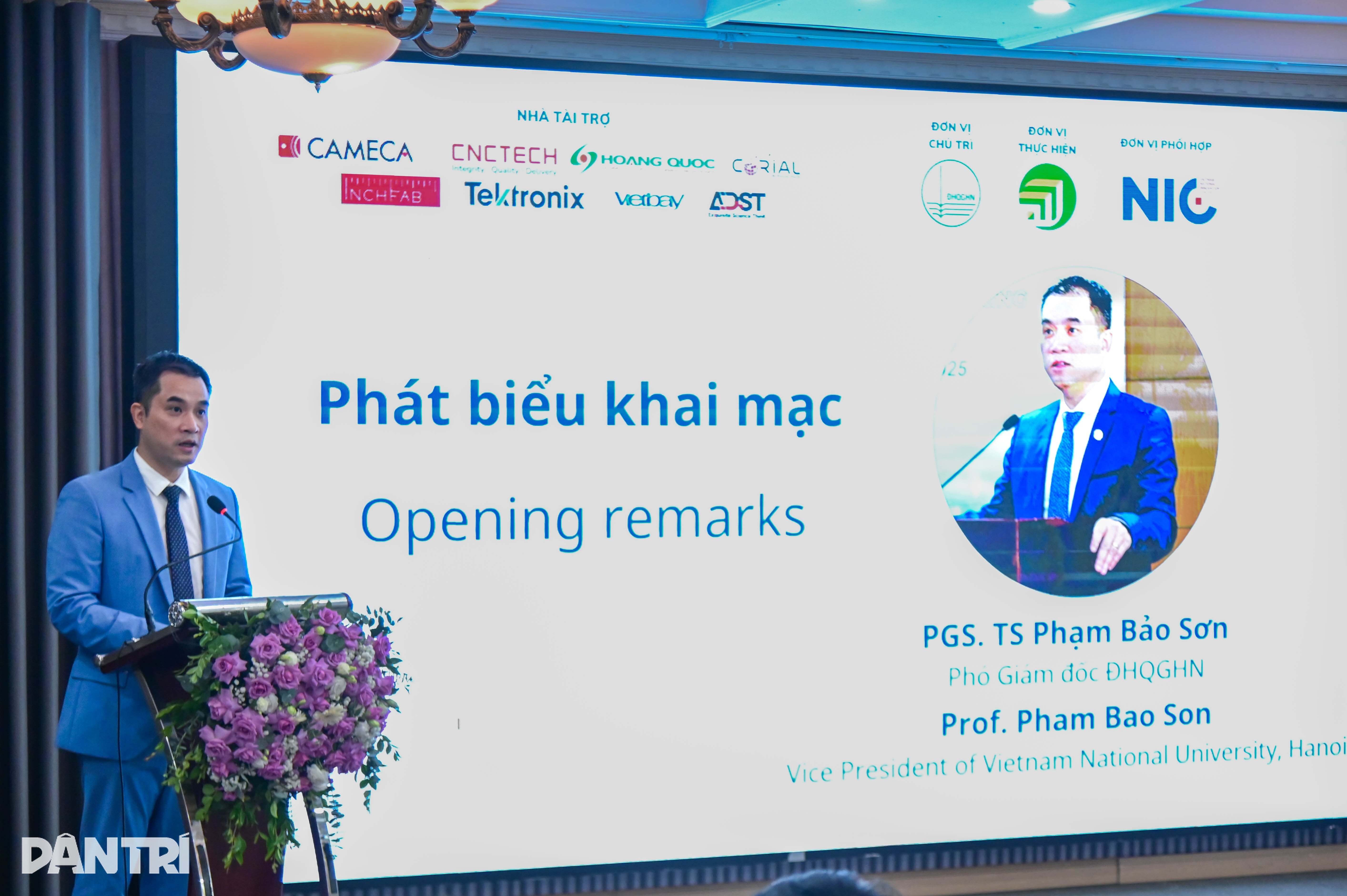
However, Vietnam cannot develop all stages in the semiconductor value chain at the same time. Instead, it is necessary to choose suitable fields to build core competencies, train high-quality human resources, gradually master technology and participate more deeply in high-value processes.
He believes that this is a long-term process, requiring close coordination between universities, research institutes, businesses, investors and management agencies.
In particular, universities play a central role in training human resources and building a scientific and technological foundation for the semiconductor industry.
The connection between schools and businesses needs to be established from the early stages. Enterprises not only participate in recruitment but also need to accompany them in identifying technological problems, developing training programs, supporting internships and implementing research and product development projects.
On the contrary, research activities in universities also need to stem from the practical needs of the market and businesses.
VNU aims to train 10,000 experts in the field of semiconductors by 2030, contributing to realizing the national semiconductor human resource development program.
In addition, this educational institution is building a shared semiconductor infrastructure system in Hoa Lac to serve research, training, prototyping and testing.
According to Associate Professor, Dr. Pham Bao Son, semiconductor laboratories need to be designed to serve practical needs, both supporting training and technology mastery, while also creating conditions for businesses to test ideas, solve technical problems and develop new products.
Following the program, many leading experts in semiconductor technology discussed the development trends of the semiconductor industry, international experiences in training human resources, building laboratories and promoting commercialization of research results.