NASA's $250 million observatory is about to fall to Earth
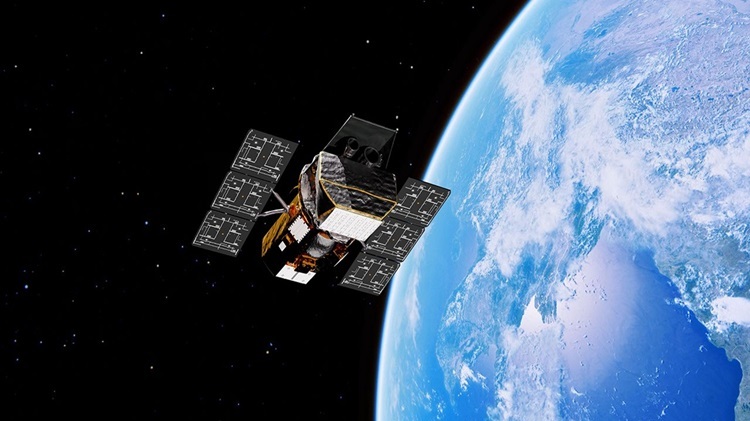
According to Nature World News, NASA's Neil Gehrels Swift Observatory may fall through the atmosphere in the coming weeks after a commercial mission to lift it to a higher orbit failed. The Link rescue ship developed by American company Katalyst Space fell back to Earth on September 25 and Swift is expected to fall in early November when its orbit gradually lowers.
In a report published on September 28, NASA said the rescue mission ended without being able to raise the observatory's orbit. If there is no intervention, Swift will retire later this year.
The 1,452 kg Swift Observatory is located about 325 km above Earth. But engineers estimate that as Swift descends below 300 kilometers in early to mid-October, operating the telescope will become difficult. Swift will then fall out of orbit and burn up in the Earth's atmosphere during the fall.
"While some hardware from the Swift spacecraft may be left behind after the reentry process, the probability of debris causing significant property damage or injury to anyone is very small," space tracking company LeoLabs told CNN. "As much of the debris makes it through the re-entry process, it is more likely to fall into the ocean or uninhabited land."
Guardian said NASA signed a $30 million contract with the Flagstaff, Arizona-based company Katalyst in September 2025 and gave them a one-year deadline to design, manufacture, test and launch satellites that can meet, capture and lift the Swift observatory higher. The Link launched from Kwajalein Atoll in the Marshall Islands on July 3 on a Northrop Grumman Pegasus XL rocket.
After entering space and completing initial tests, the vehicle began experiencing communications loss and directional control problems. An electronic error caused two of the three jet flywheels used to rotate the spacecraft to stop working, and a valve problem caused the vehicle to spin out of control. Engineers restored control, but the Link had no fuel left to carry out its mission.
NASA and Katalyst boiled down the mission to a technology demonstration, including the use of a xenon gas-powered propulsion system and Link's three robotic arms, each about a foot long with a clamp on the end. Before the spacecraft fell back to Earth on September 25, the flight control team directed Link to close to Swift within 12-15 km to take photos.
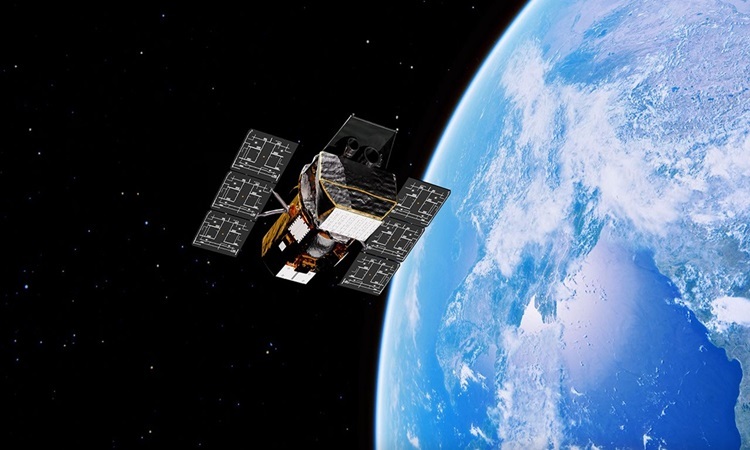
Every spacecraft operating in low Earth orbit is subject to drag from the upper atmosphere. Swift does not have a propulsion system, so it cannot raise its own orbit. According to NASA, increased solar activity over the past few years (peaking in an 11-year cycle in 2024) has amplified that drag. As the Sun becomes more active, it heats and expands the Earth's upper atmosphere, leading to more gas molecules blocking the satellite's path.
To buy more time, the flight control team at the University of Pennsylvania's Mission Operations Center began shifting about 25% of Swift's scientific research goals in December 2025 to locations in the sky that help minimize air resistance. Swift also stopped targeted scientific observations from mid-February to the end of August 2026. The flight control team must keep the observatory away from the Earth, Moon and Sun and not tilt it excessively to avoid atmospheric particles hitting the instrument.
With a construction cost of $250 million, Swift was launched in November 2004 to study gamma-ray bursts, the most powerful explosions in the universe, and became a versatile tool for observing black holes, comets and asteroids. Swift can rotate toward a new event in minutes, determine its location and notify observatories on the ground and in space. The observatory will continue to scan the sky for the remainder of its operation. Its fall shows that solar activity can shorten the life of spacecraft operating in low Earth orbit.