Dai Zheng - the 'brain' of China's reusable rocket ambitions
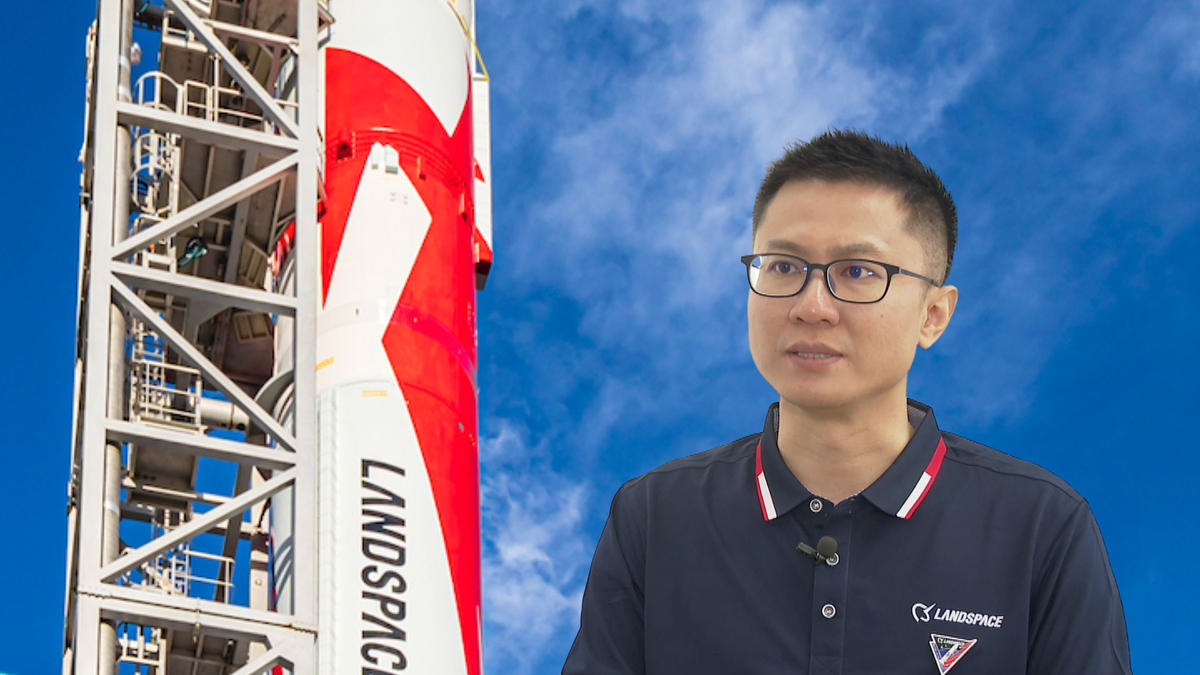
On August 9, when the Sun set and the stars began to appear in the sky of Ba Dan Jilin desert, Dai Zheng (Dai Chinh) stood in front of the launch tower, looking up for a long time. At that time, LandSpace's second generation Zhuque-3 (Y2) reusable booster rocket was about to be launched.
"It feels like I'm sending my child to take an important exam," Dai Zheng, Deputy General Director of LandSpace and Director of the Rocket R&D Department, told Xinhua Twitter in mid-August.
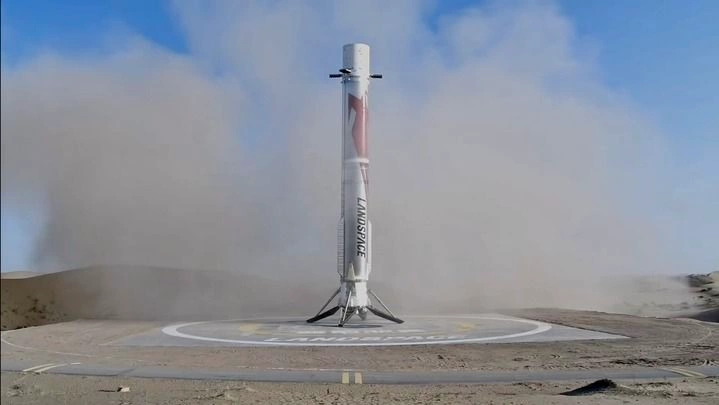
As the commander behind the Zhuque-3 Y2, Zheng understood that in that "important exam", the rocket must not only "take off" but also ensure the first stage can "return and land accurately". If successful, the mission would mark the first time China has successfully recovered the first stage base of a reusable launch rocket, and the second time after America's SpaceX.
On August 19, Zhuque-3 Y2 took off from the Dongfeng Commercial Space Innovation Test Site, inside the Jiuquan National Satellite Launch Center, according to SpaceNews. The recall process was successful.
Zheng and his team have been waiting a long time for this breakthrough.
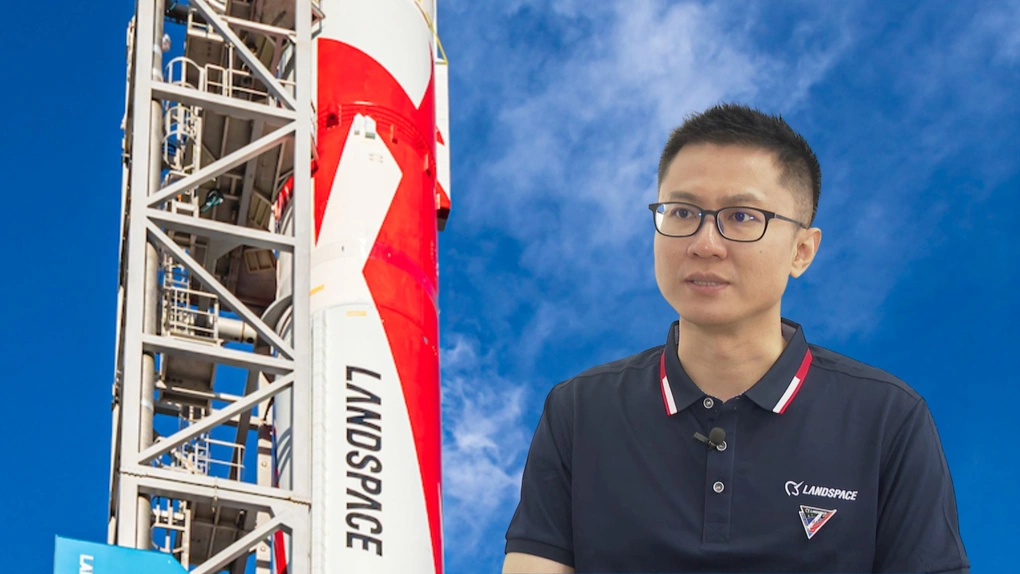
Quit your dream job to pursue your space ambitions
Zheng was born in 1984 to a family whose parents were both teachers in Fujian province. According to China Daily, during the summer vacation after finishing fourth grade, he attended a local model airplane summer camp. Here, he launched a homemade rocket made from cardboard to a height of more than 70 meters before deploying a parachute and returning to the ground. The experience left a deep impression on the boy, arousing his later love of rockets.
"When I looked at the stars, I wondered what was up there. Then I wondered how I could get there," Zheng said.
Zheng said he "literally spent his entire youth" searching for answers about the stars. At the age of 19, he passed the Aerospace Engineering School of Tsinghua University and studied for a master's degree there after graduating. In 2009, he joined the China Academy of Rocket Technology (CALT), participating in the development of the Long March 3 and Long March 5 rockets, and was considered a young expert with a comprehensive understanding of rocket design. However, Zheng still feels that being constrained by the framework will not help him pursue his childhood dream.
In 2015, news from across the ocean continued to arrive. In December of that year, the successful recovery of the first stage by SpaceX's Falcon 9 rocket, opening the era of reusable rockets, made him restless. He watched the entire video about the recall process over and over again "with a heart filled with emotions".
The same year, Zhang Changwu (Truong Truong Vu), founder and CEO of LandSpace, was also lost in thought. He invited Zheng to a coffee shop in Ich Trang, Beijing. The two had a long and insightful conversation about the changes in the industry brought about by reusable rockets. Changwu also sent Zheng an invitation to join.
On the way home, Zheng hesitated for a long time, because the decision meant giving up his stable career path at CALT. "I entered the state-owned aerospace industry right after graduating and never thought I would leave," Zheng told CCTV last year. "There was a lot of uncertainty, but intellectually I knew I needed to take that step."
The night before deciding to resign, Zheng took out all the certificates, placed them all over his bed, and burst into tears. "It felt like being reborn or peeling off an old layer of skin," he said. "But in everyone's life, someone always needs to take the first step."
A decade of challenges
In fact, after joining LandSpace, Zheng continuously faced troubleshooting "firsts." On October 27, 2018, the Zhuque-1 booster version, the first rocket that Zheng developed after joining the new company, was tested but failed. This failure prompted a decisive turning point: building its own liquid-fuel propulsion system instead of relying on third-party solid fuel.
Shortly thereafter, LandSpace announced the development of a liquid oxygen-methane rocket, which is more suitable for multiple shutdowns and restarts as well as course corrections, in order to accumulate technology for reuse purposes. "Many nights, we felt as if we had entered a 'tech wasteland' lacking both experience and new options if we unfortunately failed," Zheng told Xinhua Twitterã. "The only choice is to grit your teeth and endure with the mindset of 'pursuing the difficult but right thing'."
That mindset created the Zhuque-2 equipped with a self-developed liquid oxygen-methane engine. However, the Y1 version could not launch due to technical problems. Doubt prevailed, but he knew everyone needed someone to lead the team determined to "start from scratch".
In July 2023, Zhuque-2 Y2 made history when it became the world's first methane-powered rocket to reach orbit, laying the foundation for China's commercial liquid fuel rockets. At the command center, some people cried, some people laughed. Zheng just stared intently at the perfect trajectory curve on the big screen for a long time. He knew that he and his colleagues had overcome the "fog" of failure.
LandSpace then pioneered the development of the larger Zhuque-3 with a bold design: replacing traditional aluminum alloys with stainless steel for the main body of the rocket, similar to what SpaceX did with the Starship. Although heavier than aerospace aluminum, steel is considered to be better able to withstand the temperatures of re-entry into the atmosphere, reducing the need for thick heat shields and simplifying maintenance between spaceflights.
On December 3, 2025, the 66 m high two-stage rocket Zhuque-3 Y1 took off for the first time from the Jiuquan Satellite Launch Center to test its reusability. About 8 minutes after takeoff, the first stage returned, trying to land at a location 390 km away from Jiuquan. However, the attempt was unsuccessful when the rocket stage caught fire and crashed onto the edge of the landing pad.
After the failure, Zheng and his colleagues had more than 8 months of racing against time. On August 19, they made history when Zhuque-3 Y2 was launched into space. At the command center, everyone was extremely excited. Fifteen years of hard work have written their names into the history of China's commercial aerospace industry.
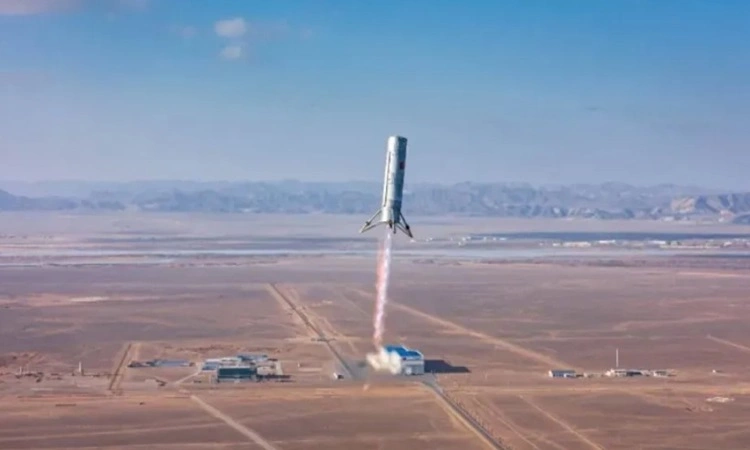
"Through a lot of calculations, experiments, meticulous and rigorous improvements, what we achieved is amazing," Zheng said. "When the rocket took off, when the sound of the rocket passing through the atmosphere echoed continuously, I felt that humanity is truly great, and each of us is a part of that."
According to China Daily, some LandSpace employees were very surprised at that time, when their "boss", who was considered "bland and unromantic", uttered the most romantic words at an important moment.
As for Zheng, he said he will continue to pursue and perfect the LandSpace rocket to narrow the gap in the commercial aerospace field with the US. "We cannot let the next generation look up at the sky and only see American satellites," Zheng told CCTV broadcast earlier this week. "If we fail, future generations will look back and feel we failed to shoulder our historical responsibility."