Galaxy Watch Ultra2 review: Significantly better but still not perfect


(Dan Tri) - Galaxy Watch Ultra2 stands out with a longer battery, thinner design and brighter screen. However, the large size, slow charging and price of nearly 19 million VND still make users consider.

GALLERY
13 photos


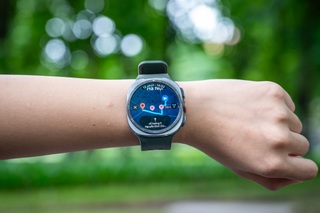

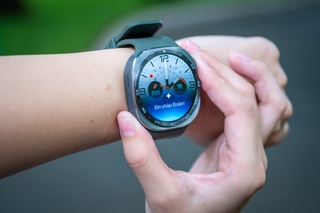

The first generation Galaxy Watch Ultra is one of those Samsung watch models that makes me feel quite conflicted.
I like the way the company created a product that is different from the regular Galaxy Watch line, but the large size, not really outstanding battery life and some inconveniences in operation made the word "Ultra" on the product at that time not completely convince me.
Therefore, what I want to know is to what extent the limitations of the first generation have been resolved and whether they are enough to turn the Ultra2 into a watch truly worth considering at a price of nearly 19 million VND.
Thinner, more comfortable to wear
If only viewed from the front, the Galaxy Watch Ultra2 does not feel like it is a completely new product.
Samsung continues to use a round screen design in a nearly square cushion-shaped titanium frame. This is still a quite typical design, easy to recognize but also somewhat picky about users.
Personally, I like that Samsung doesn't try to change the design just to create a new feel. A product in the Ultra line needs to have its own identity and the first generation did just that.
The change I appreciate more is in the thickness.
Galaxy Watch Ultra2 has a 10.7 mm thick body, a 12% decrease compared to the previous generation despite a 35% increase in battery capacity. The new Marine Band is also 26% lighter.
The first noticeable change is in the strap. Compared to the previous generation, the 2nd generation strap is significantly softer and more comfortable, making it so comfortable to wear that users can almost forget that they are wearing a watch, even when sleeping.
A figure of more than 1mm doesn't sound too significant, but with a device that stays on the wrist most of the day, I think this is the kind of upgrade that makes more sense than a few cosmetic changes.


However, "thinner" is not synonymous with "small".
Ultra2 only has one size of 47mm, body 47.4 x 47.1mm and weight of 61.5g without cable. Notably, the watch body is even heavier than the previous generation by about 1g.
This is still a big smartwatch.
For people with small wrists, I think size is an issue to consider before configuration or features. The Ultra design is difficult to be discreet and I don't think this is the right product for everyone.
If Samsung adds a smaller version in the future, the Ultra series could reach a wider group of users.
The screen is brighter
Galaxy Watch Ultra2 uses a 1.5-inch Super AMOLED screen, 498 x 498 pixel resolution and sapphire glass. The most notable upgrade is the maximum brightness increased to 5,000 nits, from 3,000 nits of the previous generation.
Normally, I'm quite cautious with maximum brightness numbers because users rarely use the device at that brightness level continuously.
But on a watch aimed at running, trekking and outdoor activities, visibility in sunlight makes much more practical sense.


When running, users do not want to have to tilt their wrist through many angles just to read heart rate, distance or speed. The easier the watch is to see, the less interrupted operations will be.
This is also how I see this upgrade.
5,000 nits isn't the reason I bought the Ultra2, but it is what makes an outdoor smartwatch more pleasant to use in the environment it was designed for.
Impressive battery, charging speed is not adequate
If I had to choose one upgrade that makes the Galaxy Watch Ultra2 more convincing to me than the first generation, it is the battery.
Samsung increased the capacity from 590mAh to 800mAh, the company announced a maximum duration of 60 hours when Always On Display is turned on and 80 hours when this feature is turned off.

According to personal experience, Ultra2 gets about 48-50 hours of use with Always On Display turned on during the day, while also tracking activity and sleep.
To me, this is the most suitable change for "Ultra" positioning, because the duration of about two days or more helps users not have to choose between charging the battery and monitoring sleep.
However, the actual duration still depends heavily on GPS, LTE, AOD and exercise intensity, and cannot compete with Garmin models with batteries that last for days or weeks.
Therefore, I wouldn't call the Ultra2 battery excellent considering the entire sports watch market, but in the group of Wear OS smartwatches with AMOLED screens, LTE and many smart features, this is still one of the product's biggest strengths.

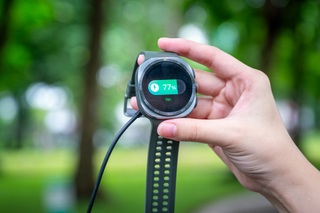
Unfortunately, the charging speed is not commensurate with the large battery. Samsung says the device can reach about 40% in 30 minutes, but to fully charge it actually takes about an hour and 45 minutes.
For a high-end smartwatch, this is still quite a long time, especially when the Ultra2 does not support the regular Qi standard and users still have to carry their own magnetic charging dock when traveling or working. Therefore, Samsung has made the battery more worthy of the word "Ultra", but the charging experience is still the point that makes me not completely satisfied.
Good performance, not a big difference
Galaxy Watch Ultra2 uses Qualcomm's new Snapdragon Wear Elite platform. The SDW6100 processor is manufactured on a 3 nm process, has a 5-core CPU, comes with 2 GB RAM and 64 GB internal memory.
Ultra2 meets those needs well and the new platform also contributes to power optimization.

However, I don't see the chipset as a big enough reason for original Galaxy Watch Ultra users to upgrade because the first generation was already fast enough.
This is more of an upgrade that makes the product better in the long run instead of changing the way I use the watch every day.
Outdoor watch but lacks physical controls
Quick Button continues to be one of the details I like on the Ultra line.
This button can be set to quickly start a workout, toggle information screens, or mark each lap during a workout. Holding down can also activate the emergency siren.
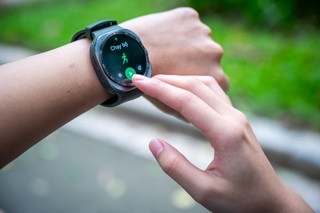
For people who regularly jog, pressing a button to start an exercise is significantly more convenient than opening Samsung Health and finding the right exercise mode.

But what makes me sad is that Samsung has not yet turned the Quick Button into a knob.
The Galaxy Watch Ultra2 also does not have a physical rotating bezel like the Classic series.
This creates a rather strange situation. This is the Galaxy Watch most designed for outdoor environments, but most navigation still depends on swiping on the screen.
When hands are dry and stationary, there is no problem.
But when running, with sweaty hands, in the rain, or wearing gloves, I will always favor a physical crown or bezel over a touchscreen.
Gemini is interesting but not a convincing point
The new One UI Watch brings Gemini deeper into the wrist experience.
The Raise to Talk feature allows users to raise their hand and speak to call Gemini without having to press a button or use a wake-up command.
In concept, this is exactly how I want to use an AI assistant on a watch. A device on the wrist needs to reduce operations as much as possible.

But the current experience is not completely stable.
In real life experience, there are times when Gemini activates as soon as the wrist is raised, but there are also times when it does not respond even after repeating the movement. Traditional ways of activating with keys or voice commands are more stable.
As such, I view Raise to Talk more as a feature with potential than as a finished advantage.
AI on a smartwatch will only be truly useful when I can trust it to work the first time.
Is nearly 19 million VND worth it?
This is the part that makes the Galaxy Watch Ultra2 a difficult product to review.
If only looking at product quality, I think this is one of the most complete Galaxy Watches Samsung has ever made.
The thinner body partially solves the bulkiness problem. The 800mAh battery provides more realistic usage time. The 5,000 nit screen is suitable for outdoor activities. GPS, training tools and diving capabilities also make the word Ultra more meaningful than before.


But the price of 18.99 million VND in Vietnam forces me to put those advantages in a different context.
If your primary needs are receiving notifications, tracking sleep, measuring heart rate, hitting the gym or jogging a few times a week, most of the Ultra2's capabilities may become redundant.
The regular Galaxy Watch already meets these needs quite well at a significantly lower cost.
The Ultra2 only starts to make sense once users really take advantage of the big battery, LTE, GPS, outdoor display, trail capabilities, durability and in-depth sports features.