Proposed impact on the atmosphere to weaken rainstorms and heat waves
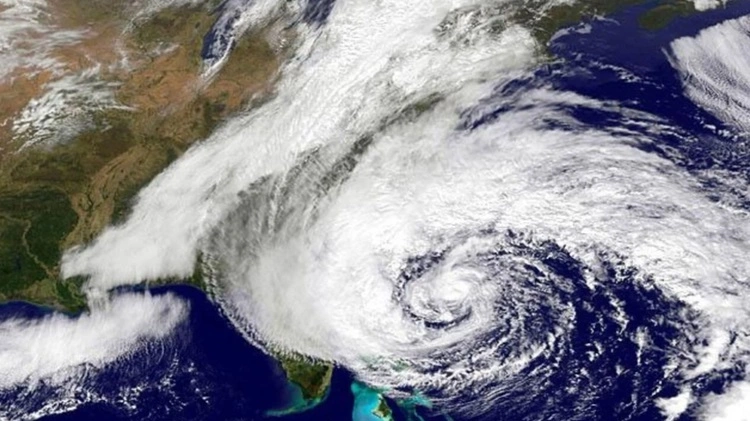
In an article published on June 24 in the journal PLOS Water, Qin Huang, a researcher at the University of Arizona, USA, and his colleagues proposed preventing bad damage from extreme weather events with "Weather Jiu-Jitsu", a method aimed at pushing weather systems away from harmful orbits. This idea was developed based on the principles of the martial art Jiu Jitsu, using little energy and technical leverage to take advantage of and transform the opponent's great strength. According to the research team, making small adjustments that take advantage of the sensitivity to atmospheric disturbances can help people avoid the severe impacts of weather disasters. According to Independent, climate change makes many extreme weather phenomena such as droughts, floods, heat waves and cold events more frequent and intense, leading to increasing losses of life and property. In the US alone, in 2025, extreme weather will cause an estimated $417 billion in damage. Historically, efforts to control the weather have been limited to small-scale operations, mainly cloud seeding.

Cloud seeding is a geoengineering solution used to stimulate rain to fall in dry areas. Silver iodide or salt is sprayed into the clouds, causing water vapor to quickly condense into ice crystals. As the ice crystals grow, they become too large and fall out of the clouds as snow or rain depending on the weather. Cloud seeding techniques are being used in more than 50 countries, including the US and UAE, by spraying chemicals from the ground, aircraft or shooting with rockets and artillery shells. According to Eurek Alert, the research team conducted simulation experiments to prove the concept, using atmospheric circulation models and Aurora, a large-scale artificial intelligence model designed to predict weather with high resolution. Their model shows that small cloud seeding, done just days before the peak of extreme weather, could have deviated the path of 2012 Hurricane Sandy by about 483 km and missed New York City, causing temperatures during the 2021 cold wave in Texas to increase by about 10 degrees Celsius and reducing rainfall that caused flooding in California in 2022 by 5%. While the simulation results show that the Weather Jiu-Jitsu method is feasible, the researchers emphasize that practical implementation requires advances in weather monitoring and a better understanding of how to control extreme weather events. In addition, the environmental and political impacts of this method also need to be researched and resolved. If successful, the new approach could support disaster management and promote beneficial impacts from weather events that often cause severe damage. According to the research team, the increasing impact of extreme weather events on society shows that traditional methods such as building dams and dikes are not enough to deal with their widespread consequences. Weather Jiu-Jitsu offers a new paradigm of using small interventions performed at the right time and place to take advantage of atmospheric dynamics, helping to redirect or reduce the scale of extreme events before they cause damage.
An Khang compiled