Xiaomi phone captures the Sun during a lunar eclipse
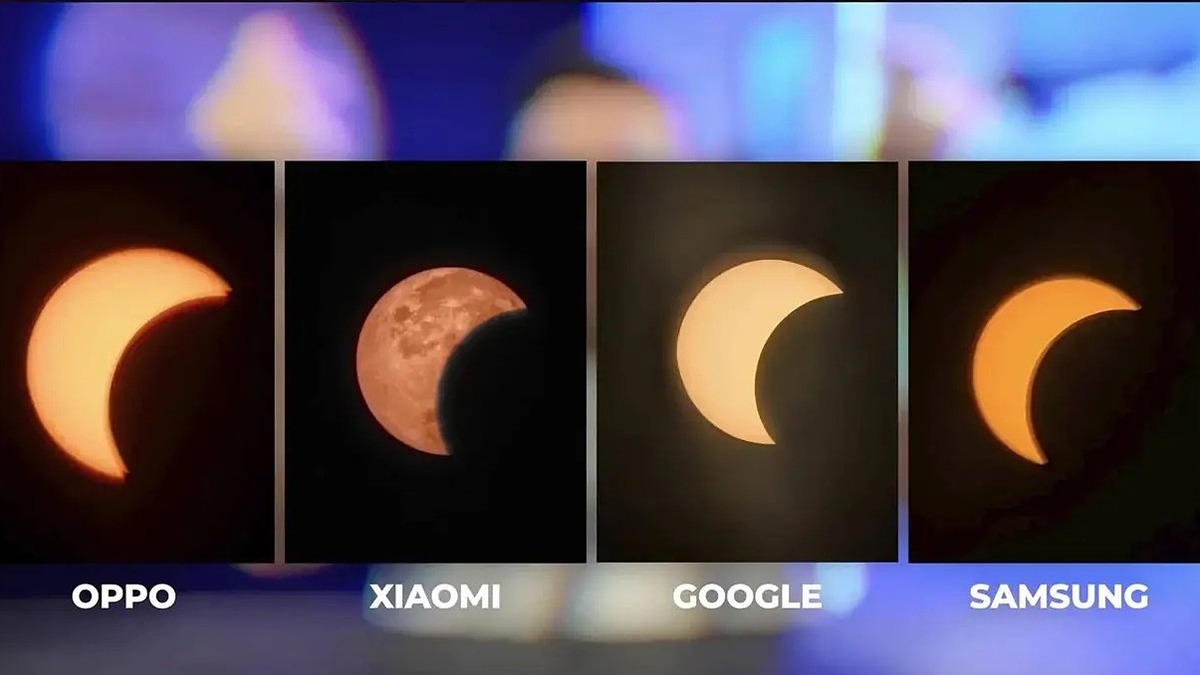
According to Gizchina, during the solar eclipse on August 12, many people complained that photos taken by Xiaomi phones automatically added pitted surfaces and meteor craters to the Sun area. The incident was shared on social networks and according to the International Cyber Digest account, this phenomenon is most obvious on the high-end model Xiaomi 17 Ultra when users try to point the lens at the sky to capture a solar eclipse.
The reason is said to be the way Supermoon shooting mode works. This is a feature Xiaomi specifically designed for taking photos of the Moon at high zoom levels, up to 60x. When the eclipse occurred, the camera detected a round, bright object in the sky, the AI algorithm immediately mistakenly identified it as the Moon. The machine automatically activates the processing process according to the settings, "applying" simulated surface details.
In fact, when there is a solar eclipse, the dark circle is the Moon while the bright object is the Sun. To fix it, users must completely turn off Supermoon mode, but then the image is easily overexposed and loses detail.
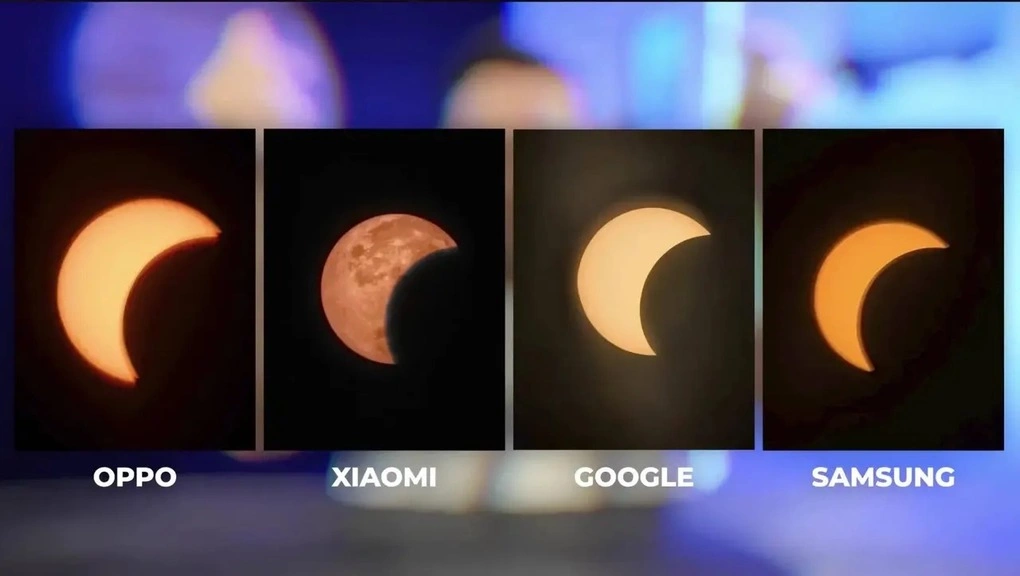
The phenomenon of mistaking halos for the Moon is not new, but Xiaomi's algorithm error this time has sparked debate about the limits of AI in mobile photography: what are the limits of "upgrading" photos and "fake" photos.
In fact, users have long been accustomed to and accepted common AI algorithms such as multiple image fusion (HDR), night mode to help brighten the frame, or noise reduction to compensate for physical limitations of sensor size and small lenses.
However, the fact that the software automatically inserts textures that do not exist in a real context is another story. According to Gizchina, this step goes beyond the boundaries of conventional image processing, showing that the device is deciding on its own what the image looks like instead of honestly recording what happens in front of the lens.
Recently, Chinese smartphones have taken full advantage of AI in processing photos taken at large zoom levels. Due to the limitations of the sensor and lens, object details and writing are often "drawn" and create a sharp feeling. However, with languages other than English and Chinese, zoom photos often make mistakes in "making up" incorrect writing.
Before Xiaomi, Samsung also faced a similar wave of criticism for many years when Galaxy phones processed and "painted" additional details to Moon photos.
Hoang Ngan