How does the runway affect aircraft operations?
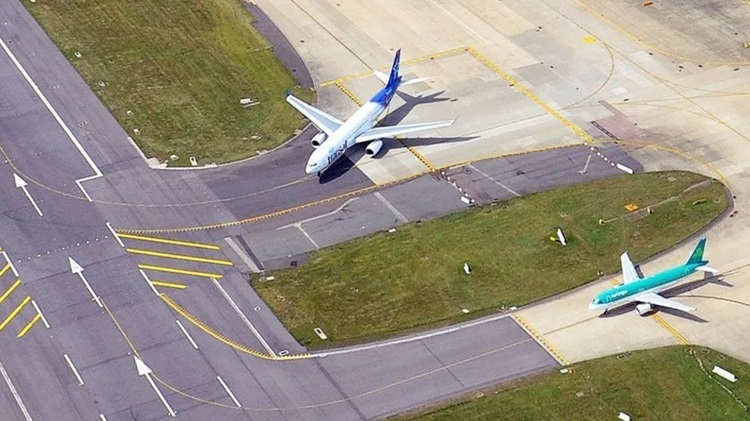
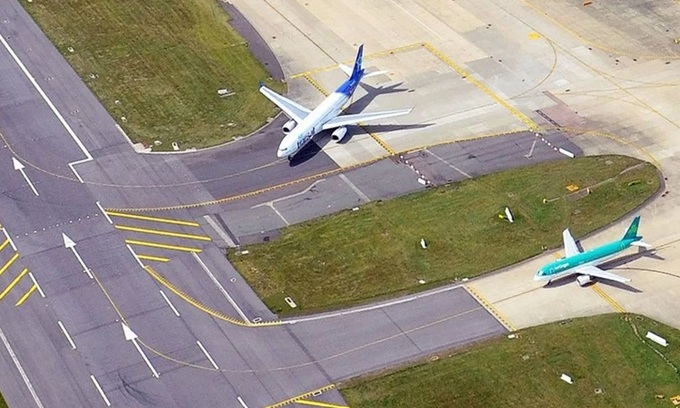
The length of an airport's runway can greatly affect flight operations. Airports around the world have a variety of runway lengths, allowing for a number of aircraft types. Airlines and pilots also consider airport runway design and conditions to ensure planes can arrive or depart safely, according to Simple Flying.
An airport runway is a rectangular area at the landing strip, specially prepared for aircraft to land and take off. While major airports around the world have asphalt or concrete runways, some runways in smaller areas are dirt or covered with weeds. That is due to the diverse needs of the airport and the region. Most airports usually have multiple runways, sometimes up to 5-6 strips of different sizes for large commercial jets such as Airbus A380, Boeing 747... Small aircraft used to fly in the region will use shorter runways to ensure the efficiency of airport operations.
The length of the airport runway ranges from 350 to 5,000 m. The world's longest runway (5,000 m) is located at Ulyanovsk Vostochny airport in Russia and Shigatse Peace airport in China. Small airports often have narrow runways (23 m) while in larger airports, the runway width can be up to 61 m. In addition to aircraft type, other factors to consider when designing a runway include airport altitude, weather conditions, regional geography, and environment.
Compared to small aircraft, large aircraft require more space to ensure sufficient speed when taking off or to use brakes when landing. Long runways are essential for airports located in hot climates. Ensuring the runway is long enough is also important because it allows the aircraft to come to a safe stop in case a takeoff needs to be aborted or a landing is refused. Most commercial airports usually have runway lengths between 2,438 - 3,962 m. If the airport is too short, the plane may fail to take off, leading to an accident.
An Khang (According to Simple Flying)