The AI baby knows how to act spoiled and angry like a 6-year-old child
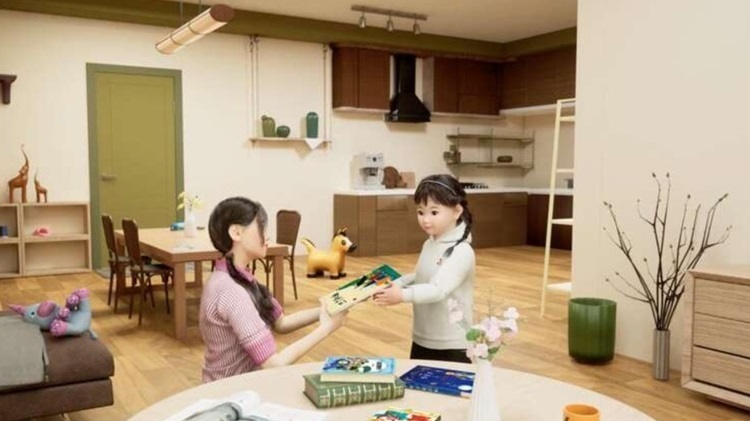
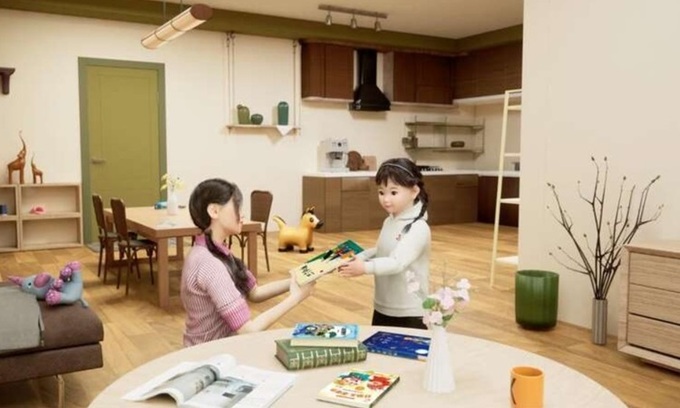
China launched TongTong 2.0, the world's first upgraded artificial super intelligence (AGI) system at the Zhongguancun Forum in Beijing, Interesting Engineering reported on March 31. Developed by the Beijing Institute of Super Artificial Intelligence, this humanoid system has many advanced cognitive abilities equivalent to a 5-6 year old child, better than the previous version, which had intelligence comparable to a 2-3 year old child. TongTong 2.0 showcases China's growing AI capabilities, thanks to an open source approach that helps accelerate advances in artificial intelligence and many other emerging technologies.
Chen Hao, executive director of the Advanced Technology Center at the Beijing Institute of Super Artificial Intelligence, describes TongTong 2.0 as a digital personality with its own values and vision. This AI system can engage in conversation based on its understanding of intent, while also considering its own values and personality. The ability to seamlessly communicate, manage conversations, and create feature-based conversations all contribute to strengthening the system.
In daily encounters, TongTong 2.0 may display human-like personalities such as coddling or procrastinating on tasks. For example, when asked to go to sleep or eat something unwanted, the system may justify its actions or demand a reward before responding. An important advance in the development of AGI is the ability to control dialogue and simulate emotions. Unlike its predecessor, which had difficulty completing tasks when faced with environmental changes, TongTong 2.0 can respond, re-plan and adjust in real time. It can pause, resume operations, adjust or stop tasks as needed while proactively creating new plans to meet goals in a smarter and more flexible way.
TongTong 2.0's autonomous learning capacity is one of its key features. It converses with humans in multiple languages and accumulates insights from real-life situations instead of depending on offline materials. The system mimics human introspection and evolves by updating its knowledge base, functions, and capabilities through ongoing interaction.
In testing, TongTong 2.0 demonstrated problem-solving capabilities. TongTong responded by taking off his shoes, rising up on the sofa cushions and grabbing the remote control that the technician placed out of reach. It was instructed to plug in after noticing that the air conditioner did not turn on. Its knowledge base increases as a result of accumulated experience, helping it to remember and use learned abilities.
Researchers built virtual living environments such as a kindergarten and a 6-member family to support the development of TongTong 2.0. Through introducing multiple intelligent entities with their own personalities, skills, and values, they create a social network of family and friends for TongTong. Its continuous development is supported by these situations, which help the system hone its emotional and social intelligence. The development of TongTong 2.0 prioritizes intelligent interaction and adaptive learning.
In February 2024, Chinese scientists revealed TongTong, the world's first artificial intelligence baby. TongTong 2.0 builds on the capabilities of its predecessor, enhancing language, perception, movement, learning, emotion and interaction. While TongTong 1.0 has the intelligence of a 3-year-old child, the new version demonstrates the cognitive ability of a 5-6 year old.
An Khang (According to Interesting Engineering)